Long Thanh International Airport construction in Vietnam continues to progress as Phase 1 works move toward completion under a revised 2026 delivery timeline. The $1.8bn contract package forms part of the wider development of Vietnam’s largest aviation infrastructure project, located in Dong Nai Province near Ho Chi Minh City. Additionally, the airport is designed to significantly expand national aviation capacity while easing long-standing congestion at Tan Son Nhat International Airport. Moreover, the project remains a key component of Vietnam’s long-term transport and logistics expansion strategy.
The airport is being developed to serve as a second major international gateway for southern Vietnam. Phase 1 is designed to handle 25 million passengers annually and includes a runway, passenger terminal, taxiways, and supporting infrastructure. Furthermore, authorities have confirmed that commercial operations are now targeted for late 2026 following construction acceleration directives issued by the government. Consequently, the project has entered its final construction and systems integration stage.
The latest construction update indicates that major infrastructure components, including runway works, airside systems, and terminal structures, are nearing completion. However, some work packages continue to face pressure from labour shortages and site coordination challenges. Therefore, contractors have intensified deployment of manpower and equipment to maintain the revised schedule.
Long Thanh International Airport construction reaches advanced delivery phase in 2026
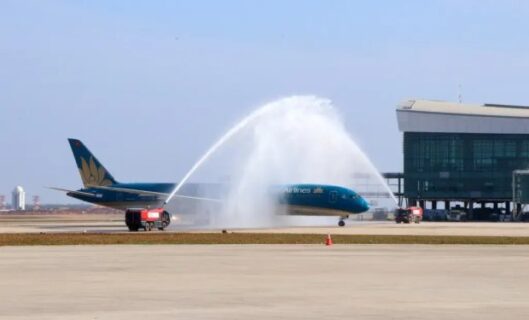
Long Thanh International Airport construction has entered a critical execution phase as Vietnam pushes to meet its late-2026 operational deadline. Authorities have confirmed that multiple core components, including runway infrastructure and air traffic systems, are largely complete or nearing completion. In addition, technical readiness activities such as calibration flights and system testing have already been carried out.
The airport project is being delivered in phases, with Phase 1 representing the most important operational stage. Consequently, focus has shifted toward terminal completion, installation of aviation systems, and integration of passenger processing facilities. Moreover, transport connectivity infrastructure linking the airport to Ho Chi Minh City is also being accelerated to support launch readiness.
Despite steady progress, the project has faced challenges including labor shortages and construction coordination delays. Nevertheless, project authorities have reinforced timelines and prioritized completion of critical packages to ensure operational readiness within 2026.
Long Thanh International Airport construction supports Vietnam aviation restructuring
Long Thanh International Airport construction plays a central role in Vietnam’s aviation restructuring strategy, particularly in redistributing air traffic away from overloaded southern hubs. Tan Son Nhat International Airport has reached operational limits, and therefore the new airport is expected to absorb a significant share of international traffic once operational.
In addition, the project supports Vietnam’s broader logistics expansion agenda by improving cargo handling capacity and international connectivity. As a result, the airport is expected to strengthen trade flows and enhance regional economic integration in southern Vietnam.
The development also aligns with national infrastructure priorities that emphasise large-scale transport upgrades, including expressways and planned rail links to Ho Chi Minh City. Furthermore, government agencies continue to coordinate closely with contractors to ensure synchronised completion of airside and landside infrastructure.
Ultimately, Long Thanh International Airport construction is expected to transform Vietnam’s aviation landscape by establishing a new international gateway capable of handling future demand growth and supporting long-term economic expansion.
Vietnam’s aviation expansion continues to accelerate with parallel mega-projects shaping both northern and southern infrastructure capacity. In the north, a $7 billion Gia Binh International Airport project is advancing. Designed to serve 30 million passengers by 2030 and 50 million by 2050, supported by DAA International as strategic and operational partner. Together, these developments reflect a coordinated national strategy to decentralize air traffic, strengthen logistics capacity, and position Vietnam as a major regional aviation hub.
Completion Date
Construction of the first phase of the airport is expected to be completed in 2026. This phase will handle the movement of 25 million passengers and 1.2 million tons of cargo goods a year. After all phases are completed, the airport capacity will reach up to 100 million passengers per year. It aims to become one of the international air transit centres of the region. Furthermore, estimates show that by 2030, Long Thanh Airport will contribute about 0.98% of Vietnam’s GDP, creating 200,000 jobs.
Also Read: Phase 1 construction of Long Thanh International Airport, Vietnam’s largest, to begin in Aug 2023
Construction Cost
The airport will be completed in three phases of construction totalling US$13.3 billion. This is the project with the largest amount of capital financing in the banking industry. Moreover, it is the first project to be arranged entirely with medium-long-term dollars from Vietnamese commercial banks with more competitive conditions than the investor of Airports Corporation of Vietnam to borrow capital directly from international financial institutions.
Also Read: Bulacan International Airport Set to Transform the Philippines’ Aviation Industry
Speaking at the Prime Minister Pham Minh Chinh pointed out that the construction project of Long Thanh International Airport is a special level project. It symbolizes strategic importance to the socio-economic development of the Southern Key Economic Region. Additionally, it symbolises the development of Vietnam’s aviation industry and the country’s socio-economy in the coming years.
Construction Team
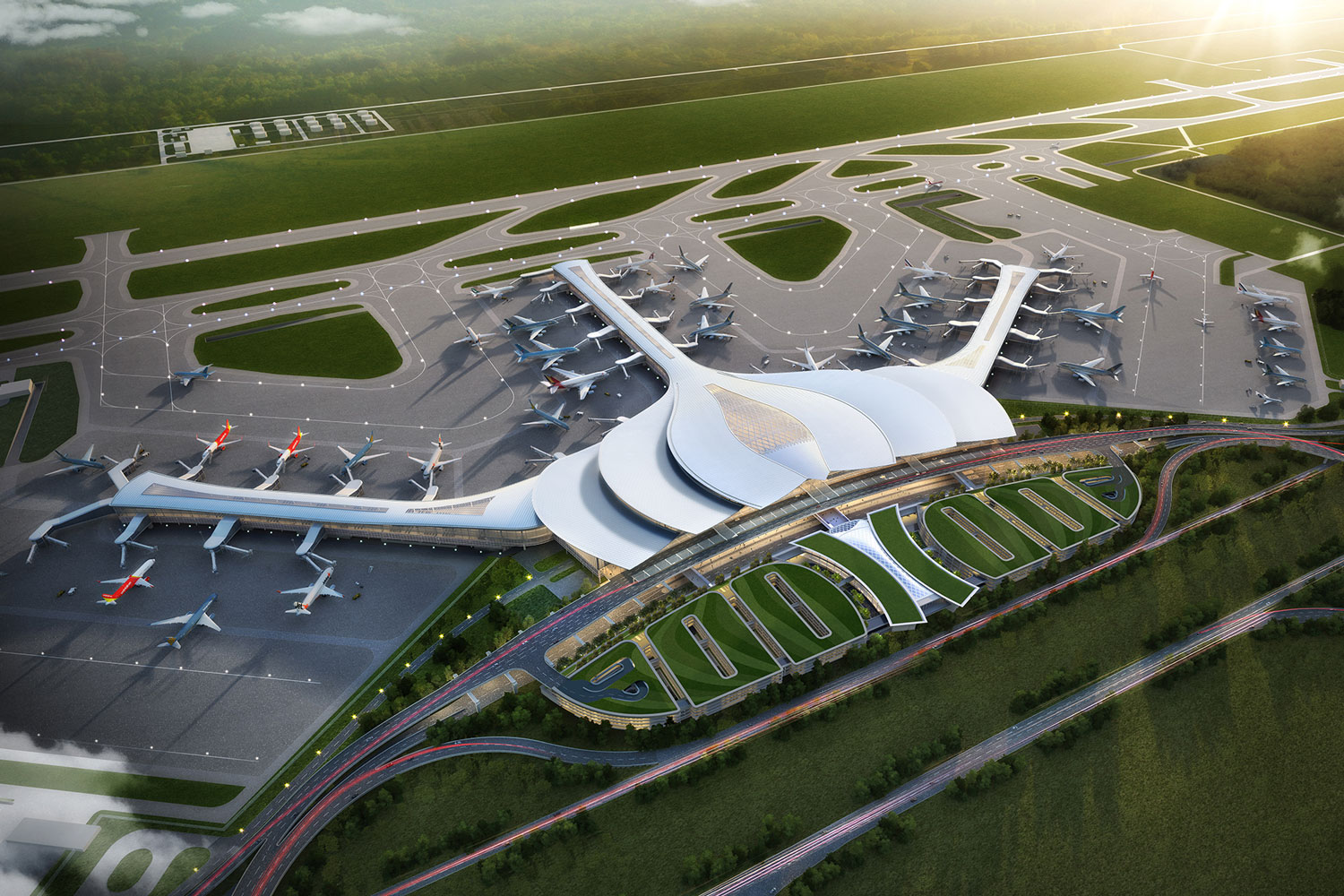
Designed by Heerim Architects, the terminal building takes the form of a blooming lotus flower. Furthermore, it boasts an impressive total GFA of 373,000m². The concourse will feature a complex clear span roof spanning 82m. Arup has been appointed as the structural engineering and civil engineering consultancy for the detailed design stage of the terminal building.
Also Read: US$ 360M set aside for the 2nd phase of Vietnam’s North-South expressway project
The structural design presented numerous challenges, including geometric manipulation, rationalisation, complex geometry, iterative design, and a tight schedule. To overcome these challenges, our structural team used digital tools such as Rhino Grasshopper. This facilitated the structure modelling in the GSA software so that the analysis model could be updated quickly to match the tight schedule while handling the intricacies of the complex roof geometry.

On behalf of the Government, Prime Minister Pham Minh Chinh welcomed and praised the positive efforts of Vietcombank, Vietinbank, BIDV. Additionally, the close monitoring and coordination of the State Bank of Vietnam, which quickly helped arrange a large amount of USD 1.8 billion in financing to promptly support the Investor of Airports Corporation of Vietnam to sign the contract construction contracts with contractors, meeting the project implementation schedule at the request and direction of the Prime Minister.
Also Read: City of Chicago offers a glimpse of the new Satellite Concourse 1 at O’Hare Airport
Project Fact Sheet
Project Name: Long Thanh International Airport construction project
Location: Dong Nai Province, Vietnam (near Ho Chi Minh City)
Total Project Value (Phase 1): Approximately US$1.8bn–US$4.6bn equivalent depending on package structuring
Project Type: International airport development
Developer/Investor: Airports Corporation of Vietnam (ACV)
National Authority: Government of Vietnam
Project Phase: Phase 1 (Operational preparation stage)
Planned Capacity (Phase 1): 25 million passengers annually
Cargo Capacity (Phase 1): 1.2 million tonnes annually
Key Infrastructure: Runway, passenger terminal, taxiways, aprons, air traffic systems
Expected Operational Launch: Late 2026
Long-Term Vision: Multi-phase expansion into major international aviation hub for Southeast Asia
Strategic Objective: Relieve congestion at Tan Son Nhat Airport and expand southern Vietnam aviation capacity
Project Team
Project developer: Airports Corporation of Vietnam (ACV)
Owner: Government of Vietnam
Aviation regulatory authority: Civil Aviation Authority of Vietnam
Construction contractors consortium: Multiple Vietnamese and international civil engineering contractors
Terminal construction package operator: ACV-appointed infrastructure contractors
Runway and airside works contractor: National infrastructure construction firms under ACV supervision
Transport connectivity developer: Ministry of Transport Vietnam
Urban rail and expressway integration authority: Government of Vietnam infrastructure coordination units
Air navigation systems provider: Vietnam Air Traffic Management Corporation (VATM)
Airport operations readiness partner: Airports Corporation of Vietnam operational transition teams