The European Commission’s approval of up to €6.9 billion (approximately US$7.43 billion) in public funding for the IPCEI Hy2Infra program continues to drive the development of Europe’s cross-border hydrogen infrastructure. The initiative brings together 32 companies across 33 projects in France, Germany, Italy, the Netherlands, Poland, Portugal and Slovakia to establish the backbone of the European hydrogen economy.
Hy2Infra will support the deployment of 3.2 GW of large-scale electrolyser capacity and 2,700 km of new and repurposed hydrogen pipelines. It will also support 372 GWh of underground hydrogen storage, and hydrogen import infrastructure including LOHC terminals at key European ports.
Several projects have now entered engineering, permitting and construction phases, with the first electrolysers expected to begin operations between 2026 and 2028. Major pipeline projects are scheduled for completion between 2027 and 2029, supporting the EU’s REPowerEU and European Hydrogen Strategy objectives. This is as other countries such as France continue to advance national green hydrogen projects in a bid to support decarbonization.
The European Commission Approves $7.43Bn Budget to Develop the IPCEI Hy2Infra Hydrogen Project
Reported February 2o, 2024 – The EU has approved a $7.43Bn budget in state aid to for the development of IPCEI Hy2Infra Hydrogen Project. The state aid funds will be used to support Germany and six other member nations in developing their hydrogen energy infrastructure. The Commission agreed that the aid would be allocated under the Important Projects of Common European Interest (IPCEI) program. The program also seeks to boost the development of innovative infrastructure as part of its Green Deal.
It also under the REPowerEU plan. The proposal for the funding of the project was prepared by Germany and six other member states in the Commission. This includes France, Italy, the Netherlands, Poland, Portugal and Slovakia. The project will provide support to the various companies and entities contracted on various hydrogen-related projects. It will provide support to 32 companies working on a combined 33 projects along the hydrogen value chain.
The European Commission Hydrogen Infrastructure Development Scope
The European Commission’s Hydrogen infrastructure development scheme will be of high significance in Europe. The project dubbed the IPCEI Hy2Infra project will be essential in ensuring that the rates of energy sustainability in Europe increase. The project will cover a wide part of the hydrogen value chain by supporting various endeavors. This includes the deployment of 3.2 GW of large-scale electrolyzers to produce renewable hydrogen. It also entails the deployment of new and repurposed hydrogen distribution and transmission pipelines.
Also read: Europe-Africa Rail Tunnel Project to Connect Two Continents
This will be approximately 2,700 kilometers. Furthermore, it entails the development of large-scale hydrogen storage facilities of at least 370Gwh. This will also necessitate the construction of handling terminals and related port infrastructure for liquid organic hydrogen carriers. These IPCEI Hy2Infra Hydrogen Project terminals will be able to handle 6,000 tonnes of hydrogen a year.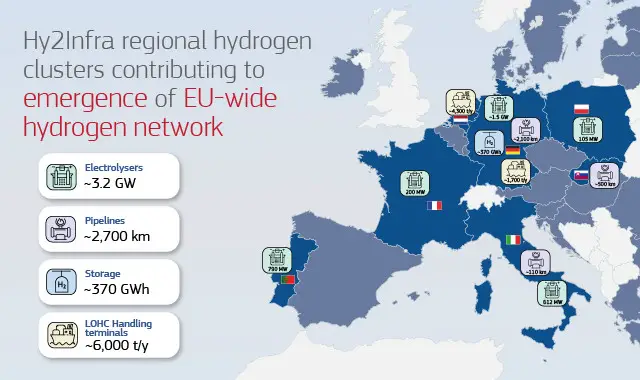
The Significance of the IPCEI Hy2Infra Hydrogen Project
The IPCEI Hy2Infra Hydrogen Project contributes to a common objective by supporting the deployment of hydrogen infrastructure important for achieving the objectives of key EU policy initiatives. These include the European Green Deal, the REPowerEU Plan, and the EU Hydrogen Strategy. The 33 projects included in the IPCEI project are highly ambitious ones to develop infrastructure that goes beyond what the market currently offers.
Firstly, the project will lay the building blocks for an integrated and open hydrogen network. The network will be accessible on non-discriminatory terms. It will also enable the market ramp-up of renewable hydrogen supply in the continent of Europe. This will further facilitate the decarbonization of economic sectors that depend on hydrogen. This will significantly reduce their carbon emissions. The technical knowledge and experience acquired during the construction and first years of operation of the projects will be widely shared by participating companies.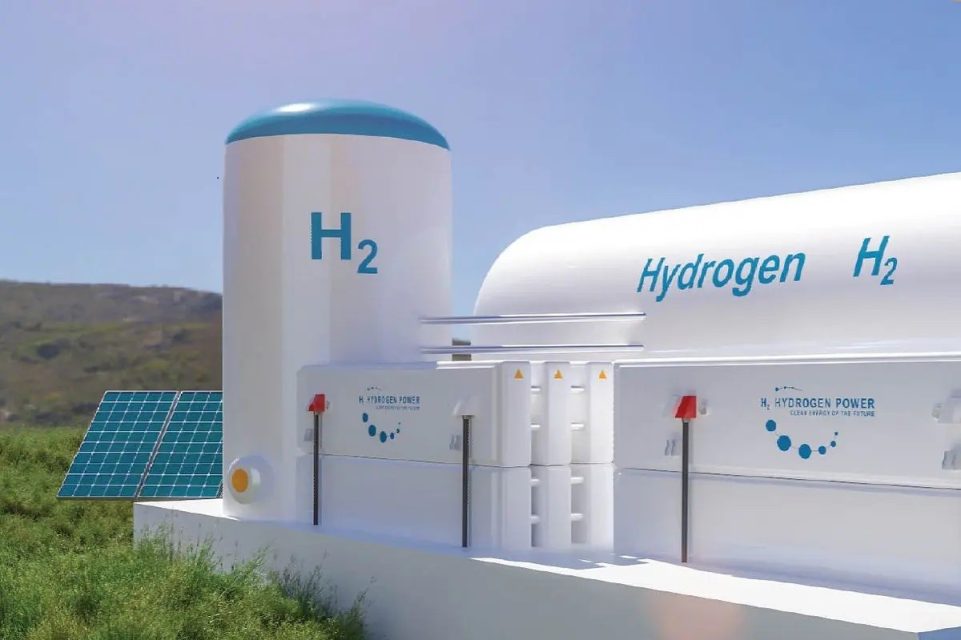
Those Involved in the Project
The IPCEI will involve 33 projects by 32 companies, including five SMEs. The participating companies will closely cooperate through numerous collaborations. They will also collaborate with external partners, such as transmission system operators and potential off-takers. The universities, research organizations, and equipment suppliers across Europe, including SMEs. Several Member States (France, Germany, Poland, and Portugal) included their participation in the IPCEI Hy2Infra in their Recovery and Resilience Plans. This can partially fund some of their projects through the Recovery and Resilience Facility.
Also read: European Commission to enhance renewable energy in Africa
Also read: European commission boosts renewable energy in Zambia