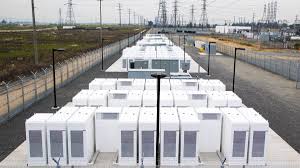
The Moss Landing battery storage expansion project remains one of California’s largest planned energy storage developments despite significant changes since it was first announced. The project was originally proposed to double the battery storage capacity at the Moss Landing Energy Storage Facility, reinforcing California’s renewable energy ambitions and grid reliability. However, recent operational challenges at the existing facility, including the January 2025 fire, have shifted attention toward recovery, remediation, and long-term safety while the proposed expansion remains on hold.
The project was initially designed to expand the existing Moss Landing Energy Storage Facility from 750 MW/3,000 MWh to approximately 1,500 MW/6,000 MWh, making it one of the world’s largest battery storage developments. The expansion received regulatory approval in 2020, although implementation has always depended on market conditions and commercial viability.
As the Snowshoe BESS project progresses in Minnesota, it demonstrates how developers continue investing in utility-scale battery storage to strengthen grid reliability and support greater renewable energy integration across the United States.
Moss Landing Battery Storage Expansion Project Current status (2026)
As of 2026, Vistra has not commenced construction on the proposed 1,500 MW expansion. Instead, the company is prioritizing cleanup and remediation at the existing Moss Landing Energy Storage Facility following the January 2025 fire that damaged much of the original Phase I battery installation. Federal and state agencies continue overseeing battery removal, environmental monitoring, and site stabilization activities. Battery removal is expected to continue through 2026 before any future expansion plans are reconsidered.
The original Moss Landing facility remains a significant asset despite the incident. Phase II continues operating separately, while the damaged Phase I section is undergoing decommissioning and environmental remediation. Vistra has not announced a revised construction schedule for the larger expansion.
California continues to expand battery storage capacity through multiple projects as it works toward its clean energy targets. However, the Moss Landing fire has prompted closer scrutiny of battery safety standards, emergency response procedures, and technology selection for future projects.
Earlier Planning of Moss Landing Battery Storage by Vistra Energy
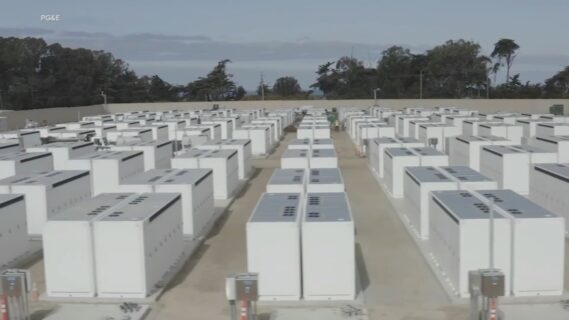
Vistra Energy, a retail power company has proposed a new battery project in the state of California that will double the output of the world’s largest battery storage facility that they recently completed. The company inaugurated the 300MW / 1,200MWh Moss Landing Energy Storage Facility just before the end of 2020 in California’s Monterrey Bay and announced its commissioning early in 2021. A month ago, towards the end of January, Vistra Energy representatives appeared at a meeting of the city council of Morro Bay, about 150km south of Moss Landing to discuss future plans for a 600MW standalone battery energy storage facility.
Also Read: Construction of 1.1GW solar and storage project in California begins
The Morro Bay Energy Storage Facility would be used to absorb excess renewable generation, mainly solar, and put it onto the grid at times when it was most needed. The project would “revitalize” an existing natural gas power plant site, occupying 22 acres of the 107 acre complex with roughly 180,000 lithium-ion batteries housed in three purpose-built, 30ft “low profile” buildings. Other advantages of this particular site for construction, according to the Vistra representatives, are that it would tie into local utility Pacific Gas & Electric’s (PG&E’s) active transmission lines with three new project-level substations connecting to PG&E’s existing substation built to take electricity away from the gas power plant which was there already.
The proposed Vistra energy battery project development is being timed to coincide with the upcoming retirement of California’s Diablo Canyon nuclear power plant, which is scheduled to happen during 2024. If the Morro Bay project can begin construction next year, Cherniss said, it could be online around the time that retirement happens. The project could help the state meet its urgent needs for Resource Adequacy while contributing to Vistra’s emissions reduction goals. The project is a new part of Vistra’s plans ahead, with the power retailer recently unveiling a plan called ‘Vistra Zero’ which promises to accelerate its fossil fuel retirements including 7,500MW of coal by 2027 and deploy around 9GW of renewables around the US by 2030.
Project Fact Sheet
Project name: Moss Landing Battery Storage Expansion Project
Location: Moss Landing, Monterey County, California, USA
Estimated investment: Approximately $1.5 billion
Project type: Utility-scale Battery Energy Storage System (BESS)
Existing facility capacity: 750 MW / 3,000 MWh
Proposed expansion capacity: 1,500 MW / 6,000 MWh
Project purpose: Increase grid reliability and renewable energy storage
Technology: Lithium-ion battery energy storage system
Grid connection: California Independent System Operator (CAISO)
Original approval: 2020
Current status (2026): Expansion remains unbuilt; project timeline under review while cleanup and remediation continue following the January 2025 fire.
Next milestone: Completion of battery removal, environmental remediation, and future investment decision.
Project Team
Owner: Vistra Corp.
Project developer: Vistra Zero
Facility owner/operator: Vistra Corp.
Host site: Moss Landing Power Plant
Grid operator: California Independent System Operator (CAISO)
Environmental oversight: U.S. Environmental Protection Agency (EPA)
State regulatory oversight: California Public Utilities Commission (CPUC)
Local authority: Monterey County
Environmental monitoring: California Environmental Protection Agency (CalEPA)
Engineering contractor: Not publicly announced
EPC contractor: Not publicly announced
Battery supplier: LG Energy Solution (existing phases)
Remediation contractor: American Battery Technology Company (cleanup activities)
Operations and maintenance: Vistra Corp.

Leave a Reply