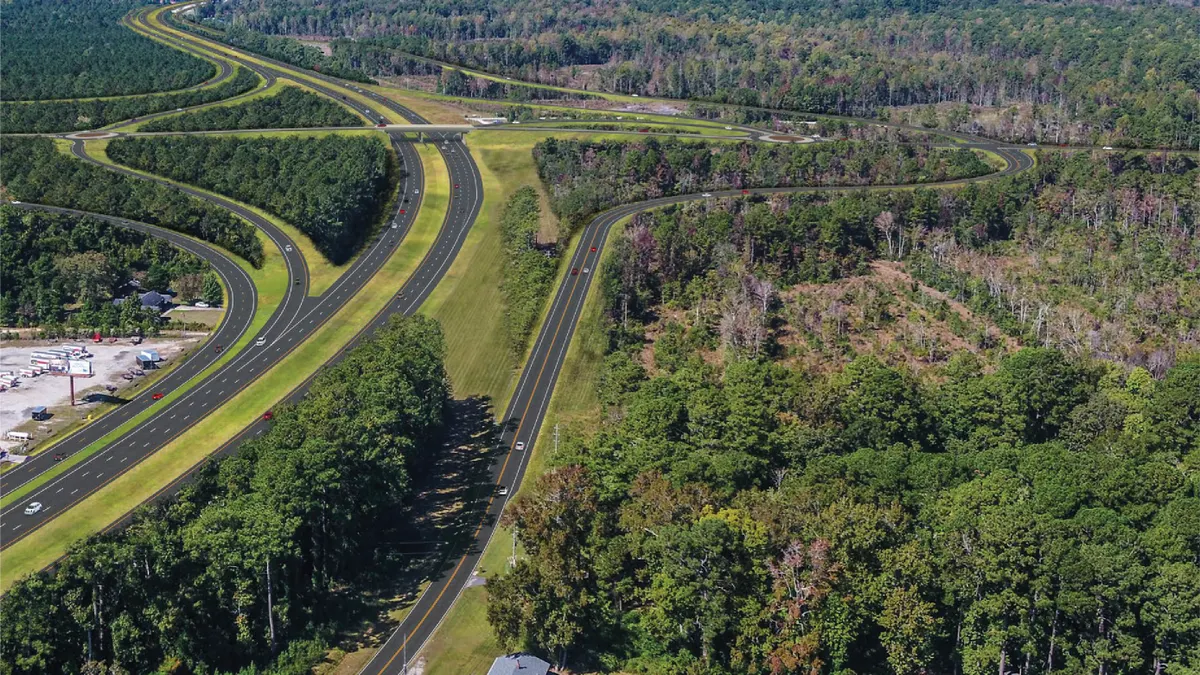
Fayetteville Outer Loop and Havelock Bypass mark a major milestone for transportation in North Carolina as Balfour Beatty delivers two highway projects valued at a combined $1.3 billion. The openings strengthen regional mobility, ease congestion, and improve freight reliability across key corridors. Moreover, both projects reflect years of coordination with the North Carolina Department of Transportation. As a result, communities in Fayetteville and eastern North Carolina now benefit from safer and faster travel routes.
Transformation of Regional Mobility
The Fayetteville Outer Loop completes a critical segment of Interstate 295 around the western side of Fayetteville. The loop connects U.S. 401 to Interstate 95, creating a continuous bypass. Consequently, motorists can avoid downtown congestion and reduce travel times.
The project spans approximately 39 miles and supports access to Fort Bragg. Therefore, military logistics and daily commuting operations gain measurable efficiency. In addition, freight operators can move goods more predictably across Cumberland County.
Meanwhile, the Havelock Bypass introduces a new 9.2-mile four-lane divided highway along the U.S. Route 70 corridor. The route diverts traffic from downtown Havelock and improves hurricane evacuation capacity. Furthermore, it enhances connectivity between inland communities and coastal destinations.

Economic Impacts and Gains
These projects collectively represent an infrastructure investment exceeding $1.3 billion. The Fayetteville Outer Loop accounts for roughly $1 billion of that total. The Havelock Bypass contributes approximately $323 million.
Because of this scale, the projects generated thousands of construction jobs over multiple phases. In turn, local suppliers, subcontractors, and service providers supported sustained economic activity. Additionally, improved highway capacity attracts commercial development near interchanges.
The Outer Loop encourages retail and mixed-use growth near new access points. Similarly, the Havelock Bypass supports tourism and defense-related industries. Thus, both corridors position North Carolina for long-term economic expansion.
Engineering Scope and Construction Highlights
Balfour Beatty delivered complex interchange systems, grade separations, and bridge structures across both projects. Crews executed extensive earthworks and drainage installations under strict safety controls. Moreover, teams coordinated closely with state inspectors to maintain compliance standards.
The Havelock Bypass required environmental mitigation measures near sensitive areas. Engineers incorporated wildlife crossings and storm water management systems. As a result, the project balances mobility improvements with environmental stewardship.
The Fayetteville Outer Loop demanded phased construction sequencing to maintain traffic continuity. Therefore, project managers implemented detailed logistics planning and real-time coordination. This approach minimized disruption to surrounding communities.
Similarly, Balfour Beatty continues to strengthen its U.S. highways portfolio beyond North Carolina. In Texas, the contractor secured a major interstate reconstruction scheme, further expanding its large-scale transport delivery record. As previously reported in Balfour Beatty wins $889M contract to rebuild stretch of I-30 through Dallas, the company is modernizing critical roadway infrastructure to improve safety and capacity. Together, these developments reinforce Balfour Beatty’s growing presence in complex, high-value road projects across the United States.
Long-Term Transportation Impact
Both highways now strengthen statewide freight corridors and improve resilience during extreme weather events. In particular, the Havelock Bypass enhances evacuation efficiency along the coast. Likewise, the Outer Loop reduces bottlenecks along major military and commercial routes.
State transportation leaders emphasize that these projects complete long-planned corridor strategies. Consequently, North Carolina advances its broader infrastructure modernization agenda. Balfour Beatty also reinforces its position in large-scale U.S. civil construction.
Project Fact Sheet: Fayetteville Outer Loop and Havelock Bypass
Project Name: Fayetteville Outer Loop
Location: Fayetteville, Cumberland County, North Carolina
Highway Designation: Interstate 295
Owner: North Carolina Department of Transportation
Lead Contractor: Balfour Beatty (U.S. Civils Division)
Total Estimated Cost: $1 billion USD
Length: Approximately 39 miles
Scope of Work:
- Multi-lane interstate construction
- Interchanges and flyovers
- Bridge structures
- Drainage and storm water systems
- Intelligent transportation features
Primary Objectives:
- Congestion relief
- Military access improvement
- Freight mobility enhancement
- Regional economic development
Project Name: Havelock Bypass
Location: Craven County, North Carolina
Highway Designation: U.S. Route 70
Owner: North Carolina Department of Transportation
Lead Contractor: Balfour Beatty (U.S. Civils Division)
Total Estimated Cost: $323 million USD
Length: Approximately 9.2 miles
Scope of Work:
- Four-lane divided highway construction
- Interchanges and bridges
- Environmental mitigation systems
- Storm water and erosion controls
Primary Objectives:
- Traffic diversion from downtown Havelock
- Hurricane evacuation improvement
- Safety and travel time reduction
- Coastal corridor connectivity
Project Team: Fayetteville Outer Loop and Havelock Bypass
Owner / Client: North Carolina Department of Transportation
Prime Contractor: Balfour Beatty – U.S. Civils Division
Construction Management:
- Balfour Beatty project executives
- On-site civil engineers
- Field superintendents
- Safety and compliance officers
- Engineering & Design Coordination:
- Balfour Beatty in-house design professionals
- Transportation and structural engineering consultants
Environmental & Regulatory Compliance:
- Environmental specialists
- Storm water management engineers
- State regulatory inspectors
Leave a Reply