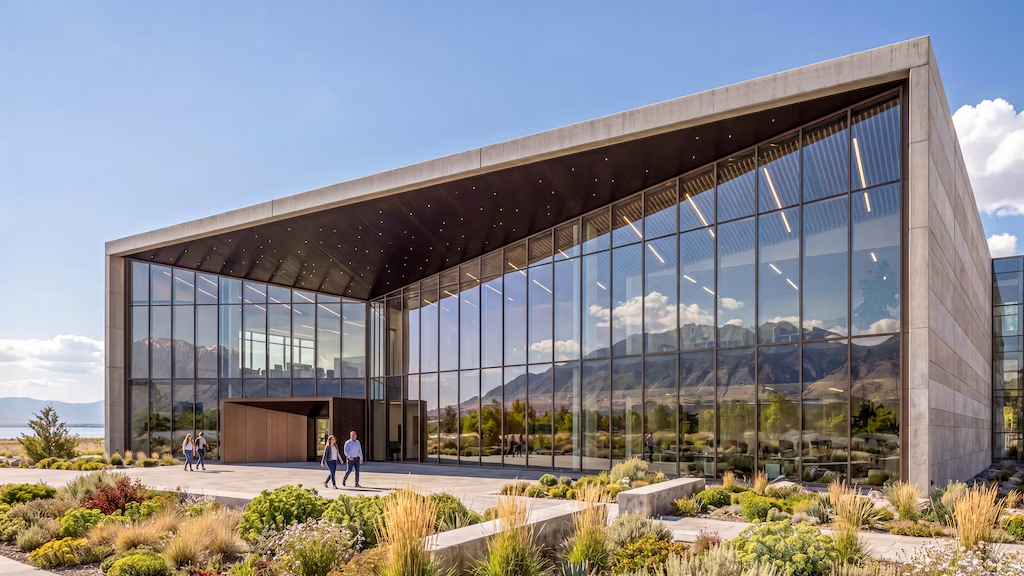
The proposed $100bn Stratos data center will have to restrategize as leaders are opposing plans for the campus to run on natural gas alone. The 40,000-acre data center planned for Northern Utah has been a topic of conversation across the state. One of the main reasons is the pollution many expect it will contribute to a region already struggling with smog. A report by the Military Installation Development Authority, MIDA, had noted earlier that the plant would rely on gas.
The plant that will generate electricity for the data complex would be powered “100 percent off the Ruby Pipeline,” a MIDA official said in April. The military has been on the involvement front when it comes to data centers recently such as the negotiations with CyrusOne on data centers build out in military bases. However, after weeks of protests, reams of comments against the project, and disgruntled Utahns digging into state leaders’ finances and family businesses, the narrative is changing. The state’s Republican governor has now asserted the project will “never” be solely powered by natural gas. Data center are facing pushbacks and setbacks all across the United States with the Mountain Road Tech Park data center the latest to fall under the pressure.
Outlook on Energy Sources for Stratos Data Center in Utah
Governor Spencer Cox has asserted that the Stratos data center in Utah will “never” run solely on natural gas. “That’s never going to happen,” Governor Spencer Cox told The Salt Lake Tribune. “The very first phase will be natural gas, but the other phases should not be. They should be nuclear, and they should be geothermal, and solar and other technology.” So far, the proposed project has been light on details.
Nonetheless, it has been noted that at full build, it will be one of the world’s largest data centers. However, the scale of the campus is causing a reason for concern among environmental advocates and some residents on its impact. According to some estimates, a 9-gigawatt power plant entirely powered by natural gas could raise Utah’s carbon emissions by 64 percent.
Although it’s still unclear how much water the facility would need, the project’s developers have said they’re working to secure 13,000 acre-feet in Hansel Valley and the surrounding area. For these reasons, it is not a shock that opposition to the proposal has been intense. A water right filed to support the data center and power plant received nearly 4,000 letters of protest this month.
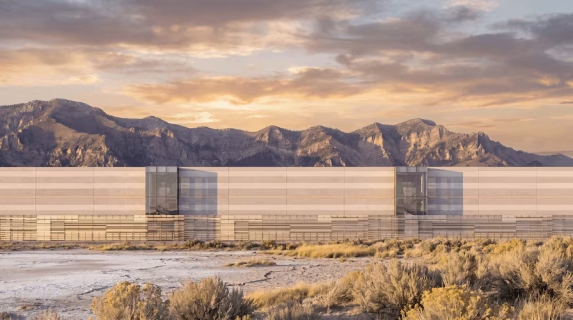
Project Factsheet:
- Project Name: Stratos Data Center Campus
- Location: Northern Utah, USA
- Estimated Investment Value: $100 billion
- Project Type: Hyperscale AI and cloud data center campus
Timeline
- Project proposal publicly discussed: 2026
- Initial power strategy announcement: 2026
- Public opposition and protests intensified: 2026
- Energy strategy reassessment: Ongoing
Site & Scale
- Total project site: Approximately 40,000 acres
- Projected power demand: Up to 9 GW
- Potential water requirement: 13,000 acre-feet
- Expected status at full build-out: Among the world’s largest data center campuses
Key Contractors/Stakeholders
- Project developer: Stratos data center development group
- State authority involved: Military Installation Development Authority (MIDA)
- Key government figure: Governor Spencer Cox
- Energy infrastructure link: Ruby Pipeline
- Local stakeholders: Environmental advocates and Utah residents
Infrastructure Scope
- Massive multi-building hyperscale data center campus
- On-site power generation infrastructure
- Initial natural gas-powered energy systems
- Future integration of nuclear, geothermal and solar energy sources
- Water supply infrastructure for long-term operations
Strategic Objectives
- Establish one of the largest AI and cloud data campuses globally
- Support growing hyperscale computing and digital infrastructure demand
- Diversify long-term energy sources beyond natural gas
- Expand technology and economic development in Utah
Current Status
- Project facing significant public and environmental opposition
- State leaders opposing exclusive reliance on natural gas
- Developers expected to revise long-term energy strategy
- Water rights proposal has received thousands of protest letters




Leave a Reply