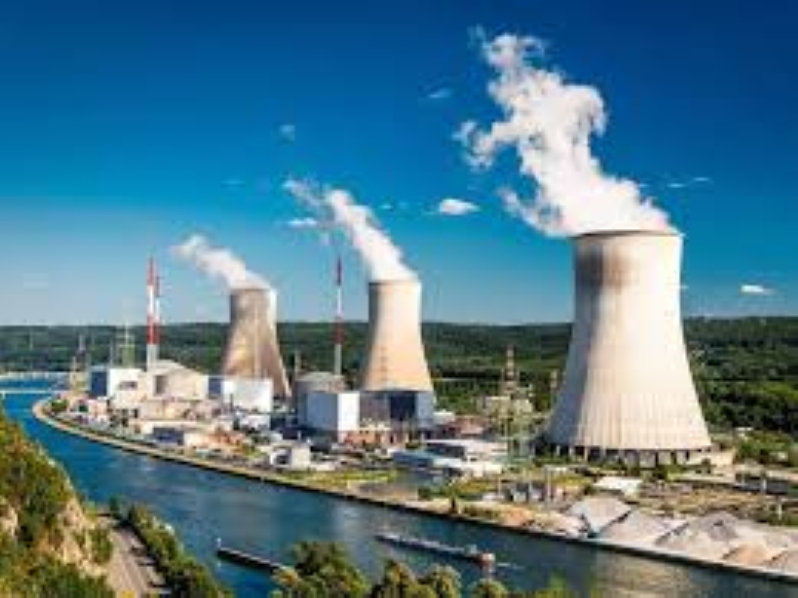
Adani Group has unveiled plans to become a major player in the India’s emerging private nuclear power sector, with billionaire chairman Gautam Adani announcing a 10GW nuclear power project target by 2035. The Adani announcement is one of the most significant private-sector commitments to nuclear energy since India opened the sector to domestic and foreign investment. It also forms part of the group’s broader strategy to build an integrated energy platform spanning thermal, renewable, hydroelectric, gas and nuclear power.
The announcement for the 10GW nuclear power project in India was made during the Adani Group’s Annual General Meeting on 24 June 2026. It also comes amid sweeping reforms in India’s nuclear industry designed to accelerate investment and support the country’s long-term decarbonization objectives.
Nuclear ambitions take center stage
Speaking at the AGM, Gautam Adani described the group’s entry into nuclear energy through Adani Atomic Energy. Adani also hailed the subsidiary a strategic step toward supporting India’s future energy security. The 10GW nuclear capacity target by 2035 would place it among the country’s largest nuclear power operators. It would also, potentially, make the Adani Group the largest private-sector participant in the Indian nuclear energy market.

The announcement follows the establishment of Adani Atomic Energy Limited (AAEL). It also follows project development subsidiaries created to pursue opportunities in the newly liberalized sector. Earlier this year, Adani Power incorporated a dedicated nuclear subsidiary, signaling its intention to participate actively in upcoming nuclear projects as regulatory barriers are removed.
Adani Group has also identified site for the 10GW nuclear power plant development in India, although specific project locations have not yet been disclosed.
India’s nuclear sector opens to private investment
Adani’s plans are being enabled by one of the most significant policy shifts in India’s energy sector in decades. Historically, nuclear power generation was controlled almost exclusively by state-owned Nuclear Power Corporation of India Limited (NPCIL) which has overseen projects such as India’s first indigenously developed reactor at Kakrapar Atomic Power Project in Gujarat. However, legislation approved in late 2025 opened the industry to private and foreign participation. This was done in an effort to accelerate deployment and attract billions of dollars in investment.
India currently operates about 8GW-9GW of nuclear generating capacity. The country has also set a national target of increasing this figure to 100GW by 2047, creating one of the world’s largest potential nuclear development pipelines.
Additionally, government officials have previously indicated that India could seek approximately US$26 billion in private-sector nuclear investments as part of its long-term clean energy strategy.

Link to AI and data center growth
Adani’s nuclear ambitions are closely aligned with its broader infrastructure and data center construction activities. Earlier this year, the group announced plans to invest approximately US$100 billion in AI-ready data centers by 2035. This is while also targeting 3GW of data-center capacity by 2030. By extension, Adani is banking on reliable, round-the-clock low-carbon electricity – from nuclear – as essential for supporting India’s expanding digital economy.
Globally, a resurgence in nuclear investment is being driven by similar factors. This also includes the increasing electricity demand from AI data centers and cloud computing infrastructure. Countries including Canada, Sweden and the U.S. – and others – have recently announced new nuclear development initiatives aimed at meeting future energy requirements.
Why is Adani Group planning to build a 10GW nuclear power project in India by 2035
Adani Group’s ambitious planned entry into nuclear power is a significant milestone for India’s energy transition. While the conglomerate has already established itself as one of the country’s largest developers of renewable energy, ports, transmission infrastructure and thermal power assets, nuclear energy would come as a game-changer. It would provide a complementary source of dependable baseload generation capable of supporting industrial growth and data-center expansion. Furthermore, Adani Group’s energy subsidiary Adani Power also plans to invest over $20 billion by 2031 to double its generation capacity to 45GW.
The timing is also particularly significant because India’s electricity demand continues to grow rapidly. This growth is charted parallel to urbanization, manufacturing expansion and global digitalization.

By combining renewable energy, legacy generation and nuclear power, Adani is positioning itself to become one of the country’s most diversified energy providers. The proposed 10GW target also signals confidence that India’s new regulatory framework. This is as it promises to open the doors to private-sector participation in a sector previously dominated by government entities.
Latest Adani nuclear power project in India: Fact sheet
Developer: Adani Group through recently formed subsidiary Adani Atomic Energy
Capacity Target: 10GW
Target Completion: 2035
Status: Announced; In planning phase
Project Significance: India’s target of 100GW nuclear capacity by 2047
Key Driver: Rising electricity demand, decarbonization and AI data center growth
Who is involved in the development
Developer
- Adani Group
- Adani Power Limited
- Adani Energy Solutions
Regulatory Stakeholders
- Nuclear Power Corporation of India Limited (NPCIL)
- Department of Atomic Energy, India
- Atomic Energy Regulatory Board (AERB)



Leave a Reply