
California high-speed rail project has entered a new development phase after the California High-Speed Rail Authority appointed an international consortium to support future expansion planning. The move strengthens operational planning for the estimated $128 billion rail program while exploring faster delivery methods, private investment opportunities, and long-term public-private partnerships. The agreement also supports expansion beyond the line currently under construction between Merced and Bakersfield, reinforcing California’s ambition to deliver the United States’ first true high-speed rail network.
The Authority signed a Co-Development Agreement with Momentum Alliance Partners, beginning a collaborative phase lasting up to 30 months. During this period, the consortium will evaluate construction sequencing, financing models, commercial opportunities, operational concepts, and future delivery strategies for additional high-speed rail segments.
California High-Speed Rail Project targets faster expansion
The agreement focuses on expanding the network beyond the active Merced-to-Bakersfield construction section. Consequently, the consortium will study practical ways to accelerate delivery while attracting private capital. Keolis and SNCF Voyageurs will jointly provide operations and maintenance expertise through a dedicated venture. Their role will help shape future service planning, maintenance strategies, and operational readiness.
Keolis brings more than two decades of commuter rail experience in the United States. Meanwhile, SNCF Voyageurs contributes over 40 years of high-speed rail operating expertise from France and Europe. Together, the companies will advise the Authority on efficient operating models suitable for California’s future high-speed network.
Momentum Alliance Partners also includes infrastructure investors, engineering consultants, transport planners, and systems specialists. Their combined experience covers several internationally recognized rail projects. The consortium previously contributed to projects such as Montreal’s REM, Grand Paris Express, Brightline West, and sections of California’s high-speed rail program. Therefore, the Authority expects valuable international experience during project development.
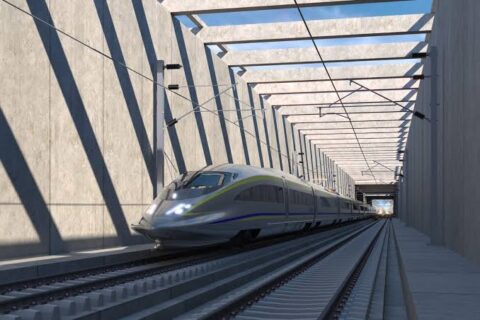
California High-Speed Rail Project construction continues in Central Valley
Importantly, the new agreement does not alter ongoing construction activities. he Authority continues building the initial operating section between Merced and Bakersfield. Construction crews remain focused on guideways, structures, bridges, track systems, and supporting infrastructure across California’s Central Valley.
Recently, the Authority also advanced major procurement activities for track, electrification, communications, and train control systems. Those contracts will prepare completed civil structures for high-speed passenger operations. The co-development agreement instead concentrates on future expansion phases extending beyond the initial operating section.
During the next 30 months, consortium members will identify investment opportunities, optimize construction sequencing, evaluate commercial strategies, and recommend public-private partnership structures. Officials believe these studies could improve affordability while accelerating future construction packages. Private-sector participation may also reduce delivery risks and strengthen long-term financial sustainability.
California High-Speed Rail Project strengthens long-term delivery strategy
California continues pursuing one of North America’s largest transportation infrastructure programs. The Authority estimates the complete statewide system will cost approximately US$128 billion under current planning assumptions. The network will eventually connect San Francisco, the Central Valley, Los Angeles, and Anaheim using electrified high-speed trains capable of operating at up to 220 mph.
The latest agreement reflects growing emphasis on combining public investment with private expertise. Instead of awarding another construction package, the Authority has prioritized strategic planning before launching additional expansion contracts.
That approach allows technical specialists, operators, financiers, and engineers to jointly evaluate practical solutions before future procurement begins. If successful, the partnership could accelerate future construction while supporting reliable operations across California’s expanding high-speed rail network.
The latest partnership also complements broader rail infrastructure investments across California. In Southern California, major civil works have already been completed on the Foothill Gold Line Rail Project, expanding urban transit connectivity while the California High-Speed Rail Project focuses on delivering intercity high-speed services.
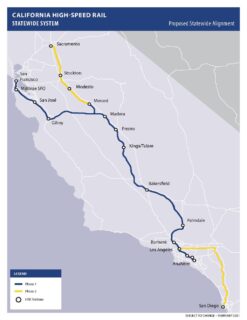
Project Fact Sheet
Project: California High-Speed Rail Project
Estimated Cost: Approximately $128 billion
Project Type: High-speed passenger railway
Location: California, United States
Current Focus: Expansion beyond the Merced-Bakersfield section
Agreement: Co-Development Agreement
Development Phase: Up to 30 months
Current Construction: Initial operating segment remains under active construction
Primary Objective: Evaluate accelerated delivery, private investment, financing strategies, and public-private partnerships
Future Scope: Expansion toward additional statewide high-speed rail segments
Maximum Operating Speed: Up to 220 mph
Key Deliverables: Operations planning, maintenance strategy, delivery sequencing, commercial development, financing evaluation, and expansion planning
Project Team
Project Owner: California High-Speed Rail Authority
Lead Development Consortium: Momentum Alliance Partners
Operations and Maintenance Partners:
- Keolis
- SNCF Voyageurs
Infrastructure Investment Partners:
Engineering Consultants:
Rail Engineering Consultant: SYSTRA
Transport Planning Consultant: Steer
Role of Consortium: Evaluate financing, delivery models, operational concepts, systems integration, commercial development, infrastructure sequencing, and long-term expansion strategies.

Leave a Reply