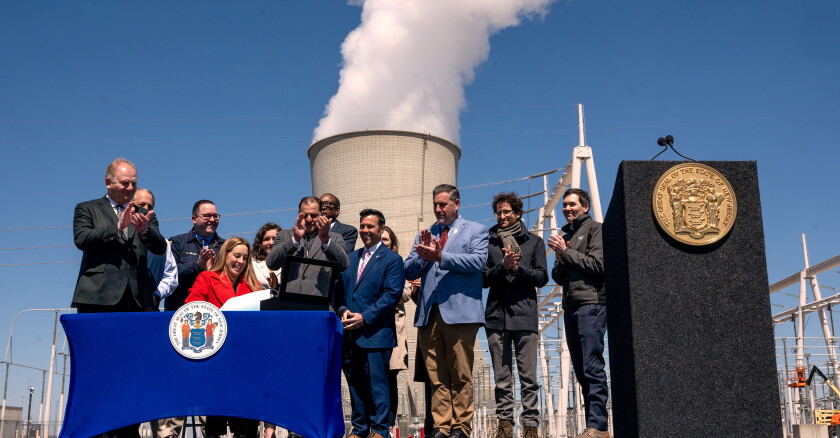
New Jersey nuclear project has entered a crucial planning phase after Governor Phil Murphy signed legislation directing the state to pursue at least one advanced nuclear reactor with a minimum generating capacity of 1,100 MW.
The law authorizes the New Jersey Board of Public Utilities (BPU) to launch a competitive procurement process while establishing funding mechanisms that can support future construction. The initiative seeks to deliver reliable, carbon-free electricity, strengthen grid resilience, and prepare the state for rapidly growing power demand. Industry analysts estimate that constructing a next-generation nuclear facility of this scale could require an investment of approximately $15 billion, depending on the selected technology and site.
Unlike previous state energy initiatives, the legislation focuses on creating a clear pathway toward commercial deployment rather than selecting a reactor developer immediately. Instead, New Jersey will first invite qualified developers to submit proposals before evaluating technical capability, financial strength, environmental performance, and construction readiness. This competitive process is expected to attract several leading advanced reactor developers seeking to build one of the largest nuclear projects currently planned in the United States.
New Jersey Nuclear Project enters competitive procurement phase
The new legislation requires the New Jersey Board of Public Utilities to issue a Request for Expressions of Interest for developers capable of delivering at least 1,100 MW of advanced nuclear generation. Interested firms must demonstrate how their projects will improve electricity reliability, strengthen energy security, and provide affordable power to consumers.
Additionally, the legislation establishes an Advanced Nuclear Development Fund to support project development. The fund may receive revenue through an Advanced Nuclear Development Charge collected from electricity customers. Approved projects may also qualify for Advanced Nuclear Energy Certificates, providing developers with long-term financial certainty.
State officials believe the financing framework will encourage private investment while reducing project risks during planning, licensing, engineering, and construction. Consequently, developers can begin preparing commercial proposals with greater confidence.
The legislation also outlines strict evaluation criteria. Project proposals must address construction schedules, financing plans, workforce development, environmental compliance, economic benefits, and long-term operational performance before receiving state approval.
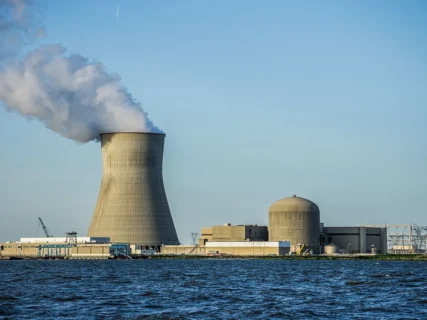
New Jersey Nuclear Project strengthens future construction pipeline
The New Jersey Nuclear Project responds directly to increasing electricity demand driven by artificial intelligence data centers, advanced manufacturing, electrification, and population growth. As power consumption rises, state leaders view advanced nuclear technology as a dependable source of around-the-clock clean electricity.
Unlike traditional nuclear plants, advanced reactors incorporate passive safety systems, modular construction techniques, and simplified engineering designs. These features can reduce construction complexity while improving operational flexibility and enhancing long-term plant safety.
The project also complements broader federal efforts to accelerate advanced nuclear deployment across the United States. The U.S. Department of Energy continues supporting reactor demonstrations, domestic nuclear fuel production, supply chain development, and financing programs that can accelerate commercial construction.
Although New Jersey has not selected a reactor design, several advanced reactor technologies remain eligible under the procurement process. These include small modular reactors and other Generation IV technologies currently progressing through regulatory review and commercial development.
If construction proceeds, the project could create thousands of skilled jobs during engineering, site preparation, civil works, mechanical installation, electrical construction, and long-term plant operations. It would also generate significant opportunities for regional suppliers, contractors, and specialist manufacturers.
New Jersey Nuclear Project could reshape regional energy infrastructure
The legislation marks only the beginning of the project development process. Developers must still complete site selection, environmental impact assessments, Nuclear Regulatory Commission licensing, detailed engineering, financing arrangements, and final investment approval before construction can begin.
Nevertheless, the legislation provides one of the clearest state-level frameworks for developing advanced nuclear infrastructure in the United States. If successfully implemented, the New Jersey Nuclear Project could become a national model for delivering reliable, carbon-free electricity while supporting economic growth, modern infrastructure, and long-term energy security.
The state’s initiative also reflects growing confidence in next-generation reactor construction across the United States. Recent milestones, including the Hermes Low-Power Demonstration Reactor, have helped demonstrate the commercial progress of advanced nuclear technologies and their role in supporting future clean energy infrastructure.
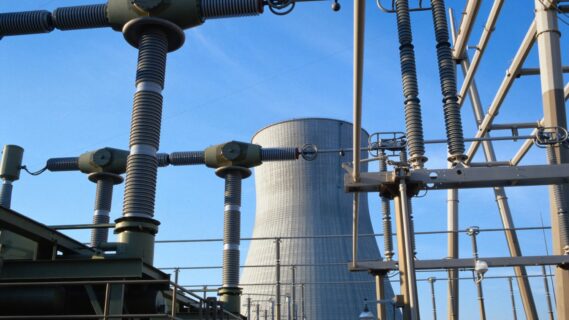
Project fact sheet
Project name: New Jersey Nuclear Project
Location: New Jersey, USA
Estimated investment: Approximately $15 billion
Generating capacity: Minimum 1,100 MW
Project type: Advanced nuclear power generation project
Technology: Advanced nuclear reactor (technology to be selected through competitive procurement)
Status: State legislation enacted; procurement process being prepared
Procurement authority: New Jersey Board of Public Utilities (BPU)
Funding mechanisms:
- Advanced Nuclear Development Fund
- Advanced Nuclear Development Charge
- Advanced Nuclear Energy Certificates
Primary objective: Deliver reliable carbon-free electricity while improving grid resilience
Key benefits:
- Energy security
- Reduced emissions
- Economic development
- Grid reliability
- Skilled employment
Major approvals pending:
- Site selection,
- Environmental reviews
- NRC licensing
- Engineering design
- Financing
- Final investment decision
Expected construction start: To be determined following developer selection and regulatory approvals
Project team
Project owner: State of New Jersey
Lead agency: New Jersey Board of Public Utilities (BPU)
Legislative authority: State of New Jersey Legislature
Executive authority: Office of Governor Phil Murphy
Nuclear regulator: U.S. Nuclear Regulatory Commission (NRC)
Federal support: U.S. Department of Energy (potential funding and technical support)
Project developer: To be selected through a competitive procurement process
Technology provider: To be selected
Engineering consultant: To be appointed
Environmental consultant: To be appointed
Construction contractor: To be appointed
Grid integration partners: Regional transmission operators and electric utilities (to be confirmed)
Funding oversight: Advanced Nuclear Development Fund administration
Future supply chain partners: U.S.-based nuclear equipment manufacturers and specialist construction contractors

Leave a Reply