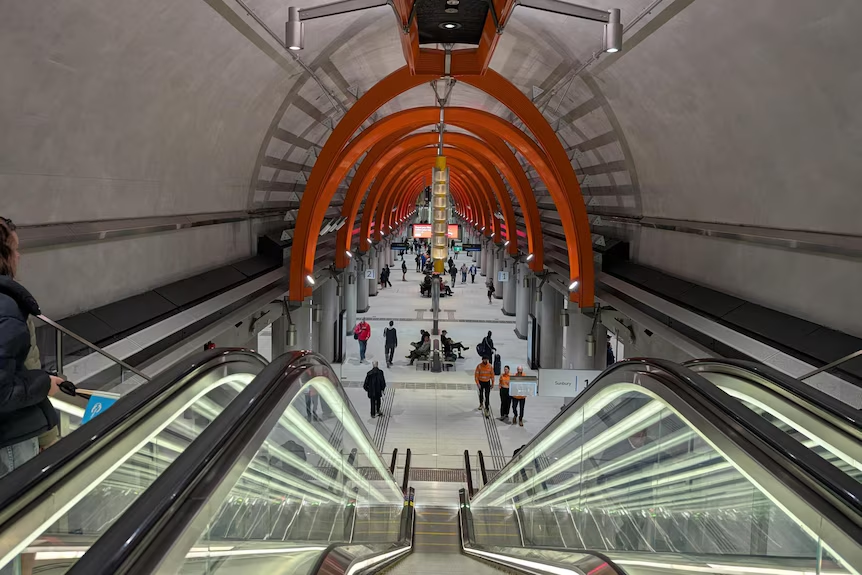
The Melbourne Metro Tunnel project has reached full completion, marking a major milestone in Victoria’s rail infrastructure transformation. The $15 billion underground rail system is now operational, connecting the Sunbury, Cranbourne, and Pakenham lines through five new stations and a 9km twin-tunnel corridor. Moreover, the project has significantly increased metropolitan rail capacity by enabling high-frequency services through the city core.
According to official project updates, full services commenced following staged openings and final system integration works. Consequently, Melbourne’s rail network has entered a new operational phase supported by modern signaling and expanded service frequency. Additionally, the Metro Tunnel improves access to key precincts including Parkville’s health and education hub. Therefore, the project now functions as a central spine in the city’s public transport system. Ultimately, it lays the foundation for future network extensions, including the planned Melbourne Airport Rail connection.
There has also been escalator outages at Parkville Station and State Library Station. The other new stations opening today are Town Hall and Arden, with the new line running for almost 100 kilometers. It represents the biggest upgrade to Melbourne’s rail in 40 years, doubling the size of the city’s underground rail network. Furthermore, it will ease congestion on the city loop. Australia has made major advancements in its road projects with WestConnex, Australia’s largest road project demonstrating this commitment.
Melbourne Metro Tunnel project strengthens cross-city rail connectivity and capacity
The Melbourne Metro Tunnel project strengthens cross-city rail connectivity by linking western and southeastern rail corridors through a dedicated underground pathway. Moreover, the system removes pressure from the City Loop by redirecting high-demand lines through a separate high-capacity tunnel. The five new underground stations—Arden, Parkville, State Library, Town Hall, and Anzac—now support increased passenger volumes and improved service reliability. Consequently, trains operate at higher frequencies with reduced congestion across central Melbourne.
Additionally, the project integrates advanced signaling technology to support modern metro-style operations. However, final integration required extensive testing and staged commissioning before full network deployment. In addition, supporting infrastructure upgrades were delivered across multiple suburban corridors to align with the new service patterns. Therefore, the Metro Tunnel now functions as a core enabler of Melbourne’s expanded rail timetable.
Melbourne Metro Tunnel project reaches operational maturity with full network integration
The Melbourne Metro Tunnel project has now reached operational maturity as full network integration continues across Victoria’s rail system. Moreover, services running through the tunnel now form part of a restructured timetable that redistributes passenger flows across multiple lines. Consequently, the Sunbury line and southeast corridors benefit from increased capacity and improved travel times.
Additionally, the project supports long-term urban growth by improving access to employment, health, and education precincts. However, ongoing optimization of timetables and network coordination continues to refine performance outcomes. In addition, freight and regional interfaces have been adjusted to support the new operational structure. Therefore, the Metro Tunnel is now fully embedded within Melbourne’s broader rail ecosystem, delivering long-term transport efficiency gains.
The Melbourne Metro Tunnel directly enables future expansion projects, particularly the Melbourne Airport Rail project, by unlocking critical network capacity through the city core. As detailed in the Melbourne Airport Rail coverage, early works are already progressing between Tottenham and Sunshine, where major track reconfiguration and station upgrades are underway.
Consequently, the capacity created by the Metro Tunnel provides the operational foundation for airport rail services to integrate into the metropolitan network. Moreover, Sunshine is being developed as a major interchange hub connecting regional, suburban, and future airport services. Therefore, both projects form a coordinated infrastructure strategy aimed at transforming Victoria’s rail connectivity and long-term transport resilience.
State of Affairs Regarding the Melbourne Metro Tunnel
The Melbourne Metro tunnel will a project that has been years in the making, with tunneling beginning in 2019. Boring machines were digging as deep as 40 meters underneath Melbourne to create the tunnels. It is the most striking of which are two twin tunnels that run for nine kilometers. However, the opening is not without controversy. Firefighters union wanting to delay it due to claims about dangerous radio faults within the new network.
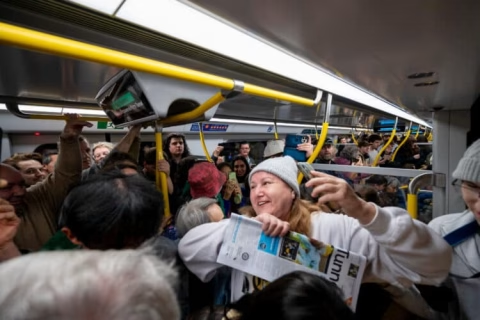
The tunnel is expected to provide more frequent services on the lines, while freeing up City Loop capacity. During the soft launch, or what the government has dubbed the “summer start”, Metro Tunnel trains will operate between 10am and 3pm on weekdays. The services will run every 20 minutes between Westall, on the Cranbourne-Pakenham line, and West Footscray on the Sunbury line. At weekends they will run every 20 minutes from 10am to 7pm, and extend to East Pakenham every 40 minutes and Sunbury every 60 minutes.
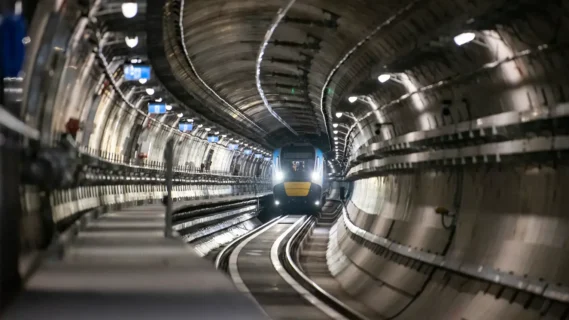
Project Factsheet
Significance:
- $15B rail mega-project and biggest upgrade in 40 years.
- Adds five new underground stations.
- Doubles Melbourne’s underground network and eases City Loop congestion.
Key Infrastructure:
- Two 9 km twin tunnels, up to 40 m deep.
- Nearly 100 km of new through-running rail.
- Modern platforms and high-capacity signaling.
Current Status:
- Opened after nearly 10 years of construction.
- Minor launch issues: fire alarm delays and escalator outages.
- Soft launch continues despite union concerns over radio faults.
Service Plan:
- Weekdays: 10am–3pm, every 20 minutes (Westall–West Footscray).
- Weekends: 10am–7pm, every 20 minutes; extended services every 40–60 minutes.
Project Team
Project developer: Victorian Government
Rail infrastructure owner: Victorian Government
Project delivery authority: Rail Projects Victoria
Program oversight body: Major Transport Infrastructure Authority (MTIA)
Funding partners: Victorian Government and Australian Government (co-funded infrastructure program)
Transport integration authority: Transport for Victoria
Rail network operator: Metro Trains Melbourne
Regional rail operator interface: V/Line
Systems and signaling contractor: High-capacity signaling and rail systems engineering consortiums
Design and engineering consultants: Multi-disciplinary international rail infrastructure firms (stations, tunneling, systems integration)
Construction contractors: PPP alliance and civil construction joint ventures across tunneling and station packages
Environmental and compliance advisors: State-appointed environmental assessment and infrastructure compliance consultants
Utility relocation partners: Victorian utility service providers (electricity, gas, water, telecommunications)
Community and stakeholder engagement teams: Victorian Big Build communications and engagement units
Airport interface stakeholder (future integration): Melbourne Airport and Melbourne Airport Rail delivery authorities

Leave a Reply