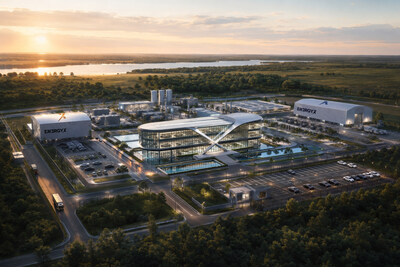
Two U.S.-based battery-materials firms announced Thursday, June 4, 2026, that they will build a lithium iron phosphate (LFP) cathode active material plant in Northeast Texas — a project company executives say could strengthen domestic battery supply chains and provide critical materials for energy storage, electric vehicles and defense applications.
Wildcat Discovery Technologies, a subsidiary of Sweden’s Holyvolt Group, and Energy Exploration Technologies (EnergyX) said they have formed a joint venture to develop a manufacturing facility on 330 acres at the TexAmericas Center near the Red River Army Depot and adjacent to EnergyX’s Project Lonestar™ lithium plant. The site in Hooks is positioned to leverage rail access, existing utilities and proximity to defense and battery-industry hubs.
The joint venture plans to produce about 15,000 metric tonnes per year of LFP cathode active material in the first phase and build the plant for future expansion. The partners estimate total investment will exceed $230 million and will supply substantial private funding. The companies will seek Department of Energy support to accelerate construction and scale-up.
The venture expects to create roughly 150 permanent, skilled jobs and as many as 800–1,200 construction and indirect jobs in the region. Company statements said hiring and training plans will involve local workforce partners, community colleges and veterans’ groups to fill roles such as chemical operators, technicians, engineers and maintenance staff.
Strategic supply advantage
A central pillar of the partnership is EnergyX’s plan to supply most — if not all — of the lithium carbonate required for cathode production under commercially favorable terms, including a discount, plus a price floor and ceiling. The partners note that lithium precursor costs can account for 60–85% of LFP cathode production costs, citing industry estimates, and that securing stable, affordable lithium gives the joint venture a competitive edge versus many current LFP producers that remain exposed to price volatility.
EnergyX also controls roughly 50,000 acres of lithium mining rights underneath the co-located production facility and its Lonestar™ plant, the companies said. Both firms have previously demonstrated production at smaller scale — Wildcat in San Diego and EnergyX in Hooks — and have supplied sample materials to customers across energy storage, mobility and defense markets.
Additionally, Texas is attracting growing investment in advanced manufacturing, including the recently announced New 4.6 GW solar module manufacturing facility in Houston. This momentum reflects the state’s strong industrial base, logistics access, and expanding role in U.S. clean energy and industrial production.
Also, this project reflects the same broader shift toward strengthening domestic battery materials supply chains. While the Texas project focuses on lithium iron phosphate cathode production, it complements upstream and midstream developments such as Electra Battery Materials’ proposed nickel refinery study in the southeastern United States, which targets critical inputs needed for advanced battery manufacturing.
Industry and geopolitical context
LFP cathode materials, prized for safety, cost and cycle life, are widely used in battery packs for grid storage, commercial vehicles and some electric cars. But most LFP production today is concentrated in Asia. Particularly China, raising concerns in Washington and industry circles about supply-chain resilience and national security. The new plant aims to create a U.S.-controlled pathway from domestic lithium resources through cathode manufacturing to finished battery components.
“This project is designed to help close that gap,” Wildcat CEO Mark Gresser said in a statement, noting the companies’ complementary strengths in cathode technology and domestic lithium supply. EnergyX founder and CEO Teague Egan framed the project as part of a larger “Battery Mecca™” vision in Texas that could eventually include lithium metal anode production and high-energy cell manufacturing.
Holyvolt Group’s founder Mathias Ingvarsson, whose company acquired Wildcat in February 2026, said the facility supports Western competitiveness and a lower-carbon, resilient supply chain for critical battery materials. He added that Wildcat’s development roadmap includes higher-density LFP generations and plans for cobalt- and nickel-free chemistries that could expand future product offerings.
What’s next
The partners said they will seek federal funding from the Department of Energy to accelerate the project. If approved and funded, the facility would become one of the first significant domestic LFP cathode plants in the United States, the companies say.
For Northeast Texas, proponents argue the facility would not only bring jobs but also anchor a broader battery-materials cluster alongside mining, refining and advanced materials R&D. Its placement adjacent to the Red River Army Depot was highlighted as an asset for defense electrification and readiness.
Questions remain about timing, permitting, and the pace at which DOE or other federal support might be awarded. But the announcement underscores growing momentum among U.S. and Western companies to rebuild domestic battery-materials supply chains and reduce dependence on foreign sources.
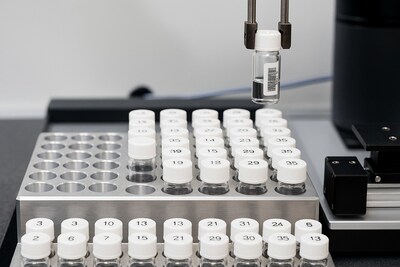
Wildcat Discovery & EnergyX LFP Cathode Manufacturing Joint Venture Hooks, Texas
Project Overview
Location: TexAmericas Center, Hooks, Texas (330 acres)
Adjacent to: EnergyX Project Lonestar™ lithium plant & Red River Army Depot
Product: Lithium iron phosphate (LFP) cathode active material
Status: Joint venture announced; pursuing DOE funding
Key Figures
Annual Capacity (Phase 1): 15,000 metric tonnes per year
Total Investment: $230 million+ Permanent
Jobs: 150 direct positions Construction/Indirect Jobs: 800–1,200
Timeline: Seeking DOE approval; subject to final engineering milestones
The Competitive Advantage
EnergyX supplies majority of lithium carbonate at fixed, below-market prices with negotiated floor and ceiling. Lithium typically represents 60–85% of LFP production costs, so this eliminates price volatility exposure that affects most competitors.
Supporting factors:
- EnergyX controls ~50,000 acres of lithium mining rights at the site
- Integrated mine-to-material ecosystem eliminates fragmented supply chains
- Both companies demonstrated production capability at pilot scale
- Early customer samples submitted to energy storage, mobility, and defense markets
What Each Company Brings
Wildcat Discovery Technologies:
- LFP cathode materials technology & development platform
- Higher-density LFP formulations in development
- Cobalt- and nickel-free cathode chemistries (future)
- AI-ready, high-throughput materials platform
Energy Exploration Technologies (EnergyX):
- Lithium carbonate supply (for LFP)
- Lithium hydroxide (for other cathode chemistries)
- Project Lonestar™ lithium plant (adjacent, operational)
- Lithium metal anodes & lithium isotope products
Applications
Grid-scale energy storage systems Electric vehicle batteries Military platforms & defense electrification Commercial fleet vehicles & advanced mobility Drone & aerospace applications
Site Advantages
Rail transportation access Available utility infrastructure Competitive energy rates Proximity to Red River Army Depot Strategic location for defense supply chain
Workforce & Economic Impact
Permanent roles: Chemical operators, technicians, engineers, maintenance personnel
Training partnerships: Local community colleges, workforce development orgs, veterans’ groups
Regional benefit: Strengthens Northeast Texas as advanced manufacturing hub
Construction phase: 2-3 year buildout with 800–1,200 jobs
Strategic Context
Problem: China dominates global LFP cathode production; U.S. faces supply-chain vulnerability in critical energy and defense sectors
Solution: U.S.-controlled pathway from domestic lithium extraction through cathode manufacturing to finished battery components
Funding & Next Steps
Private sector funding: Substantial cost share from Wildcat and EnergyX
Federal support sought: DOE funding to accelerate construction and scale-up
Expansion potential: Phase 1 designed to support future production growth
Long-term vision: “Battery Mecca™”—integrated lithium, cathode, anode, and cell manufacturing ecosystem in Texas

Leave a Reply