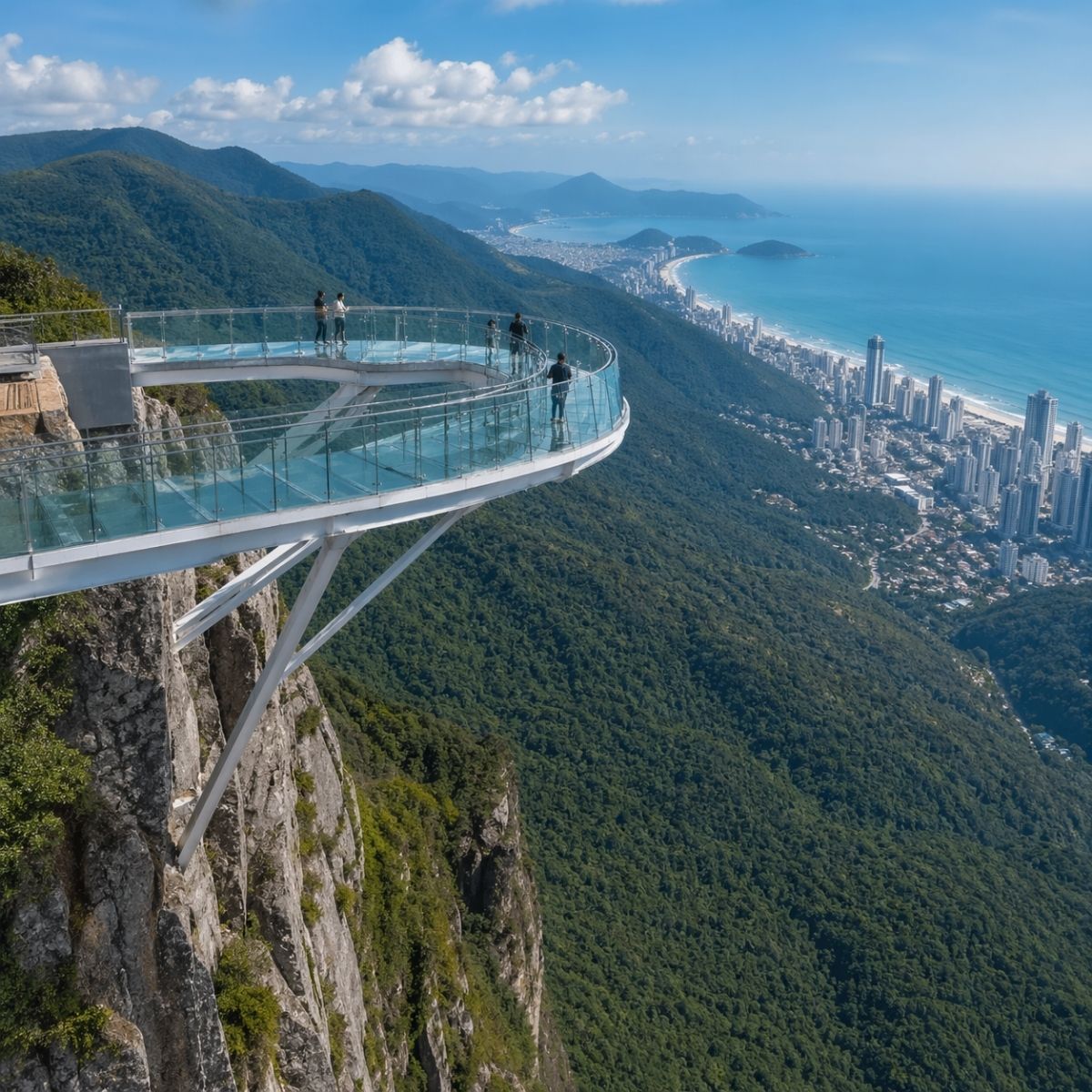
Santa Catarina glass walkway project sets out an ambitious plan to build a 686-meter-high structure atop Pico da Pedra in Camboriú, aiming to become the world’s tallest glass walkway. The proposal, announced by Mayor Leonel Pavan, seeks to transform a low-traffic hiking destination into a global tourism landmark. Moreover, the concept draws direct inspiration from China’s cliffside glass bridges. Consequently, the project positions itself as a competitive international attraction.
Santa Catarina glass walkway project aims to surpass China
The Santa Catarina glass walkway project centers on Pico da Pedra, a prominent viewpoint in Camboriú. At 686 meters altitude, the proposed structure would exceed heights seen in China’s Zhangjiajie National Forest Park and Tianmen Mountain. Therefore, it could establish a new global benchmark for glass walkways.
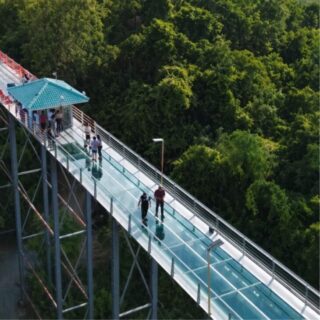
Additionally, the design includes transparent flooring engineered to withstand heavy loads and environmental stress. Engineers will likely apply multilayer laminated glass technology for durability and safety. Meanwhile, the project envisions dramatic visual effects, similar to Chinese installations that simulate cracking glass underfoot. As a result, visitor engagement could significantly increase.
The estimated investment stands at approximately $25 million. However, detailed engineering plans and procurement strategies remain under development. Authorities continue to assess feasibility, including wind resistance and geological stability. Consequently, technical validation will shape final execution timelines.
Santa Catarina glass walkway project to transform access and tourism
Currently, Pico da Pedra attracts only about 100 visitors weekly due to limited accessibility. The existing 2 km trail involves steep climbs and rocky sections. Therefore, many potential visitors avoid the hike despite its scenic value.
To address this, the Santa Catarina glass walkway project includes a vertical elevator system. This installation will transport visitors directly from road level to the summit. As a result, accessibility will expand to include elderly visitors and those with limited mobility.
Furthermore, the site’s proximity to Balneário Camboriú strengthens its tourism potential. This neighboring city already attracts millions annually. Consequently, the walkway could tap into an existing tourist base without requiring additional long-distance travel.
The geographical visibility of Pico da Pedra from BR-101 also enhances its appeal. Visitors traveling along the highway will easily identify the landmark. Therefore, spontaneous tourism traffic could increase alongside planned visits.
The proposed Santa Catarina glass walkway project reflects Brazil’s broader ambition to deliver landmark infrastructure that competes globally, similar to the longest cable sea bridge in Brazil. While that $1.2 billion bridge project in Bahia focuses on transport connectivity between Salvador and Itaparica, the Camboriú walkway targets tourism transformation through extreme-altitude design. Together, these developments highlight how Brazil is leveraging large-scale construction projects to drive economic growth and international visibility.
Engineering challenges and environmental considerations
The Santa Catarina glass walkway project faces significant engineering challenges due to its height and terrain. Construction at 686 meters requires advanced structural analysis and specialized materials. Engineers must design foundations anchored securely into natural rock formations. Additionally, wind loads at high altitude demand rigorous testing and safety margins.
Transporting construction materials to the summit presents logistical complexity. Contractors may need temporary access systems or aerial transport solutions. Therefore, construction planning will play a critical role in project viability.
Environmental licensing also represents a major hurdle. Pico da Pedra lies within the Atlantic Forest, which is protected under Brazilian law. Consequently, developers must conduct comprehensive environmental impact assessments. These studies will evaluate effects on vegetation, wildlife, and water systems.
Unlike China, Brazil enforces stricter environmental review processes. Therefore, approvals may take several years before construction begins. However, compliance will ensure long-term sustainability and regulatory alignment.
Project Fact Sheet
Project Name: Santa Catarina Glass Walkway Project
Location: Pico da Pedra, Camboriú, Santa Catarina, Brazil
Project Type: High-altitude glass walkway and tourism infrastructure
Estimated Cost: $25 million
Proposed Height: 686 meters above ground level
Key Features:
- Transparent multilayer glass walkway
- High-capacity vertical elevator system
- Scenic viewing platforms
- Safety and monitoring systems
Current Access:
- 2 km hiking trail
- 1–2 hours climb time
- Around 100 visitors per week
Status (2026): Concept and political announcement stage
Projected Impact:
- Significant tourism growth potential
- Increased regional economic activity
- Enhanced international visibility for Camboriú
Project Team
Project Owner: Municipality of Camboriú
Sponsor: Office of Mayor Leonel Pavan
Development Partners: Local tourism authorities and private investors (to be confirmed)
Design Consultants: To be appointed through tender process
Engineering Consultants: Specialists in high-altitude structural systems (pending)
Construction Contractor: Not yet selected
Environmental Consultants: Independent firms for licensing and compliance
Project Management: Joint municipal and private-sector coordination team

Leave a Reply