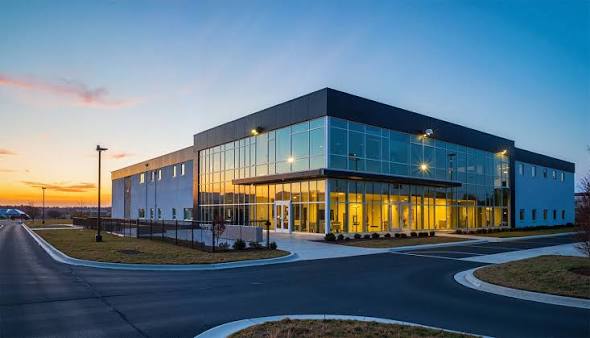
Updated October 18, 2026 – Microsoft has withdrawn from an agreement to lease computing capacity at the £2 billion Nscale AI data center in Loughton, Essex, marking a significant setback for the project following power supply delays announced in July 2026.
The data center, announced in 2025 as one of the UK’s largest AI infrastructure projects, was initially expected to begin operations in 2027. Microsoft was intended to serve as its anchor tenant. However, sufficient grid electricity may not be available until the early to mid-2030s. This has undermined the facility’s original delivery timeline.
In July 2026, Nscale announced plans to explore alternative power solutions. This included fuel cells supplied by US-based Bloom Energy, to bridge the gap before a permanent grid connection became available.
Microsoft’s withdrawal leaves Nscale’s £2bn Essex AI data center project facing uncertainty over its future customer commitments.
However, Nscale has reiterated its commitment to the Loughton development and the UK market, where it faces competition from other operators, including Vantage Data Centers, which operates the LHR21 data center in Park Royal, West London.
Additionally, Microsoft’s withdrawal highlights the growing challenges facing the UK’s AI infrastructure ambitions. One major factor – grid connection constraints, continues to delay major data center investments around the world despite substantial financial backing and customer demand.
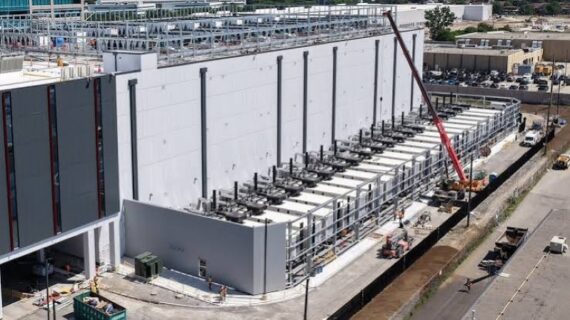
£2bn Nscale data center project in Essex delayed as UK grid bottlenecks reshape AI infrastructure
Reported July 13, 2026 – Essex data center project has encountered a significant hurdle after Britain’s overloaded electricity grid delayed the project’s power connection. The setback threatens the delivery schedule for the hyper scale AI facility in Loughton, Essex, despite planning approval and strong government backing. Developers are now pursuing alternative power solutions to maintain construction momentum while avoiding costly commissioning delays. The project also highlights a growing challenge for Britain’s digital infrastructure sector, where electricity availability is becoming as critical as planning approval and project financing.
The facility is expected to become Britain’s largest AI supercomputer and will provide computing infrastructure for artificial intelligence applications. However, the planned 90-megawatt grid connection will not be available before the targeted opening date. Consequently, the developer has started evaluating temporary energy alternatives to keep the construction program on schedule.
Microsoft has already committed to become the project’s anchor customer, reinforcing the facility’s strategic importance to the UK’s AI ambitions. Yet electricity constraints now pose the biggest obstacle to project delivery.
Essex Data Center seeks alternative energy to protect construction schedule
Developers have entered discussions with California-based Bloom Energy to provide electricity through solid oxide fuel cells instead of waiting for the permanent grid connection. The technology generates electricity by converting natural gas through an electrochemical process rather than combustion. Therefore, it produces lower emissions while supplying reliable power for energy-intensive data centers.
Bloom Energy has already deployed similar systems at a Manchester data center and the Wytch Farm oilfield in Dorset. The company originally developed elements of the technology through research associated with NASA’s Apollo program. The alternative power option could allow equipment installation, systems integration and commissioning activities to continue before the national grid completes the permanent connection.
Construction delays could expose the project to financial penalties if contracted computing capacity becomes unavailable when customers expect service delivery. The project developer recently strengthened its financial position by securing a $900 million revolving credit facility to accelerate AI infrastructure projects across Europe, North America and Asia-Pacific.
Britain’s growing power infrastructure challenge
The Essex project demonstrates how electricity infrastructure increasingly determines construction timelines for hyper scale developments. Britain’s transmission network currently faces unprecedented demand from renewable energy projects, manufacturing facilities and rapidly expanding AI data centers. As a result, many developers have joined lengthy connection queues before construction can reach completion.
The UK Government continues pursuing its target of delivering a power system supplied by 95% clean electricity by 2030. However, transmission upgrades have struggled to match rising demand from major infrastructure projects. Industry estimates indicate that more than 100 UK developments have explored gas-powered generation because permanent electricity supplies remain unavailable within commercial construction schedules. Some projects reportedly face waiting periods exceeding ten years for grid access.
The Essex development illustrates this national challenge. Although the project secured planning permission and government support, electricity infrastructure has become the critical path for delivery. The facility also represents a major test for Nscale, which has secured billions of dollars in funding to expand AI infrastructure globally. The company counts Nvidia among its strategic backers and recently appointed former UK Deputy Prime Minister Sir Nick Clegg and former Meta executive Sheryl Sandberg to its board.
Despite suspending a separate AI project in Northumberland because of high energy costs, Nscale says it remains fully committed to delivering the Essex data center. Industry analysts expect electricity availability to remain one of Europe’s biggest construction challenges as investment in hyper scale AI infrastructure accelerates. Consequently, future developments will increasingly integrate independent power generation into project planning alongside conventional grid connections.
The Essex data center is part of a broader wave of AI infrastructure investment transforming the UK. Other major developments include Google’s $1 billion London data center, which is adding cloud and AI computing capacity to meet rising digital demand across Britain.
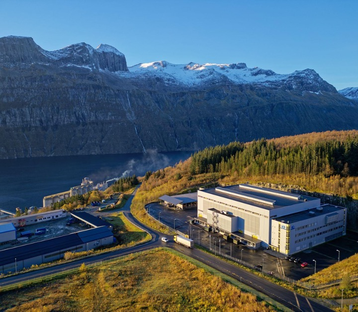
Nscale Essex data center project fact sheet
Value: £2 billion
Project type: Hyperscale AI data centre
Location: Loughton, Essex, United Kingdom
Project status: Planning approved; awaiting permanent grid connection
Current phase: Pre-construction and enabling infrastructure works
Expected operational date: 2027
Previous target: 2026
Power demand: 90 MW
Primary customer: Microsoft
Purpose: AI computing, cloud services and high-performance computing
Alternative power solution: Bloom Energy solid oxide fuel cells under evaluation
Key construction challenge: National grid connection delays
Strategic importance: Planned home of Britain’s largest AI supercomputer
Major construction works:
- Data halls
- Substations
- Cooling systems,
- Electrical infrastructure
- Fiber connectivity
- Administration buildings
- Site infrastructure
Project team
Developer: Nscale
Owner: Nscale
Anchor customer: Microsoft
Strategic technology partner: Nvidia
Alternative energy provider (under discussion): Bloom Energy
Planning authority: Epping Forest District Council
Government support: UK Department for Science, Innovation and Technology
Chief Executive Officer: Josh Payne
Board Director:
- Sir Nick Clegg
- Sheryl Sandberg
Grid connection provider: National Grid Electricity Transmission
Financial institutions: Consortium providing a $900 million revolving credit facility




Leave a Reply