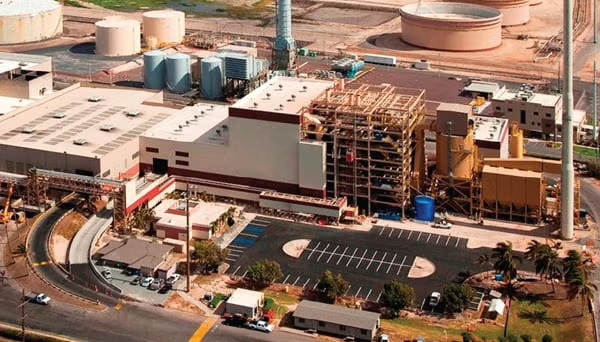
Japan’s largest power generation company has made a proposal to invest $2bn for a Hawaii gas-fired power plant in Oahu. The investment is for a 500-MW combined-cycle and simple-cycle natural gas-fired power plant in the U.S. Tokyo-based JERA noted the project comes after the company made an agreement with Hawaiian officials last fall.
Moreover, it is part of a commitment with the Trump administration to build new U.S.-based power generation facilities. The firm also recently noted the Hawaii station would replace older oil-fired generation. It noted that it would cut energy costs on Oahu by 20%.
The claim is backed by its portfolio with JERA having part ownership of 10 U.S. power plants. Officials also noted that the new plant would be supported by an offshore liquefied natural gas (LNG) facility. Last year, JERA agreed to increase its purchases of U.S. LNG at least for the next 20 years.
Other Projects
Various natural gas-fired power plants are taking shape across the U.S. under the Trump administration. For instance, the natural gas power plant by JEA in North Jacksonville, a $1.57bn investment. The proposed plant is planned to occupy approximately 40 acres and would replace infrastructure that was demolished in 2018. The board’s approval enables the utility to proceed with the next stages of project development, including negotiations. Other avenues for energy generation that the U.S. is leveraging includes nuclear power such as expanding the Centrus uranium enrichment plant in Piketon, Ohio.
Scope of Implementation on the Hawaii Gas-fired Power Plant in Oahu
The announcement of the Hawaii gas-fired power plant in Oahu comes after the state Public Utilities Commission’s approval. The commission approved the planned project in March by the state-owned Hawaiian Electric Co. to replace six older oil-fired steam generating units. The plants are the Oahu’s Waiau power plant with new fuel-flexible, simple-cycle combustion turbines. Moreover, they have a total generation capacity of 243 MW.
The Waiau plant has also been in operation since 1938, calling the need for replacement. Hawaii Democratic Gov. Josh Green in a statement said JERA’s proposal “represents a transformative overhaul of our electrical grid and a tangible step to move Hawaii from its historic dependence on oil.” He also noted it brings billions of dollars in new energy investments to the state.
On the other hand, John O’Brien, CEO of JERA Americas, said the new power plant “presents a path to reduce costs for residents and businesses, strengthen reliability and support Hawaii’s clean energy goals.” The energy group said it expects the new power station would come online in 2030. JERA said it plans to start the permitting process in the next few months.
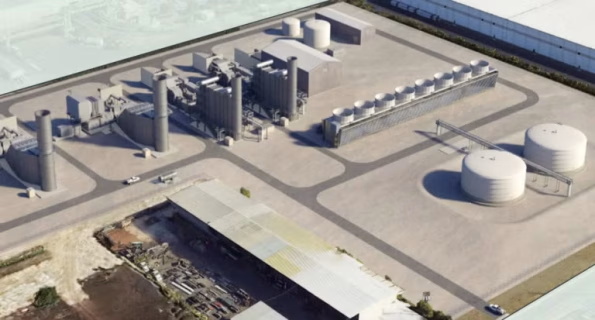
Project Overview
- Project Name: Oahu Gas-Fired Power Plant
- Project Type: Combined-cycle & simple-cycle gas power plant
- Value: ~$2 billion
- Capacity: ~500 MW
- Purpose: Replace aging oil-fired generation and improve grid efficiency
- Status: Proposed; moving toward permitting
Key Stakeholders
- Developer: JERA
- Local Utility: Hawaiian Electric Company
- Regulator: Hawaii Public Utilities Commission
- Government: Josh Green
- Executive: John O’Brien
Location
- Island: Oahu
- State: Hawaii
- Country: United States
Scope
- 500 MW gas-fired plant (combined + simple cycle)
- Replacement of older oil-fired units (Waiau plant)
- Supported by offshore LNG infrastructure
Funding / Delivery Model
- Private investment by JERA
- Long-term LNG supply agreements (20+ years)
- Regulatory approval required before construction
Status
- Proposal announced following prior agreement with state
- Approved replacement plan by utilities commission (March)
- Permitting process to begin soon
- Target operation: ~2030
Key Risks & Challenges
- Regulatory and permitting approvals
- Transition from oil to gas infrastructure
- Environmental and policy considerations
Strategic Significance
- Reduces reliance on oil-based power generation
- Supports grid reliability and modernization
- Major foreign investment in U.S. energy infrastructure
Key Features
- Fuel-flexible turbine technology
- Integration with LNG import infrastructure
- Designed to lower energy costs and emissions


Leave a Reply