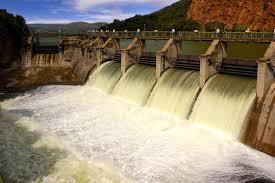
High Grand Falls Dam project moves toward groundbreaking as Kenya advances a $10 billion national water infrastructure program targeting irrigation expansion, hydropower generation, and food security. The project anchors a major shift from rain-fed agriculture to large-scale irrigated farming across arid and semi-arid lands. Additionally, it forms the centerpiece of a broader construction program covering ten mega dams across key river basins. As a result, Kenya positions High Grand Falls Dam as the flagship of its agricultural transformation strategy.
High Grand Falls Dam Project Groundbreaking Anchors $10 Billion Dam Construction Drive
High Grand Falls Dam project heads toward groundbreaking scheduled for late 2026 along the Tana River. The project carries a $2 billion investment and leads Kenya’s largest water infrastructure initiative. Moreover, it forms the core of the wider $10 billion Mega Dam Construction program.
Additionally, the dam supports irrigation expansion targeting 2 million acres across ASAL regions. It also integrates hydropower generation and bulk water storage within a single multipurpose design. Therefore, it functions as a strategic infrastructure hub rather than a standalone dam project.
Meanwhile, Galana Dam expands irrigation systems across Tana River and Kilifi counties. Lowaat Dam transforms agricultural productivity in Turkana County. Furthermore, Radat Dam in Baringo, Thuci Dam in Embu, and Basilinga Dam in Isiolo complete the six priority dam projects.
In contrast, Kenya’s previous agricultural model relied heavily on rainfall. Now, High Grand Falls Dam Construction shifts production toward controlled irrigation systems. Consequently, the country strengthens food security and climate resilience.
High Grand Falls Dam Project Uses PPP Financing and Off-Taker Model
High Grand Falls Dam project uses a Public-Private Partnership model to mobilize funding. The government channels investment through the National Infrastructure Fund, attracting private capital into large-scale infrastructure development. Additionally, the World Bank and African Development Bank provide blended finance support.
Moreover, the off-taker model ensures long-term financial sustainability. Agribusiness companies invest in irrigation zones and pay structured water tariffs. Therefore, the dam generates revenue to recover construction and operational costs. However, the project includes significant social impact requirements. Approximately 4,500 households require relocation from the reservoir area. Consequently, compensation and resettlement planning remain critical to implementation.
Meanwhile, engineers integrate hydropower systems into the dam design. The facility generates electricity while supporting irrigation supply networks. In addition, water distribution canals extend across downstream agricultural zones. Furthermore, construction follows phased delivery. Contractors first build foundations, diversion tunnels, and dam walls. Subsequently, irrigation infrastructure expands into farming regions.
High Grand Falls Dam Project Links to National Water Infrastructure Expansion
High Grand Falls Dam project connects directly to Kenya’s wider water infrastructure program. Thwake Multipurpose Dam reaches over 80% completion and requires about $635 million for final delivery. Additionally, Mwache Dam in Kwale County advances at similar completion levels with a $20 billion Kenyan shilling equivalent investment.
Moreover, these projects strengthen national irrigation and urban water systems. Thwake Dam supplies water to Konza Technopolis and surrounding counties. Therefore, it links agricultural infrastructure with industrial and urban development. Meanwhile, contractors execute complex civil works across all dam sites. China Gezhouba Group, Sinohydro, and China Energy Engineering Corporation lead major construction packages. Additionally, Kenyan firms such as HYoung & Company and Kentec Engineering support subcontracting and logistics operations.
Furthermore, engineering consultants including Mott MacDonald and SMEC International provide hydrological design and environmental planning expertise. Consequently, the program combines international engineering capacity with local construction execution. Ultimately, High Grand Falls Dam groundbreaking marks a major step in Kenya’s transition toward irrigation-based agriculture, integrated water infrastructure, and long-term food security.
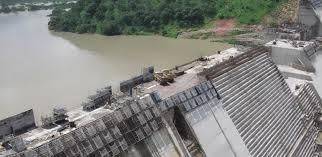
Project Fact Sheet
Project Name: Mega Dam Construction Program – Kenya Multipurpose Water, Energy and Irrigation Infrastructure
Country: Kenya
Total Program Value: Over $10 billion (with broader PPP pipeline exceeding Sh5 trillion)
Lead Project: High Grand Falls Dam
High Grand Falls Cost: Sh400 billion ($2 billion)
Thwake Dam Cost: $635 million (final Sh9 billion required for completion)
Mwache Dam Cost: Sh20 billion
Core Objective: Irrigation expansion, hydropower generation, and urban water supply
Irrigation Target: 2 million acres
Funding Model: PPP structure, National Infrastructure Fund, World Bank, AfDB blended finance
Revenue Model: Water tariffs and energy sales via off-taker system
Flagship Dams:
- High Grand Falls
- Galana
- Lowaat
- Radat
- Thuci
- Basilinga
Implementation Status (May 2026):
- High Grand Falls: Pre-groundbreaking (late 2026 scheduled)
- Thwake: 80%+ complete
- Mwache: 80% complete
- Six priority dams: Groundbreaking expected in 2026
Resettlement Impact: 4,500 families affected at High Grand Falls
Core Infrastructure Components: Dams, hydropower stations, irrigation canals, water treatment systems
Key Contractors:
- China Gezhouba Group
- China Energy Engineering Corporation
- Sinohydro, HYoung & Company
- CMC di Ravenna Kenya operations
- Kentec Engineering
Engineering Consultants:
- Mott MacDonald
- SMEC International
- Kenyan hydrology and civil engineering consortiums
Project Team
Project Owner: Government of Kenya
Lead Ministry: Ministry of Water, Sanitation and Irrigation
Co-Lead Ministry: Ministry of Agriculture and Livestock Development
Energy Integration Authority: Ministry of Energy and Petroleum
Financing Partners:
- World Bank
- African Development Bank (AfDB)
- National Infrastructure Fund (Kenya)
Implementation Model: Public-Private Partnership (PPP) with commercial off-takers
Regulatory Authorities:
- Water Resources Authority (WRA)
- National Environment Management Authority (NEMA)
County Governments Involved:
- Kitui
- Tharaka Nithi
- Tana River
- Kilifi
- Turkana
- Baringo
- Embu
- Isiolo
- Kwale
- Makueni
Lead Contractors:
- China Gezhouba Group
- China Energy Engineering Corporation
- Sinohydro
Local Contractors:
- HYoung & Company
- Kentec Engineering
- CMC di Ravenna Kenya operations
Consulting Engineers:
- Mott MacDonald
- SMEC International
- Kenyan engineering consortiums
Off-Taker Operators: Large-scale agribusiness firms managing irrigation and water tariff systems
Social Impact Teams: Government-led resettlement and compensation units with county coordination offices

Leave a Reply