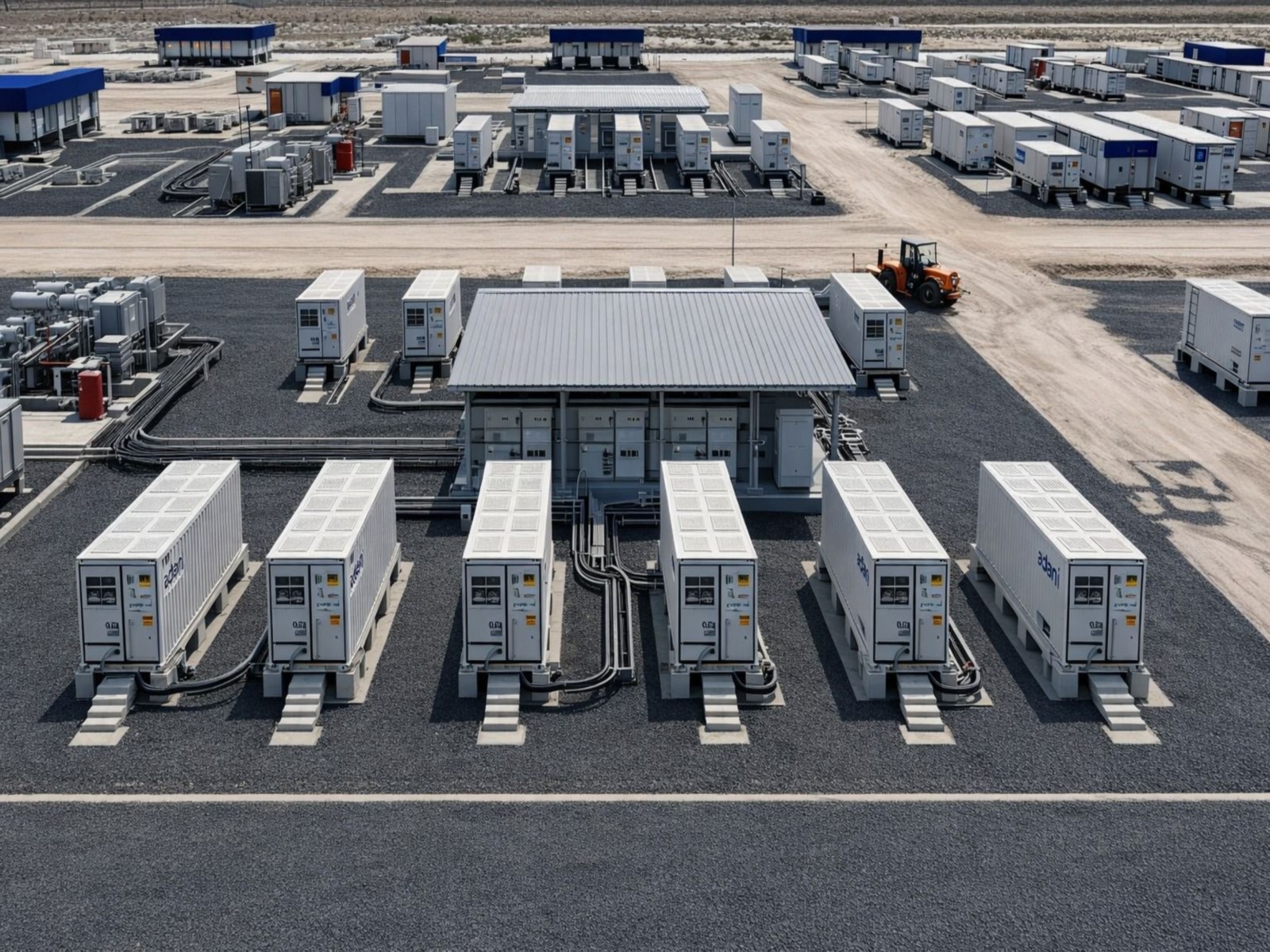
Adani Green Energy has commissioned a record-breaking 3.37 gigawatt-hour (GWh) Battery Energy Storage System (BESS) at Khavda, Gujarat. The project marks the world’s largest single-location battery storage deployment outside China. Additionally, it is one of the fastest utility-scale installations globally. It was completed within just ten months of construction, it revealed in a statement.
The milestone includes 1.37 GWh capacity added in March 2026. This brings AGEL’s total operational BESS capacity at Khavda to 3.37 GWh.
Moreover, the system can store enough clean energy to power nearly one million homes for an entire day. Also, the clean energy is deemed enough to keep over 12 million LED bulbs lit continuously for ten hours. This breakthrough is expected to significantly enhance grid reliability. Additionally, it will stabilize renewable-heavy networks, and ensure round-the-clock green power delivery, the statement added.
Significance of Large-Scale Storage in India
Sagar Adani, Executive Director of AGEL, emphasized the strategic importance of large-scale storage in India’s clean energy transition. “As renewable energy capacity scales rapidly, storage infrastructure becomes critical for delivering reliable, round-the-clock clean power. With the commissioning of the 3.37 GWh BESS at Khavda, AGEL is strengthening the foundation for resilient, dispatchable and flexible energy systems,” he stated. Additionally, the project will strengthen India’s renewable energy capacity as the country pushes for its clean energy goals. The country is pushing towards the goals with renewable energy projects such as wind, solar, and hydropower.
The Khavda BESS integrates advanced energy management systems with lithium-ion technology to optimize efficiency and responsiveness. It is strategically located within AGEL’s massive renewable energy complex, where the company is developing 30 GW of capacity by 2029, with 9.9 GW already operational.
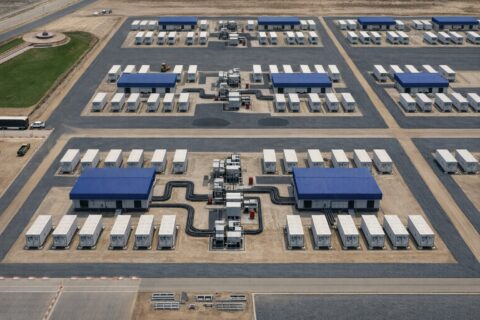
Furthermore, AGEL plans to add more than 10 GWh of battery storage capacity in FY27 and scale up to 50 GWh over the next five years. This will reinforce its commitment to building future-ready clean energy infrastructure at global scale.
Project Factsheet
Developer: Primarily spearheaded by Adani Green Energy Limited (AGEL), alongside other state-backed utilities (such as NTPC and SECI).
Location: Khavda, Kutch District, Gujarat, India (situated near the India-Pakistan borderland).
Total Planned Capacity: 30,000 MW (30 GW) upon full completion.
Total Footprint: 726 square kilometers of land, frequently described as an arid, hyper-saline wasteland perfectly suited for high-yield solar radiation and strong coastal wind patterns.
Grid Integration Partner: Power Grid Corporation of India Limited (PGCIL), establishing dedicated high-voltage direct current (HVDC) lines and pooling sub-stations.
Role of Battery Storage: Designed for peak-shaving, frequency regulation, and storing excess afternoon solar output to discharge during evening peak hours.
Commercial Off-Takers: Multiple state-owned Distribution Companies (DISCOMs) and corporate green power purchase agreements (PPAs), including high-profile tech collaborations like Google’s clean energy initiative at the site.
Leave a Reply