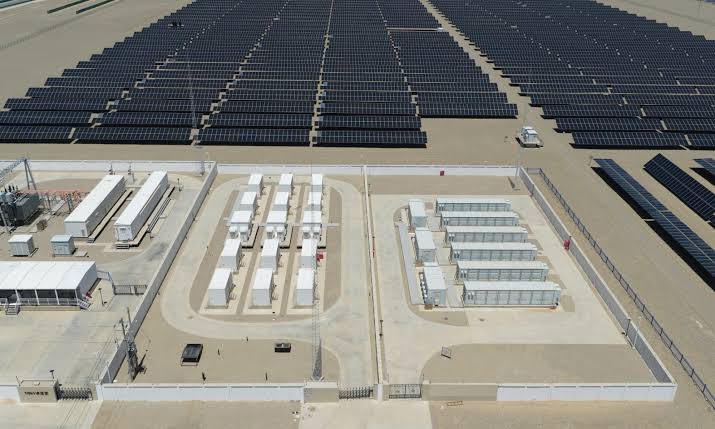
Steel River energy center project has entered a decisive phase after Google committed to purchase the project’s entire initial electricity output through a long-term power purchase agreement valued at an estimated $1.2 billion. The utility-scale solar and battery development in Arkansas will support the construction of new renewable energy infrastructure while helping offset fossil fuel emissions associated with Google’s expanding artificial intelligence operations. The agreement also strengthens investor confidence in large-scale clean energy construction despite policy uncertainty surrounding renewable energy incentives in the United States.
The project represents one of the largest corporate-backed solar developments announced this year. Construction will initially deliver 1.6GW of solar generation alongside 2GWh of battery storage before expanding to 2.5GW of solar capacity and 2.9GWh of storage during later phases. Once operational, the first phase will generate enough electricity to power more than 315,000 homes annually.
Rather than supplying electricity directly to Google’s facilities, the project will operate under a virtual power purchase agreement. Consequently, Google will continue drawing electricity from regional grids while financially supporting new renewable generation that offsets emissions from its growing data center portfolio.
Steel River Energy Center Construction expands utility-scale renewable infrastructure
Steel River energy center construction demonstrates how major corporate buyers continue driving renewable infrastructure investment. The long-term revenue certainty provided through Google’s agreement enables project developers to secure financing, procure equipment and advance construction without relying entirely on changing federal incentives.
Construction will incorporate domestically manufactured components throughout the project. First Solar will supply photovoltaic modules, while LG Energy Solution will provide battery storage systems manufactured at its Arizona facility. This procurement strategy aligns with current domestic manufacturing requirements and strengthens the project’s local supply chain.
The development also reflects growing electricity demand from artificial intelligence infrastructure. Google’s latest environmental report shows the company contracted more than 12GW of new clean energy during 2025, its largest annual procurement to date. The company continues expanding renewable investments as electricity demand from AI computing accelerates across its global operations.
Industry analysts expect corporate power purchase agreements to remain a major source of renewable energy financing. Large technology companies increasingly seek long-term clean electricity supplies to support hyperscale data centers while advancing decarbonisation commitments.
Steel River Energy Center Construction highlights new construction opportunities
Steel River energy center construction illustrates how renewable energy projects continue creating significant construction opportunities despite policy shifts. Large solar developments require extensive civil engineering works, transmission infrastructure, battery installations and electrical systems before commercial operation.
The Arkansas project will require large-scale site preparation, foundation works, mounting systems, inverter installations, battery facilities, substations and grid interconnection infrastructure. These construction packages will support contractors, equipment suppliers and specialist engineering firms throughout the development period.
Construction is scheduled to support commercial operations beginning in 2029. After completion, the initial phase will provide 1.6GW of renewable electricity, while future expansion will increase total generating capacity to 2.5GW. The battery storage system will improve grid reliability by supplying electricity after sunset and during periods of peak demand.
The project also reinforces the growing relationship between renewable energy construction and digital infrastructure. As artificial intelligence drives unprecedented electricity demand, developers increasingly combine large-scale solar generation with battery storage to support future data center expansion while reducing long-term carbon emissions.
Arkansas continues to attract major renewable energy investments as utility-scale developments expand across the state. Similarly, the Conway Solar Project demonstrates how large solar installations are strengthening Arkansas’ clean energy capacity while supporting growing electricity demand and long-term infrastructure development.
Project Fact Sheet
Name: Steel River Energy Center
Type: Utility-scale solar photovoltaic and battery energy storage project
Location: Arkansas, United States
Estimated contract value: Approximately $1.2 billion (power purchase agreement estimate)
Initial solar capacity: 1.6GW
Ultimate planned solar capacity: 2.5GW
Initial battery storage: 2GWh
Ultimate battery storage: 2.9GWh
Construction status: Development and financing progressing
Expected commercial operation: 2029 (initial phase)
Power output: Sufficient to supply more than 315,000 homes annually during the initial phase
Purpose: Offset fossil fuel emissions linked to Google’s growing AI and data center electricity demand
Procurement model: Long-term virtual power purchase agreement
Key construction scope: Solar arrays, battery storage, substations, transmission connections, civil works, electrical infrastructure and grid integration
Project Team
Corporate energy purchaser: Google
Parent company: Alphabet Inc.
Project developer: Cypress Creek Energy
Solar module supplier: First Solar
Battery storage supplier: LG Energy Solution
Project delivery: Utility-scale engineering, procurement and construction teams to be appointed by the developer
Grid interconnection partners: Regional transmission and utility operators
Project financiers: Institutional lenders supported through the long-term power purchase agreement
Technology scope: Solar photovoltaic generation, battery energy storage systems, substations, transmission infrastructure and grid integration equipment

Leave a Reply