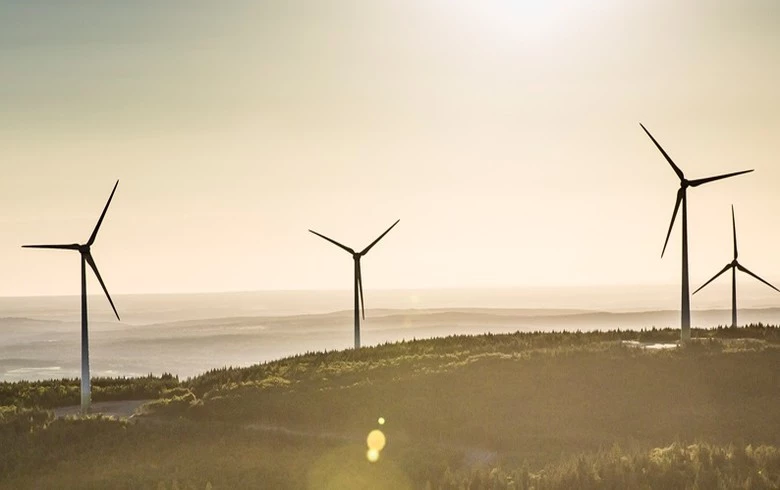
Quebec has officially launched construction on the Des Neiges wind farm, one of the most ambitious renewable energy projects in Canadian history. Announced in Beaupré on March 31, 2026, with Premier François Legault present for the groundbreaking, the $3 billion development marks a defining moment in the province’s strategy to dramatically expand its wind energy capacity and cement its position as a dominant force in North American clean power.
Snow, Wind, and Strategy: What Des Neiges Is All About
The first two phases of the Des Neiges wind farm — the southern sector and the Charlevoix sector — will comprise a total of 114 turbines and generate 800 megawatts of wind energy, enough to power 140,000 homes. The wind turbines will stand 200 metres tall and carry a capacity of 7 MW each, spread across an area covering 1,600 square kilometres. The project sits on the grounds of the Séminaire de Québec in the Charlevoix region — a striking convergence of Quebec’s historic religious landholdings and its modern industrial ambitions.
Project Fact Sheet
Project Name: Des Neiges Wind Farm
Location: Charlevoix region and southern sector, northeast of Quebec City, Quebec, Canada; situated on the grounds of the Séminaire de Québec
Total Investment: CAD $3 billion
Phase 1 & 2 Capacity: 800 MW (114 turbines)
Full Build-Out Capacity: 1,200 MW (Phase 3 pending)
Turbine Specs: 200 metres tall, 7 MW capacity each
Homes Powered (Phases 1 & 2): 140,000
Project Area: 1,600 square kilometres
Construction Start: March 31, 2026
Power Purchase Agreement: Less than 7.8 cents per kilowatt-hour with Hydro-Québec
Construction Workforce: 500 workers
Project Team
Lead Developer: Boralex
Energy Partners: Hydro-Québec; Énergir (largest natural gas distributor in Quebec)
Landowner: Séminaire de Québec
Indigenous Partners: Innu and Wendat communities
Government Champion: Government of Quebec; Premier François Legault
Offtaker: Hydro-Québec
Engineering & Construction Contractors: To be confirmed
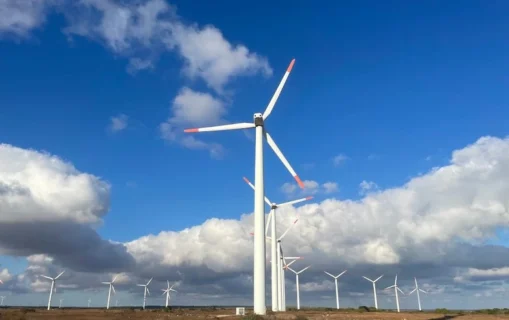
The third phase, if completed, will bring the farm’s total output to 1,200 megawatts, contributing directly to Hydro-Québec’s goal of adding 10,000 MW of wind power to its current portfolio of 4,000 MW by 2035. That target is not aspirational window dressing — it reflects the scale of electricity demand growth Quebec is anticipating from data centres, industrial electrification, and export contracts with US states hungry for clean power.
An Unlikely Alliance Driving the Project Forward
The project is a partnership between Boralex, Quebec’s hydro utility Hydro-Québec, and Énergir — the largest natural gas distributor in the province. That last partner is notable: Énergir’s involvement signals the kind of energy transition that is increasingly common in mature markets, where legacy fossil fuel distributors diversify into renewables rather than resist the shift. For Boralex, the project consolidates its status as one of Canada’s leading independent renewable energy developers, with a growing international footprint that already includes operations in France, the United Kingdom, and the United States.
When the first two phases are operational, Hydro-Québec has agreed to pay Boralex and its partners less than 7.8 cents per kilowatt-hour — a rate the utility declined to specify further. That pricing, kept deliberately vague, nonetheless reflects the increasingly competitive economics of onshore wind in Canada, where improved turbine technology and favourable sites are pushing costs lower. The two phases will employ 500 workers during the construction period.
Indigenous Partnerships and a Province in a Race
The Des Neiges launch was notably attended by representatives from the Innu and Wendat communities. Wendat Chief Pierre Picard spoke of a “respectful partnership process,” reflecting a broader shift in how major energy infrastructure projects in Canada are being developed — with Indigenous consultation and benefit-sharing increasingly embedded from the outset rather than bolted on after the fact. This is both a matter of legal obligation under Canadian law and a practical necessity: projects that fail to secure Indigenous support face protracted delays and legal challenges that can unravel timelines and financing.
Premier Legault used the occasion to frame the project in sweeping geopolitical terms. He declared that “if we act intelligently, the next century could be Quebec’s century from an economic standpoint,” adding that “energy is the most important global issue” and that the world is currently in a race to secure it. That framing is not merely political theatre. Quebec is sitting on one of the world’s most valuable combinations of assets for the clean energy transition: abundant hydropower that can act as a flexible battery for intermittent wind and solar, extensive transmission infrastructure, a relatively stable regulatory environment, and — critically — geography that places it within reach of the electricity-hungry northeastern United States. Hydro-Québec has 16 interconnections with neighbouring jurisdictions and occupies a strategic position at the heart of the region’s major energy corridors, a position it is actively looking to leverage through export contracts and potential grid linkages as far as Nova Scotia’s proposed offshore wind developments.
Quebec’s Wind Boom in a Continental Context
Des Neiges does not stand alone. About ten wind farms are currently under development across Quebec, with projects ranging from the 122 MW Canton MacNider farm in the Bas-Saint-Laurent region to EDF Renewables’ 270 MW Madawaska project. Taken together, these developments represent a fundamental restructuring of Quebec’s energy mix — one that shifts the province from near-total reliance on hydropower toward a more diversified portfolio in which wind plays a significant balancing and augmentation role. This massive shift is further underscored by the PPAW-1 Wind Energy Center in Quebec, a critical milestone for the 350 MW project as it moves toward construction to help meet the province’s growing demand for renewable power.
The scale of ambition at Des Neiges also places it comfortably among the largest onshore wind projects in North America. For comparison, the largest onshore wind farms in the United States — projects like the Alta Wind Energy Centre in California and the Roscoe Wind Farm in Texas — typically range between 500 MW and 1,500 MW. A fully built-out Des Neiges at 1,200 MW would rival those benchmarks, but with the added advantage of direct integration into Hydro-Québec’s reservoir-backed grid, which can absorb variability in wind generation more efficiently than most North American grids. As global competition for clean energy intensifies and US states accelerate their own decarbonisation commitments, Quebec’s capacity to generate, store, and export renewable electricity at scale is fast becoming one of its most strategically valuable economic assets.
Leave a Reply