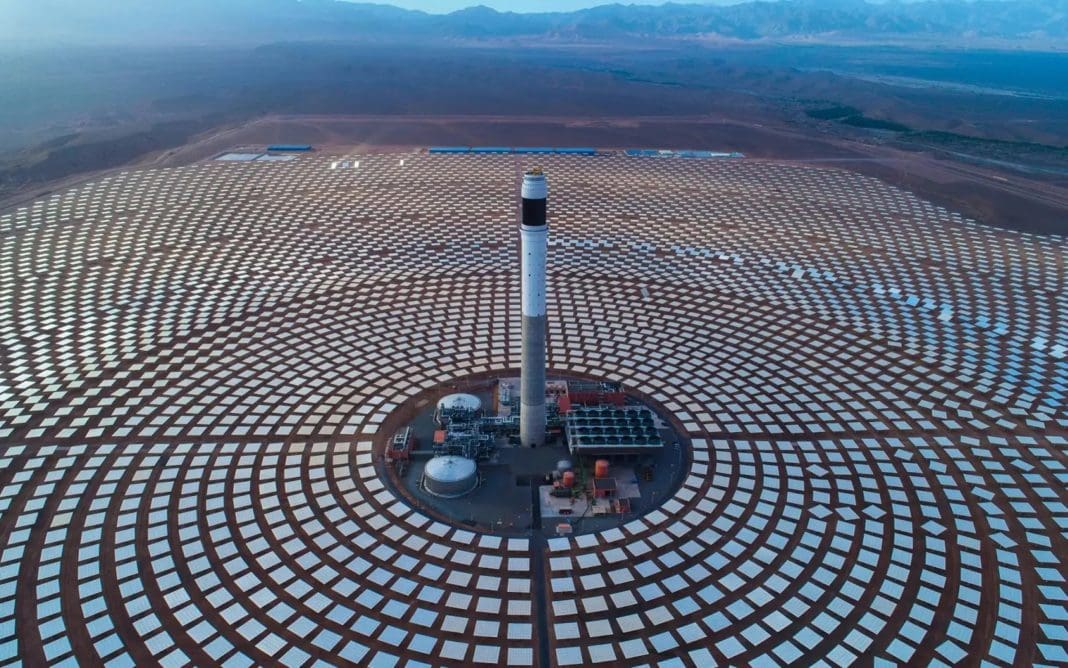
Noor Atlas solar project marks a significant advancement in Morocco’s renewable energy rollout, as construction activities officially commence across multiple regions. Moreover, the $300 million initiative reinforces national ambitions to expand clean energy capacity while strengthening grid reliability in underserved areas. As a result, the start of works signals tangible progress toward Morocco’s 2030 renewable energy targets.
Eiffage Group, through its subsidiary Eiffage Énergie Systèmes, has officially begun construction works on the Noor Atlas solar project. Furthermore, the company is spearheading engineering, procurement, and construction activities across several project sites.
In particular, Eiffage is overseeing the installation of photovoltaic systems and associated infrastructure. Additionally, the contractor is responsible for delivering substations and grid connections required for power evacuation. Therefore, its role positions it as a central technical partner in project execution.
Noor Atlas Solar Project Scope and Distributed Design
Unlike earlier centralized solar developments, the Noor Atlas solar project adopts a distributed generation model. Consequently, it consists of six photovoltaic plants strategically located across Morocco’s eastern and southern regions.
Specifically, Ain Béni Mathar contributes 121 MW, while Enjil adds 42 MW. Similarly, Tata and Tan-Tan each provide 40 MW capacity, whereas Boudnib and Bouanane deliver 33 MW and 29 MW respectively. Altogether, the combined capacity reaches 305 MW.
Moreover, this decentralized structure enhances grid stability in remote areas. As such, it reduces transmission losses while improving electricity access in underserved communities.
Financing and Technology Integration of Noor Atlas Solar
The project benefits from a hybrid financing model combining international and local funding sources. Notably, the European Investment Bank has committed €129 million toward development. In addition, KfW Development Bank provides complementary financial support.
Meanwhile, Bank of Africa contributes commercial financing to strengthen the funding structure. Consequently, the blended approach ensures financial viability while reducing investment risk.
Technologically, the plants will deploy high-efficiency bifacial photovoltaic panels. Furthermore, single-axis trackers will optimize solar capture throughout the day. In some locations, battery energy storage systems will be integrated to manage peak demand effectively.
Strategic Importance to Morocco’s Energy Goals
Morocco continues to expand its renewable energy portfolio to meet ambitious national targets. Currently, the country has achieved approximately 45% renewable energy capacity. However, the government aims to reach 52% by 2030.
Therefore, the Noor Atlas solar project plays a crucial role in closing this gap. In particular, its 305 MW capacity contributes significantly to the national grid. Moreover, its distributed nature supports regional development and energy security.
At the institutional level, Moroccan Agency for Sustainable Energy oversees implementation. Importantly, MASEN requires international contractors to partner with local firms. Thus, the project promotes knowledge transfer and strengthens domestic capabilities.
Local Partnerships and Skills Development
The project emphasizes collaboration between international and Moroccan companies. Consequently, Eiffage is working alongside local contractors to meet regulatory requirements.
This approach facilitates workforce training and technology transfer. Moreover, it enhances the development of Morocco’s renewable energy supply chain. As a result, the initiative delivers both infrastructure and long-term economic benefits.
Construction activities began in March 2026 across multiple sites simultaneously. Subsequently, works will progress in phases to ensure efficient delivery.
The Noor Atlas solar project is expected to begin supplying electricity by July 2027. Therefore, it aligns with Morocco’s near-term renewable expansion strategy and long-term sustainability goals.
Earlier reporting on Morocco competes to be the renewable energy leader in Africa shaped similar projects such as Noor Atlas, thus pushing the country’s ambition for clean energy.
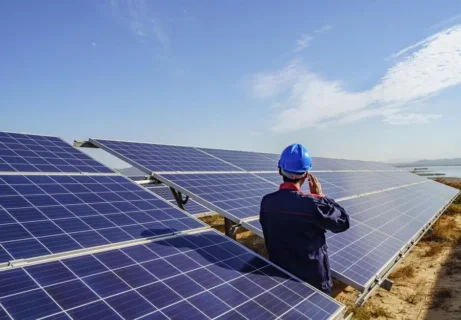
Project Fact Sheet
Project Name: Noor Atlas Solar Project
Location: Multiple regions across Morocco (Oriental, Fès-Meknès, Souss-Massa, Guelmim-Oued Noun, Drâa-Tafilalet)
Total Capacity: 305 MW
Number of Plants: 6
Plant Breakdown:
- Ain Béni Mathar – 121 MW
- Enjil – 42 MW
- Tata – 40 MW
- Tan-Tan – 40 MW
- Boudnib – 33 MW
- Bouanane – 29 MW
Estimated Cost: $300 million (€272 million)
Technology: Bifacial PV modules, single-axis trackers, BESS (selected sites)
Financiers: European Investment Bank, KfW, Bank of Africa
Project Authority: Moroccan Agency for Sustainable Energy
Construction Start: March 2026
Expected Completion: July 2027
Project Team
Project Owner: Moroccan Agency for Sustainable Energy
Lead EPC Contractor: Eiffage (via Eiffage Énergie Systèmes)
Engineering and Electrical Works: Eiffage Énergie Systèmes
Financing Institutions:
- European Investment Bank
- KfW
- Bank of Africa
Local Partners and Subcontractors: Moroccan EPC firms and electrical contractors collaborating under MASEN’s local content framework.
Leave a Reply