
Polarise 30MW AI data center plans are gaining attention as Europe intensifies efforts to secure digital sovereignty. The German startup is evaluating a 30-megawatt artificial intelligence data center in Bavaria, Germany. The project could strengthen Europe’s domestic AI infrastructure and reduce reliance on foreign cloud providers.
Moreover, the facility would support high-performance computing for enterprises, research institutions, and public organizations requiring locally controlled data environments. The initiative reflects growing geopolitical concerns about data governance, digital independence, and control of critical computing infrastructure.
Polarise 30MW AI data center drives Europe’s sovereignty strategy
Europe increasingly prioritizes sovereign AI infrastructure to protect sensitive data and strategic technologies. Therefore, Polarise intends to build the facility in Amberg, Bavaria. The company expects operations to begin by mid-2027. Furthermore, developers designed the project to scale beyond the initial capacity.
Consequently, the company plans to expand the site from 30MW to as much as 120MW in future phases. Such expansion would transform the development into a large AI-focused data center campus in Germany. Moreover, the project aligns with Europe’s strategy to strengthen domestic computing capabilities.
Meanwhile, European policymakers increasingly emphasize locally controlled digital infrastructure. Governments want sensitive data stored and processed within regional jurisdiction. Therefore, companies like Polarise now position their facilities as sovereign AI platforms built for the European market.
Site redevelopment and infrastructure design
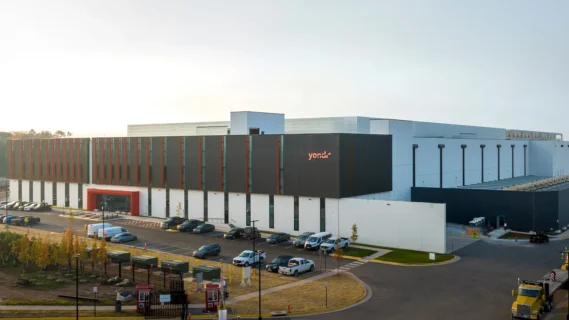
Polarise plans to redevelop a former telecommunications transmission facility for the AI data center campus. The company intends to acquire the historic Wertachtal shortwave transmitter complex. Engineers will then convert the structures into a modern AI computing facility.
Additionally, the redevelopment approach could accelerate construction schedules while reducing costs. Adaptive reuse also supports sustainable infrastructure development across the data center industry. Therefore, developers increasingly convert legacy industrial sites into high-capacity digital infrastructure hubs.
Engineers will install high-density power distribution systems and advanced liquid cooling technologies. These systems will support powerful GPU clusters required for artificial intelligence workloads. Moreover, the infrastructure will accommodate large-scale machine learning model training and inference operations.
Polarise 30MW AI data center strengthens Germany’s AI ecosystem
Germany already supports several large artificial intelligence infrastructure initiatives. These initiatives aim to strengthen Europe’s position in global AI competition. Therefore, the proposed Polarise facility could complement existing AI cloud and research programs.
The data center will likely support enterprises, startups, universities, and public sector institutions. Many organizations require high-performance computing to develop AI applications. Consequently, the project could provide secure and locally governed infrastructure for these users.
Polarise also focuses on building specialized “AI factories.” These facilities integrate high-performance GPUs, scalable storage systems, and optimized cloud platforms. As a result, organizations can deploy artificial intelligence applications more efficiently.
Furthermore, the company promotes sovereign and sustainable AI infrastructure across Europe. Such projects aim to reduce dependence on foreign technology ecosystems. Therefore, governments and enterprises increasingly support locally developed AI computing platforms.
Investment outlook and global AI demand
Although Polarise has not confirmed the final investment value, industry estimates place the project at about $300 million. AI-focused data centers require higher investments than traditional facilities. Specialized hardware, cooling systems, and networking infrastructure significantly increase costs.
Meanwhile, global demand for AI computing power continues to rise rapidly. Technology firms, governments, and research institutions now require massive processing capacity. Consequently, specialized AI data centers are emerging across Europe, North America, and Asia.
Developers increasingly design facilities specifically for artificial intelligence workloads. These centers support dense GPU clusters and high-speed data processing infrastructure. As a result, they enable the development of large language models and other advanced AI systems.
Ultimately, the Bavarian data center could become an important element of Germany’s sovereign AI strategy. If completed as planned, the facility will strengthen Europe’s domestic AI infrastructure and digital independence.
Europe is witnessing a rapid expansion of AI-focused digital infrastructure. For instance, the DayOne hyperscale data center project in Lahti, Finland, demonstrates how developers are transforming industrial sites into large AI computing campuses
Project Fact Sheet
Project Name: Polarise AI Data Center Bavaria
Location: Amberg, Bavaria, Germany
Project Type: Artificial Intelligence Data Center / AI Factory
Planned Capacity: 30 MW initial capacity
Future Expansion: Up to 120 MW
Estimated Cost: Approximately $300 million
Site: Redevelopment of the former Wertachtal shortwave transmitter complex
Developer: Polarise
Expected Operational Date: Mid-2027
Primary Function: High-performance AI computing infrastructure
Target Users: Enterprises, research institutions, startups, and government organizations
Technology Focus: AI training, machine learning, inference workloads
Infrastructure Systems: GPU clusters, advanced cooling, high-density racks, scalable storage platforms
Strategic Objective: Strengthen European digital sovereignty and AI infrastructure capacity
Project Team
Developer: Polarise – German developer specializing in sovereign AI data center infrastructure.
Executive Leadership
- Michel Boutouil – Chief Executive Officer
- Nicolas Kremer – Chief Technology Officer
- Thimo Groneberg – Chief Commercial Officer
Technology and Infrastructure Partners
- NVIDIA – AI GPU computing and accelerated infrastructure platform provider
- DDN – AI storage and data intelligence platform partner
Potential Stakeholders
- Bavarian regional authorities
- Local energy and grid infrastructure providers
- German digital infrastructure regulators
Engineering and Infrastructure Scope
- AI computing clusters and GPU servers
- High-performance storage platforms
- Advanced cooling systems for dense AI hardware
- Secure networking and sovereign cloud integration
Leave a Reply