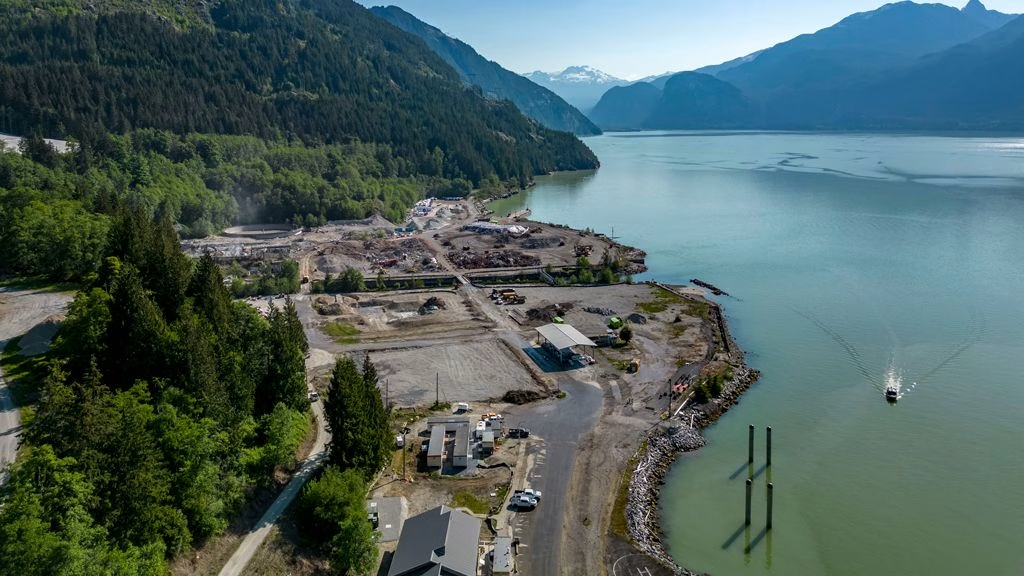
Construction on the $5.1 billion Woodfibre LNG export facility in British Columbia has reached a major turning point, with the project now nearing the 60% completion mark. Woodfibre Management, the Vancouver-based developer behind the initiative, confirmed on Wednesday that critical infrastructure components have successfully arrived at the site near Squamish. This progress signals a rapid acceleration in the development of the facility, which aims to position Canada as a key supplier of low-carbon energy to global markets while setting new environmental standards for the industry.
The latest milestone was marked by the arrival of the specialized heavy-lift vessel Seaway Swan, which transported two massive modules to the construction zone. Identified as the pretreatment and process utility modules, these components represent the 13th and 14th major deliveries to the site, highlighting the complex logistics involved in assembling the plant. Following their arrival, crews immediately began the intricate process of cutting the sea welds that secured the structures to the ship’s deck, preparing them for offloading using self-propelled modular transporters that will carefully maneuver the behemoths into their final positions.
Woodfibre LNG Project: Factsheet
Project Name: Woodfibre LNG
Location: Squamish, British Columbia, Canada
Status: ~60% Complete (as of Jan 21, 2026)
Total Investment: $5.1 Billion
Production Capacity: 2.1 Million Tonnes Per Annum (MTPA)
Ownership:
Pacific Energy Corporation (Canada): 70%
Enbridge: 30%
Recent Milestone: Arrival of Pretreatment and Process Utility modules (Deliveries #13 and #14).
Key Module Stats (Pretreatment):
Weight: >12,292 Metric Tons
Dimensions: 90m long x 47m high
Environmental Goal: World’s first net-zero LNG facility (powered by hydroelectricity).
Upcoming Logistics: 5 more modules expected in coming months.
Among the new arrivals, the pretreatment module stands out as an engineering marvel and one of the largest structures destined for the facility. Weighing in at over 12,292 metric tons and standing 47 meters tall—roughly equivalent to the height of a 12-story building—it stretches 90 meters in length. Its primary function is vital to the liquefaction process, tasked with removing impurities such as moisture and trace gases from the natural gas feedstock. This purification step is essential to prevent freezing and equipment damage when the gas is supercooled to -162 degrees Celsius, ensuring the plant operates safely and efficiently.
Strategic Infrastructure and Future Operations
The accompanying process utility module, while serving a different role, is equally critical to the plant’s functionality. It acts as the central nervous system for the facility’s thermal management, housing complex systems for tempered cooling water, hot oil heating, and thermal oxidation to actively manage emissions. Luke Schauerte, CEO of Woodfibre LNG, described the delivery as a pivotal moment, noting that these modules serve functions that are fundamental to the future operation of the plant. He expressed excitement about moving another step closer to completion and the realization of bringing Canadian LNG to international buyers.
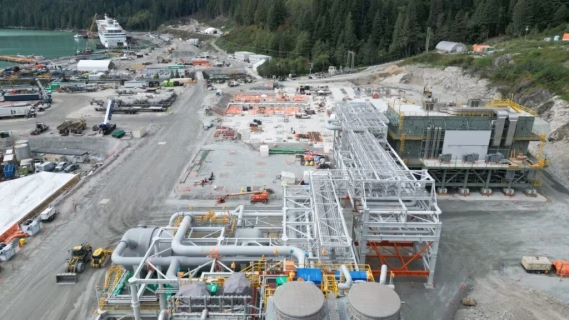
Located on the traditional territory of the Squamish Nation, the Woodfibre LNG project is distinguished by its ambitious environmental goals. It is designed to be the world’s first net-zero LNG export facility, a feat achieved primarily through the electrification of its liquefaction trains using renewable hydroelectric power from BC Hydro. This strategy represents a significant departure from traditional LNG plants that rely on gas-fired turbines, allowing Woodfibre to drastically reduce its carbon footprint—a stark contrast to conventional developments even as Saudi Aramco secures a long-term supply deal from the Commonwealth LNG project in Louisiana. The project is a joint venture, owned 70% by Pacific Energy Corporation and 30% by energy infrastructure giant Enbridge.
Looking ahead, the construction timeline remains aggressive as the developer pushes toward the operational phase. With the site now more than halfway complete, the focus shifts to the integration of these massive components and the preparation for the next wave of logistics. The company has confirmed that five additional modules are scheduled to arrive over the coming months, which will further transform the landscape of the site. Once fully commissioned, the facility is projected to produce approximately 2.1 million tonnes of liquefied natural gas annually, providing a vital energy link between Western Canada and Asian markets.
Leave a Reply