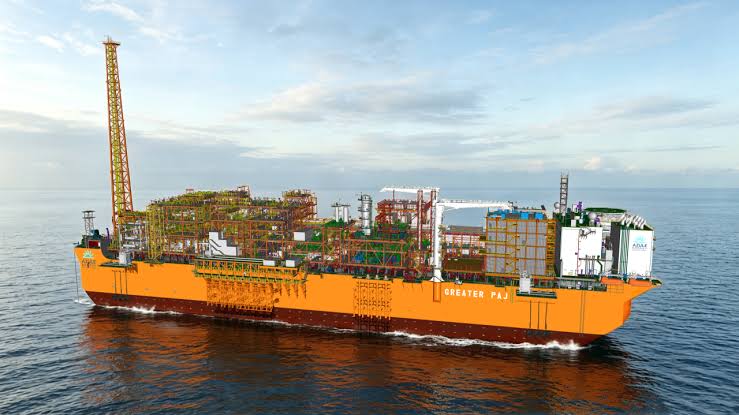
Greater PAJ Project is set to reshape Angola’s offshore energy sector after partners approved a $5.1 billion investment in the development. The project will bring five offshore discoveries into production through shared infrastructure across Blocks 31 and 31/21. As a result, the scheme becomes Angola’s first integrated cross-block oil development and one of the country’s largest offshore construction undertakings in recent years. The project also supports national efforts to sustain crude output while extending the lifespan of mature offshore assets.
The final investment decision clears the way for extensive offshore construction works in Angola’s Lower Congo Basin. Developers will connect the Palas, Astraea and Juno fields in Block 31 with the Urano and Dione fields in Block 31/21 through a unified production system. Together, the fields contain an estimated 252 million barrels of recoverable reserves.
Construction activities will include drilling campaigns, subsea installations, pipeline networks and a new floating production, storage and offloading vessel. Furthermore, the integrated approach will reduce infrastructure duplication and improve project economics. Consequently, the development establishes a model for future offshore projects in Angola.
Greater PAJ Project Construction Centers on New Offshore Infrastructure
The Greater PAJ Project will require major offshore infrastructure to support long-term production. Developers plan to drill 17 wells, including 10 production wells and seven water injection wells. These wells will connect to a new FPSO designed to process up to 95,000 barrels of oil per day.
In addition, the project includes subsea production systems, risers, flowlines and export infrastructure. Associated gas from the development will move through a new export line before reaching the Angola LNG facility. Therefore, the project supports both oil production and gas monetization objectives.
Developers expect first oil during the first half of 2029. Once operational, the project will help Angola maintain production levels as output from several mature fields declines.
The approval comes at a strategic time for Angola. The country has spent years implementing reforms aimed at attracting investment into offshore assets. Consequently, the Greater PAJ Project represents a significant endorsement of those efforts and highlights continued investor confidence in Angola’s petroleum sector.
Greater PAJ Project Construction Generates Major Contract Opportunities
Several international contractors have already secured key packages for the development. These awards cover the FPSO, subsea equipment, pipelines and offshore installation works.
CIMC Raffles will deliver the FPSO vessel that forms the centerpiece of the project. Meanwhile, Baker Hughes will provide subsea production systems. OneSubsea secured the umbilicals package, while TechnipFMC will supply pipelines and flexible flowlines.
In addition, Vallourec will manufacture rigid pipes for the development. Saipem will undertake transportation and offshore installation activities. Together, these contracts represent one of the most significant offshore construction programs currently advancing in Africa.
The project is also expected to create substantial opportunities for local suppliers and workers. Azule Energy estimates that the development will generate approximately 1.8 million man-hours of local content work. Furthermore, engineering, fabrication, logistics and training activities will support skills development across Angola’s energy sector.
Notably, the project has already moved into the execution phase, with major construction packages awarded to leading offshore contractors. Saipem and TechnipFMC securing contracts worth approximately $1 billion to deliver transportation, installation, pipelines and subsea infrastructure for the development. The awards underscore the scale of construction activity planned for the Greater PAJ Project and mark a significant step toward achieving first oil in 2029.
Greater PAJ Project Construction Supports Angola’s Long-Term Energy Strategy
The project forms part of a broader effort to sustain Angola’s role as a leading African oil producer. Although mature assets continue to decline, new developments such as Greater PAJ are helping offset production losses.
The investment follows progress on other major developments, including the Agogo Integrated West Hub and the New Gas Consortium project. Together, these projects demonstrate continued commitment to Angola’s offshore sector despite growing global focus on energy transition initiatives.
For Angola, the significance of Greater PAJ extends beyond production volumes. The development introduces a cost-efficient infrastructure model, creates construction opportunities and strengthens the country’s ability to attract future offshore investment. Consequently, the project could become a benchmark for integrated offshore developments across Africa.
Also read: Angola’s State Oil Firm Sonangol Seeks $4.8 billion Loan from China for Lobito Refinery
Project Fact Sheet
Project Name: Greater PAJ Project
Location: Blocks 31 and 31/21, Offshore Angola
Project Value: $5.1 billion
Project Type: Offshore oil and gas development
Basin: Lower Congo Basin
Recoverable Reserves: 252 million barrels
Fields: Palas, Astraea, Juno, Urano and Dione
Wells: 17
Production Wells: 10
Water Injection Wells: 7
FPSO Capacity: 95,000 barrels per day
Gas Export Capacity: 70 million standard cubic feet per day
First Oil Target: First half of 2029
Local Content Work: 1.8 million man-hours
Development Model: Integrated cross-block development
Key Infrastructure: FPSO, subsea systems, flowlines, pipelines and gas export facilities
Project Team
Operator: Azule Energy
Partner:
Regulator: National Agency for Petroleum, Gas and Biofuels (ANPG)
FPSO Contractor: CIMC Raffles
Subsea Systems Contractor: Baker Hughes
Umbilicals Contractor: OneSubsea
Pipeline and Flowline Contractor: TechnipFMC
Rigid Pipe Supplier: Vallourec
Offshore Installation Contractor: Saipem
Host Government: Republic of Angola

Leave a Reply