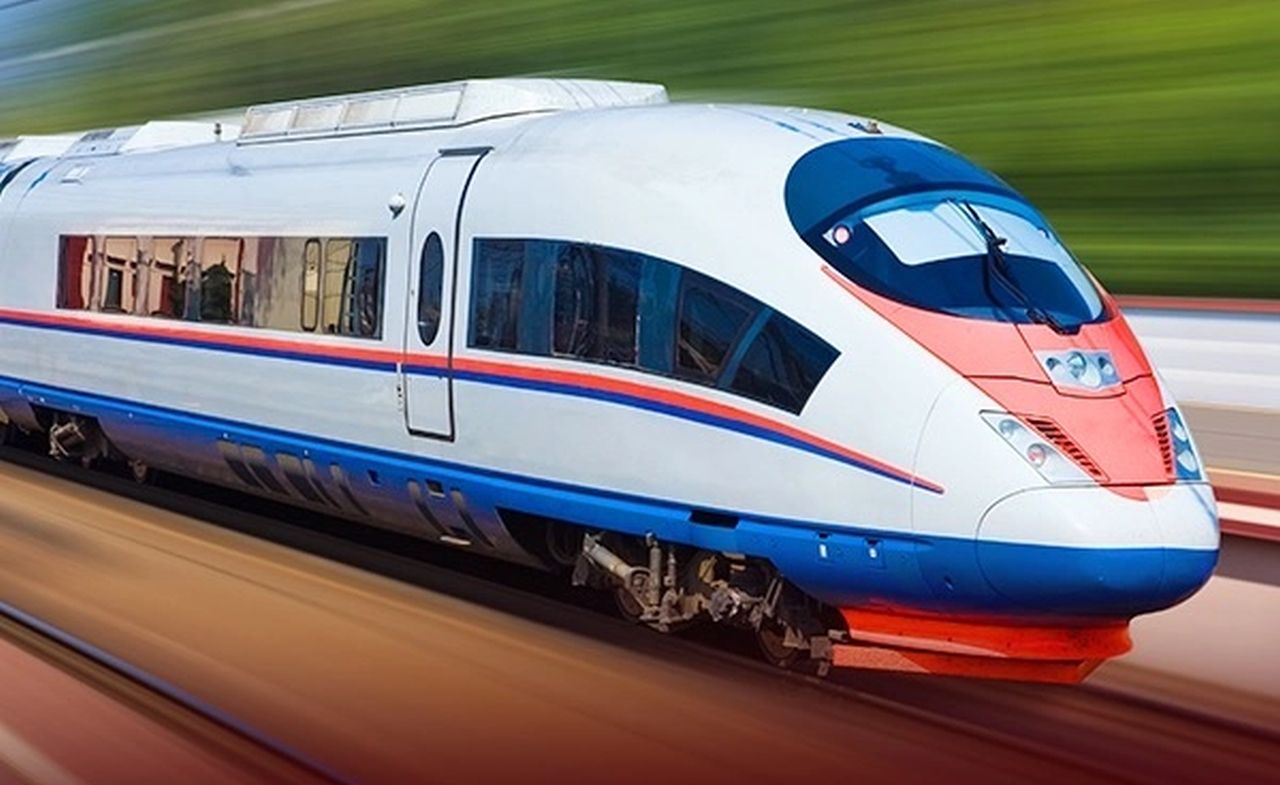
The first phase of Thailand’s THB179.4 billion (US$5.47 billion) Thai-Chinese High-Speed Rail project, connecting Bangkok’s Krung Thep Aphiwat Central Terminal with Nakhon Ratchasima over 250.77 kilometres, has reached a cumulative construction progress of only 52.4 per cent — 28.2 percentage points behind the programme’s own target of 80.73 per cent at this stage. Anan Phonimdaeng, deputy governor and acting governor of the State Railway of Thailand (SRT), disclosed the figures in a formal update on 23 March 2026, explicitly acknowledging that the 2030 service opening target — itself already a revision from earlier schedules — has become “very tight.” With remaining civil works requiring at least another three and a half years before system installation under Contract 2.3 can begin, and with two of the 14 civil works contracts not yet started, the path to a 2030 opening is narrow and depends on simultaneous resolution of multiple unrelated crises ranging from a fatal crane accident to pending government approvals.
A Project of 14 Contracts: Where Each Section Stands
The Bangkok–Nakhon Ratchasima phase is subdivided into 14 civil works contracts covering distinct sections of the alignment, with a contract complexity that reflects both the engineering diversity of the 250-kilometre corridor — passing through flat central plains, elevated urban approaches, tunnelled mountain terrain, and densely built city environs — and the fragmented procurement structure that has characterised the project’s execution. Of those 14 contracts, two are complete. Contract 1-1, the 3.5-kilometre Klang Dong–Pang Asok transition section, was completed by the Department of Highways at THB362 million. Contract 2-1, the 11-kilometre Sikhio–Kut Chik section, was delivered by Civil Construction Services & Products Company Limited at THB3.11 billion.
Project Fact Sheet: Thai-Chinese High-Speed Rail — Phase 1 (Bangkok–Nakhon Ratchasima)
Project Name: Thai-Chinese High-Speed Rail Project, Phase 1 — Bangkok (Krung Thep Aphiwat) to Nakhon Ratchasima
Location: Central Thailand, Bangkok to Nakhon Ratchasima (Korat)
Route Length: 250.77 kilometres
Total Investment (Phase 1): THB179.41221 billion (~US$5.47 billion)
Technology: Chinese high-speed rail technology (CRRC and partners)
Operating Speed: 250 km/h (designed)
Number of Civil Works Contracts: 14
Contracts Completed: 2 (Contracts 1-1 and 2-1)
Contracts Under Construction: 10
Contracts Not Yet Started: 2 (4-1 and 4-5)
Cumulative Progress (March 2026): 52.4%
Target Progress (March 2026): 80.73%
Programme Gap: -28.2 percentage points
Remaining Civil Works: Minimum 3.5 additional years before system works can begin
Original 2030 Opening: Acknowledged as “very tight”
System Installation Contract: Contract 2.3 (signed 2019; 5-year term expiring 2026; NTP not yet issued)
Phase 2 (Nakhon Ratchasima–Nong Khai): 357 km; THB341.1 billion; Cabinet approval 2020; not yet in procurement
Project Team: Thai-Chinese High-Speed Rail — Phase 1
Thai Lead Agency: State Railway of Thailand (SRT)
SRT Acting Governor / Deputy Governor: Anan Phonimdaeng
Chinese Lead Agency: China Railway International Co., Ltd. (CRIC) / CRRC and partners
System Contract (Contract 2.3): CRRC-led consortium
Key Civil Contractors:
ITD-CREC No. 10 JV (Italian-Thai Development PCL + CREC) — Contract 3-1
Nawarat Patanakarn PCL — Contract 3-2
Thai Engineers and Industry Co. Ltd. — Contract 3-3
Italian-Thai Development PCL — Contracts 3-4, 4-4
SPTK JV (Napa Construction / Tim Sekata / Bina Puri) — Contracts 3-5, 4-3
Unique Engineering and Construction PCL — Contracts 4-2, 4-6
Civil Engineering PCL — Contract 4-7
Department of Highways (Thai) — Contract 1-1
Civil Construction Services & Products Co. Ltd. — Contract 2-1
Heritage Assessment Site: Ayutthaya (UNESCO World Heritage; Contract 4-5 redesign required)
Programme Context: Part of Pan-Asia Railway Network / Belt and Road Initiative (Bangkok → Nong Khai → Vientiane → Kunming)
Among the ten contracts actively under construction, the picture is mixed. Two are approaching completion: Contract 3-2, the Muak Lek and Lam Takhong tunnels (12.23 km, THB4.28 billion, Nawarat Patanakarn PCL) is 99.8 per cent complete; and Contract 3-4, the Lam Takhong–Sikhio / Kut Chik–Khok Kruat section (37.45 km, THB9.85 billion, Italian-Thai Development PCL), is also at 99.8 per cent. However, Contract 3-4 has been suspended following a fatal incident in which a construction crane fell onto a Special Express Diesel Railcar train on the Krung Thep Aphiwat–Ubon Ratchathani route, killing up to 32 people. Construction cannot resume until the Office of the Attorney General completes its investigation — and that response may result in contract termination, which would represent a serious setback to the completion of an otherwise near-finished section.
At the other extreme, Contract 3-5 (Khok Kruat–Nakhon Ratchasima, 12.38 km, THB7.75 billion, SPTK JV comprising Napa Construction, Tim Sekata, and Bina Puri) is only 17.6 per cent complete against its target, carrying an 81.9 per cent delay — the most severely lagged contract on the alignment. The delay arose from a late decision to shift the alignment in the Korat urban area from an embankment to an elevated track, which increased the budget. The revised cost must be approved by the new Cabinet before work can advance. Contract 4-2 (Don Mueang–Navanakorn, 21.80 km, THB10.57 billion, Unique Engineering and Construction PCL) is 10.1 per cent complete, 58.9 per cent behind schedule. Contract 4-6 (Phra Kaeo–Saraburi, 31.60 km, THB9.43 billion, Unique Engineering) is 20.7 per cent complete, 46.5 per cent delayed.
The Two Unstarted Contracts and the Governance Vacuum
The two contracts that have not yet entered construction — Contract 4-1 (Bang Sue–Don Mueang) and Contract 4-5 (Ban Pho–Phra Kaeo, including Ayutthaya station) — represent some of the most politically and legally complex sections of the entire alignment. Contract 4-1’s northernmost portion overlaps with the separately procured high-speed rail link connecting Bangkok’s three airports — Suvarnabhumi, Don Mueang, and U-Tapao — and the question of how shared infrastructure in that corridor should be developed, owned, and funded has not been resolved. SRT is awaiting the Office of the Attorney General’s response to a revised draft contract that seeks to align the two programmes’ structures, a process that will also require approval from the incoming government.
Contract 4-5 faces a different challenge: the project’s original design included a full-scale station at Ayutthaya, a UNESCO World Heritage Site. Following the completion of a Heritage Impact Assessment, the station’s footprint must be reduced to comply with UNESCO preservation requirements and Thai cultural heritage protection obligations — changes that require SRT to redesign the station within the same contract framework and then re-tender for a new contractor. SRT expects to finalise the revised design within six months and submit it to the SRT board, with tender launch to follow. If the process proceeds as planned, civil works on the track structure at this section could begin before the end of 2026.
Compounding all of these execution challenges is the absence of a functioning SRT board and permanent governor. Multiple decisions — including contract extensions, budget revisions, and the formal employment contract for the SRT governor — cannot be authorised until a new board is appointed and a new chairman confirmed. This governance vacuum creates an institutional paralysis that is independent of the construction problems themselves, yet directly inhibits the project’s ability to respond to them.
Contract 2.3: The System That Cannot Begin Until Civil Works Finish
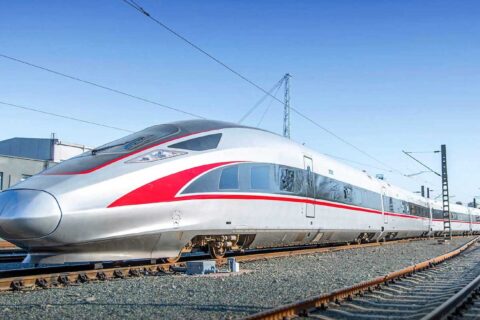
The fundamental sequencing challenge for the entire Bangkok–Nakhon Ratchasima phase is the dependency between the civil works programme and Contract 2.3 — the agreement signed in 2019 with Chinese consortium CRRC and its partners for the procurement of rail, electrical and mechanical systems, rolling stock, and staff training. Contract 2.3 is a comprehensive systems contract covering everything that follows the civil works: track laying, overhead line installation, signalling and communications, traction power, and the EMU trainsets that will operate the route. Its five-year contractual term expires in 2026, and SRT has not yet been able to issue a Notice to Proceed because the civil works zones have not been handed over in sufficient contiguous sections.
SRT’s approach to this problem — under discussion with the Chinese side — is to negotiate a phased entry: asking CREC and the systems partners to begin installing systems in completed sections as soon as those sections are formally handed over, rather than waiting for the entire civil works programme to finish before any systems work begins. This parallel installation strategy could potentially compress the overall programme, but it requires agreement from the Chinese contractors on contract terms, work plan revision, and cost implications. Anan has confirmed that SRT will negotiate a new contract extension with Chinese counterparts as part of the programme reset — a process that will itself take time and add another layer of bilateral complexity to a project that already requires constant coordination between two governments across multiple ministries, state enterprises, and contracting entities.
Thailand’s Rail Ambitions and the Wider Southeast Asian HSR Landscape
The Bangkok–Nakhon Ratchasima phase is the first instalment of a much larger vision: a continuous high-speed rail connection from Bangkok through Nakhon Ratchasima to Nong Khai on the Mekong River, where the line would cross into Laos and connect with the Laos–China Railway opened in December 2021 — creating an unbroken standard-gauge link from Singapore to Kunming and, ultimately, to the Chinese high-speed rail network. Phase 2, from Nakhon Ratchasima to Nong Khai, was approved by the Thai Cabinet at a projected cost of US$10 billion covering 357 kilometres, with a construction timeline targeting completion by 2030 and operations beginning by end of 2031 — including five new stations and a Na Tha transshipment centre at Nong Khai to handle gauge changes between the standard-gauge high-speed line and the 1-metre gauge metre-gauge network. Phase 1’s delays therefore have cascading implications: a 2030 or later opening of Bangkok–Nakhon Ratchasima pushes the Phase 2 programme back correspondingly, delaying the full realisation of Thailand’s strategic connectivity ambitions and the broader Belt and Road-aligned infrastructure logic of the Pan-Asia Railway Network.
Thailand is not alone in wrestling with the realities of delivering Chinese-technology high-speed rail on complex greenfield alignments. Indonesia’s Jakarta–Bandung High-Speed Railway, opened in October 2023 after years of cost and schedule overruns under a consortium including CRRC and Wijaya Karya, provided a regional reference point for both the achievability and the difficulty of the model. The Laos–China Railway — built largely on more straightforward terrain with significantly higher Chinese state direction over procurement and execution — opened on time in 2021, but operates at lower speeds than a true HSR service. Thailand’s Phase 1, at THB179.4 billion and 250 kilometres through varied terrain including urban Bangkok approaches, mountainous tunnels, and newly elevated urban sections, represents a more complex undertaking — and the 28-point programme gap exposed in March 2026 is the clearest signal yet that closing it within four years will require solutions that go beyond the construction site and into the highest levels of both governments.
Leave a Reply