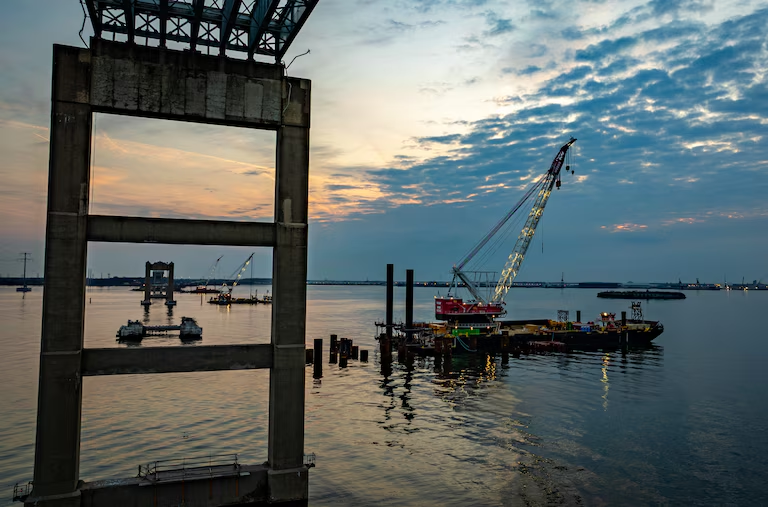
The Maryland Transportation Authority (MDTA) has dropped Kiewit in the Key Bridge rebuild project in Baltimore. The move comes as the authority prepares to initiate the second phase as they opt to seek bids from other contractors. Kiewit had earlier been selected for the initial phase of the progressive design-build procurement in late August 2024. Moreover, Kiewit had been developing plans for a replacement of the collapsed Patapsco River crossing.
The firm’s bid of $1.2 billion was at least $20 million higher than the other two shortlisted teams. By March 2026, Kiewit’s design development reached 70%. This set the stage for negotiations with MDTA on the second, full-construction phase. In that time, the rebuild’s projected construction costs have skyrocketed to more than $5 billion.
It is more than triple MDTA’s earlier estimate that the agency said had been necessary to request federal emergency relief funding. The funding would be used to launch the expedited removal of collapsed bridge debris from the main navigational channel serving the Port of Baltimore.
Other Projects
Other than working on the Key Bridge rebuild in Baltimore, Kiewit is also working on other various projects. One of these is the Austin light rail project, of which they provided latest renderings earlier last week. The project’s design phase will engage around ten subcontractors, with approximately half of them drawn from the Austin region. It reflects a deliberate effort to embed local economic participation into the project’s supply chain from the outset.
Outlook on Kiewit on the Key Bridge Rebuild in Baltimore
Entering phase two of the Key Bridge rebuild in Baltimore, MDTA noted the proposal submitted by Kiewit is unacceptable. The state-owned transport utility also noted that it had informed Kiewit of the “off-ramping.” “Off-ramping” is standard in design/build contracts when a final price can’t be agreed upon. “It became clear through negotiations that Kiewit’s proposal for phase 2 construction is unacceptable, far exceeding the state’s independent cost estimates,” MDTA said in a statement Tuesday.
“Projects of this scale require ongoing review to ensure costs are justified, partnerships are effective, and the public interest is protected,” Baltimore County Executive Kathy Klausmeier said. “We support a process that prioritizes both urgency and accountability, because rebuilding the Key Bridge the right way is just as important as rebuilding it quickly.”
Kiewit responded, stating that while an agreement was unable to be reached on phase 2, “we’re proud of the progress achieved and the strong working relationship developed throughout phase 1.” Nonetheless, as the MDTA seeks a new contractor, Kiewit is expected to continue on the project’s first phase through the end of 2026.
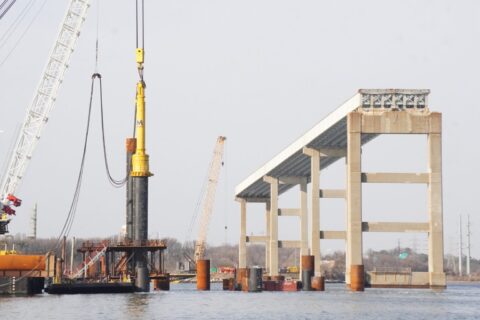
Project Overview
- Project Name: Francis Scott Key Bridge Rebuild
- Project Type: Bridge reconstruction
- Value: $5 billion+
- Purpose: Replace collapsed bridge and restore critical transport link
- Status: Transitioning to Phase 2; contractor change
Key Stakeholders
- Authority: Maryland Transportation Authority
- Initial Contractor: Kiewit Corporation
- Local Government: Kathy Klausmeier
- Location Asset: Port of Baltimore
Location
- City: Baltimore
- State: Maryland
- Country: United States
Scope
- Replacement of collapsed Patapsco River crossing
- Debris removal from navigation channel
- Full bridge reconstruction under phased delivery
Funding / Delivery Model
- Progressive design-build approach
- Federal emergency relief funding support
- Competitive bidding for Phase 2 construction
Status
- Phase 1 design ~70% complete
- Kiewit removed from Phase 2
- New contractor procurement underway
Key Risks & Challenges
- Escalating project costs (>$5bn)
- Contractor negotiations breakdown
- Also urgency vs cost control pressures
Strategic Significance
- Restores key logistics route for Port of Baltimore
- Critical national and regional infrastructure
- High-profile reconstruction project following collapse
Key Developments
- Kiewit bid exceeded competing proposals
- Phase 2 proposal deemed unacceptable
- Nonetheless, Kiewit will continue Phase 1 through 2026


Leave a Reply