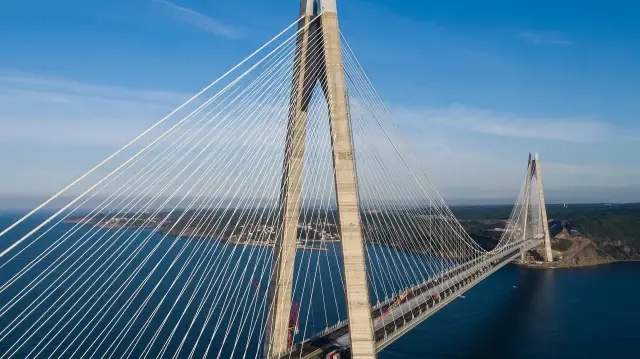
Turkey has officially secured $6.75 billion in financing for its most ambitious infrastructure endeavor to date: an intercontinental high-speed railway connecting Europe and Asia known as the Bosphorus Rail Project. Marking the largest foreign-funded railway project in the nation’s history, this landmark agreement provides the capital required to lay tracks across the Bosphorus Strait. The newly financed corridor will fundamentally reshape regional logistics, seamlessly linking Turkey’s expansive Anatolian rail network with its European borders. By finalizing these preliminary funding deals with a consortium of international export credit agencies and commercial banks, the Turkish Transport Ministry has greenlit a megaproject that has been on the drawing board for nearly a decade.
Engineering the Bridge Crossing
The crown jewel of this heavy civil endeavor is the utilization of the Yavuz Sultan Selim Bridge. Completed in 2016, the world’s widest suspension bridge was explicitly designed with a central 12.5-meter gap to accommodate a future double-track railway. However, executing this integration presents a formidable “Jobsite Impact” for the upcoming civil contractors. The engineering teams must manage the extreme dynamic loads of heavy freight trains crossing a hybrid cable-stayed and suspension structure. Installing the ballastless track systems and overhead catenary equipment nearly 322 meters above the Bosphorus requires rigorous aerodynamic modeling and specialized slip-form paving techniques to ensure the bridge’s structural deck remains perfectly balanced during continuous rail operations.
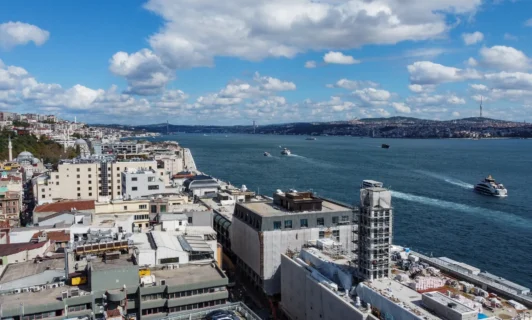
Yavuz Sultan Selim Intercontinental Railway: Factsheet
Project Name: Yavuz Sultan Selim Bridge Railway & Northern Marmara Rail Corridor
Location: Istanbul, Turkey (Connecting Asian and European peninsulas)
Total Financing: $6.75 Billion (Largest foreign-funded rail project in Turkey)
Client: Ministry of Transport and Infrastructure (Turkey) / TCDD (Turkish State Railways)
Project Team (Anticipated):
Financiers: International consortium backed by European Export Credit Agencies (ECAs).
Lead Engineering/Design: [Final design awards pending EPC mobilization]
Main EPC Contractors: [Tendering Phase – Expected to be a JV of Tier 1 Turkish firms (e.g., Kalyon, IC İçtaş, Cengiz) and international rail specialists]
Key Infrastructure:
Integration of double-track railway onto the existing Yavuz Sultan Selim Bridge.
~120km of high-speed/heavy freight surface alignment.
Extensive EPB TBM tunneling and approach viaducts.
Technical Systems: 25 kV AC Electrification, ETCS Level 2 Signaling.
Strategic Goal: Unlocking the “Middle Corridor” for 24/7 uninterrupted Asia-Europe rail freight, bypassing the Marmaray passenger tunnel.
Heavy Civil and Tunneling Scope
Beyond the bridge, the $6.75 billion package funds over 120 kilometers of new heavy rail infrastructure, pushing contractors into challenging geological territory. The alignment requires extensive drill-and-blast and mechanized tunneling operations through the complex, fault-heavy bedrock of the Thracian and Anatolian peninsulas. Multiple Earth Pressure Balance (EPB) Tunnel Boring Machines (TBMs) will need to be mobilized to carve out the subterranean corridors leading up to the Bosphorus crossing. The scope also mandates the erection of dozens of approach viaducts, requiring massive concrete pier pours and incremental launching methods to navigate the densely populated and topographically severe outskirts of northern Istanbul. This technical undertaking is part of a broader regional push for connectivity, as seen in how Türkiye begins work on the Zangezur Corridor railway, which will further strengthen strategic transport links across the region.
Unlocking the Middle Corridor
The strategic necessity of this new intercontinental link cannot be overstated. Currently, the only rail connection between the two continents is the Marmaray sub-sea tunnel, which is heavily bottlenecked by Istanbul’s daily commuter traffic, severely restricting the window for heavy freight passage. This newly funded northern bypass will unlock the “Middle Corridor” of the Trans-Caspian International Transport Route. It will allow block trains carrying cargo from China to Europe to transit through Turkey uninterrupted, 24/7. This logistical bypass is a generational shift, effectively transforming Istanbul from a transit bottleneck into the highest-capacity rail freight artery connecting the European Union with Asia.
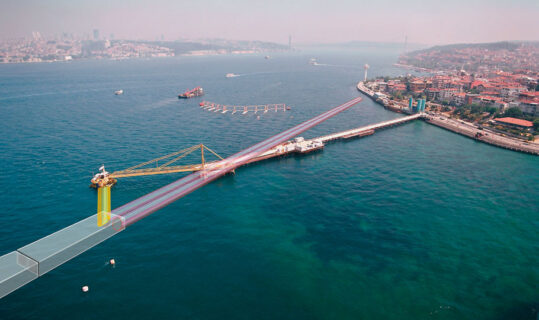
Moving to Mobilization
With the financing architecture now sealed, the project rapidly transitions from the boardroom to the jobsite. The Turkish government is expected to finalize the main Engineering, Procurement, and Construction (EPC) contracts shortly, likely favoring a joint venture of Tier 1 Turkish builders and international firms tied to the funding sources. Heavy machinery mobilization, early geotechnical surveys, and the establishment of TBM launch shafts are projected to begin before the end of the year. For the global railway supply chain, this represents an immediate, massive demand for high-strength rail steel, digital ETCS Level 2 signaling infrastructure, and specialized high-voltage electrification components.
Leave a Reply