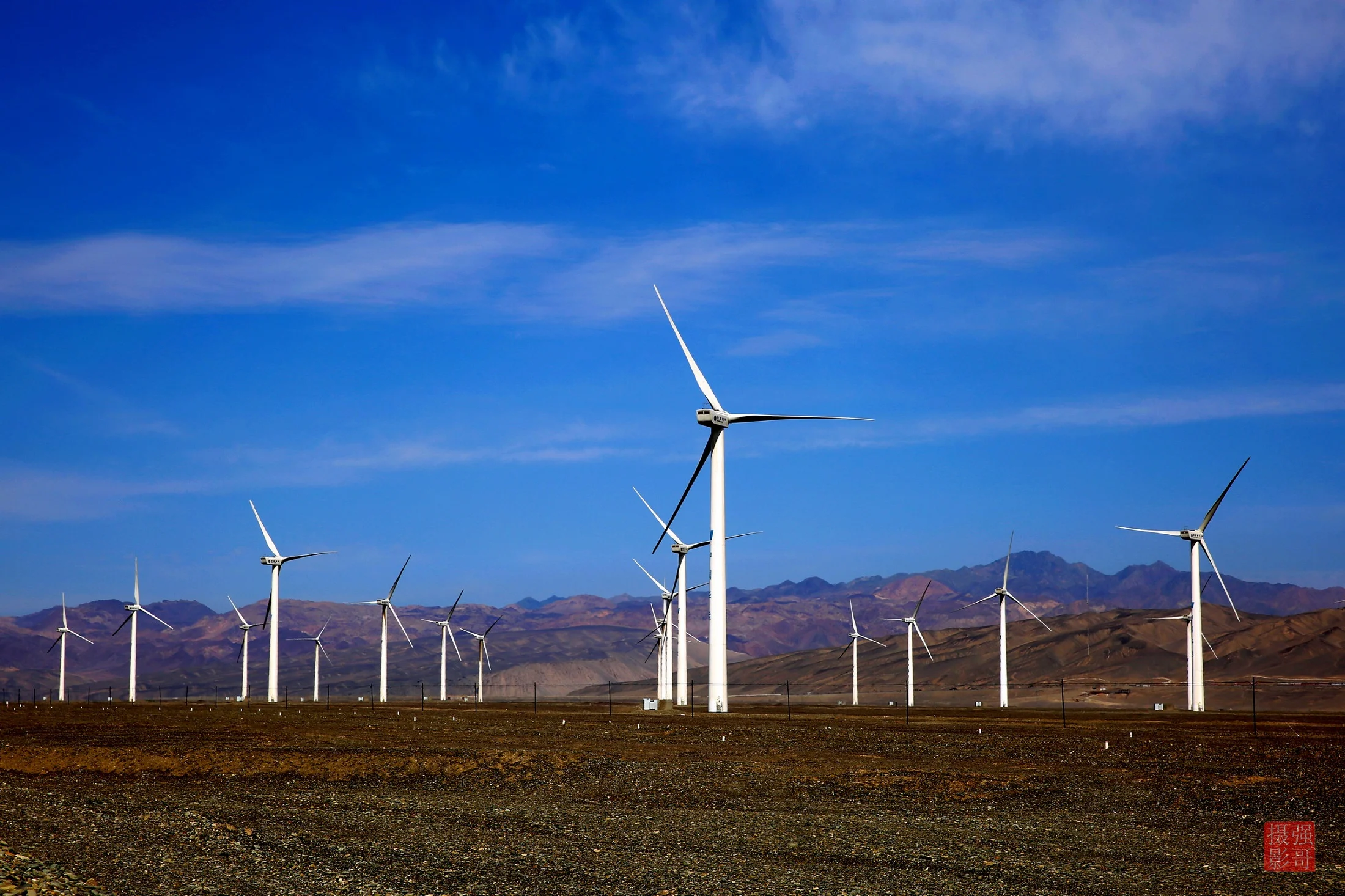
Al Ghat Wind Power project reached a significant operational milestone as the first turbine was connected to Saudi Arabia’s national grid. This marks rapid progress in clean energy deployment at the 600 MW wind farm. This achievement positions wind power as a key contributor to energy diversification under the National Renewable Energy Program. Furthermore, it aligns with Saudi Vision 2030 targets for renewable energy.
Major Grid Integration at Al Ghat Wind Power Project
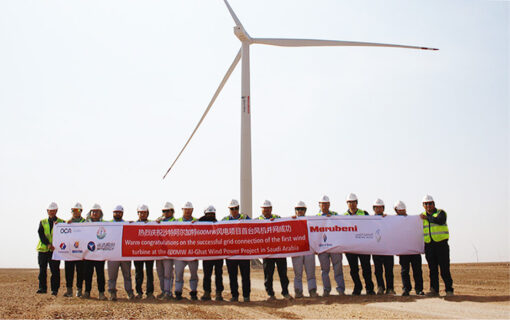
The first wind turbine at the Al Ghat Wind Power project successfully synchronized with the Saudi grid following substation backfeeding on March 12, 2026. Within 48 hours, the team completed synchronization, signaling strong execution pace
This grid connection represents the first time 7.7 MW turbine units have been integrated into Saudi Arabia’s grid. Moreover, it shows a step change in renewable technology deployment. Shandong Electric Power Construction Corporation III (SEPCO3) handles engineering, procurement, and construction (EPC) for the project.
Design, Capacity, and Scope of the Al Ghat Wind Power Project
The Al Ghat Wind Power Project is designed to deliver 600 MW of clean energy through 80 advanced turbines, each rated at 7.7 MW. In addition, the project employs onshore wind technology specifically optimized for desert conditions, ensuring maximum efficiency and durability.
Furthermore, a dedicated substation and transmission lines have been constructed to seamlessly integrate the generated electricity into the Saudi national grid. To support turbine erection and maintenance, the project includes comprehensive access roads, reinforced foundations, and essential civil works. Moreover, state-of-the-art control and Supervisory Control and Data Acquisition (SCADA) systems provide real-time monitoring and operational optimization, enhancing reliability and performance.
Equally important, the project implements robust environmental management measures, including CO₂ reduction monitoring, dust control, and habitat protection, to minimize ecological impact. Consequently, once fully operational, the Al Ghat Wind Power Project will generate reliable electricity for hundreds of thousands of households while reducing carbon emissions by approximately 1 million tons annually.
Environmental Benefits and National Targets
In addition to electricity generation, the project supports Saudi Vision 2030 renewable targets and reduces CO₂ emissions equivalent to planting nearly 50 million trees. By 2030, renewable energy is expected to provide roughly 50% of Saudi Arabia’s electricity, with wind farms like Al Ghat playing a critical role.
World‑Leading Low Cost Energy
Al Ghat achieved an ultra‑low levelized cost of electricity (LCOE) at $15.655 per MWh, setting a global benchmark for wind energy. This cost competitiveness reinforces Saudi Arabia’s position as a leading market for utility-scale renewables.
Al Ghat Wind Power Project Execution and Coordination
The project followed a coordinated design, procurement, construction, and commissioning plan to ensure efficient and timely delivery. Initially, teams completed civil works and turbine foundations before commencing installation activities, thereby creating a stable base for subsequent phases.
Thereafter, engineers carefully sequenced turbine assembly and erection to optimize logistics, reduce delays, and enhance overall efficiency. Moreover, project teams accelerated electrical commissioning processes and achieved grid synchronization ahead of schedule, demonstrating strong execution capability and effective coordination across all phases.
Project Milestones Timeline
Second Quarter 2023
The Al Ghat Wind Power Project began in the second quarter of 2023, marking a significant step in Saudi Arabia’s renewable energy expansion. Subsequently, Marubeni Corporation, in partnership with Abdul Aziz Al‑Ajlan Sons Co., secured the 600 MW project award. Following this milestone, project teams completed feasibility studies, environmental assessments, and detailed site surveys to guide execution.
Furthermore, stakeholders signed a 25-year Power Purchase Agreement (PPA) with Saudi Power Procurement Company, thereby establishing a strong implementation framework. Consequently, in the first quarter of 2024, a financing consortium led by Japan Bank for International Cooperation, Sumitomo Mitsui Trust Bank, Standard Chartered Bank, and Commercial Bank of Dubai secured funding and confirmed the $624 million project cost.
Third Quarter 2024
Meanwhile, by the third quarter of 2024, contractors transported 7.7 MW turbines to Saudi ports and initiated large-scale site mobilization works. At the same time, EPC teams advanced civil works, logistics planning, and early construction activities across the project site. Moving forward into the first quarter of 2025, engineers completed foundations for the first 20 turbines while launching substation construction works.
Moreover, teams installed transmission infrastructure to ensure efficient grid integration and long-term operational stability. By the fourth quarter of 2025, contractors progressed to electrical and mechanical commissioning, installing turbines and connecting them internally. Subsequently, engineers initiated grid synchronization tests to validate system performance and ensure compliance with national grid standards.
First Quarter 2026
Thereafter, in the first quarter of 2026, the project achieved a major milestone when teams synchronized the first turbine with the Saudi grid on March 12. In addition, engineers completed substation backfeeding within 48 hours, demonstrating strong coordination and technical efficiency across teams. Looking ahead, the project will likely reach partial commercial operation by the third quarter of 2026, bringing multiple turbines online.
Consequently, the facility will begin delivering electricity to the grid while initiating CO₂ reduction monitoring systems to track environmental performance. Finally, by the second quarter of 2027, developers expect to commission all 80 turbines, achieving the full 600 MW capacity. As a result, the project will enter full commercial operation under the 25-year PPA, securing long-term clean energy supply.
Similarly, Saudi Arabia has been advancing large-scale wind energy projects, as highlighted in the Al Ghat and Waad Al Shamal Wind Projects, where Marubeni secures 1.1GW Wind Energy Project in Saudi Arabia under the Kingdom’s renewable energy program. The initiative demonstrates how strategic partnerships, long-term power purchase agreements, and coordinated project execution continue to drive wind energy deployment in the region. In this context, the Al Ghat Wind Power Project builds on this earlier momentum, further strengthening Saudi Arabia’s position in utility-scale renewable energy development.
Al Ghat Wind Power Project — Fact Sheet
Project Name: Al Ghat Wind Power Project
Location: Al‑Ghat, Riyadh Province, Saudi Arabia
Capacity: 600 MW (80 × 7.7 MW units)
Total Cost: $624 million
Technology: Onshore wind turbines, SCADA control, transmission lines
Grid Integration: First turbine synchronized March 2026
Clean Energy Output: Electricity for hundreds of thousands of households
Environmental Benefit: 1 million tons CO₂ reduction annually
Record: Global record low LCOE $15.655/MWh
Project Status: Construction and commissioning
Project Team & Key Stakeholders
Owner / Developer:
- Marubeni Corporation
- Abdul Aziz Al‑Ajlan Sons Co.
EPC Contractor:
- Shandong Electric Power Construction Corporation III (SEPCO3)
Offtaker:
- Saudi Power Procurement Company (SPPC) – 25-year PPA
Finance Partners:
- Japan Bank for International Cooperation (JBIC)
- Sumitomo Mitsui Trust Bank
- Standard Chartered Bank
- Commercial Bank of Dubai
Regulatory Context:
Technical & Commissioning:
- Project execution teams for substation and turbine integration
Leave a Reply