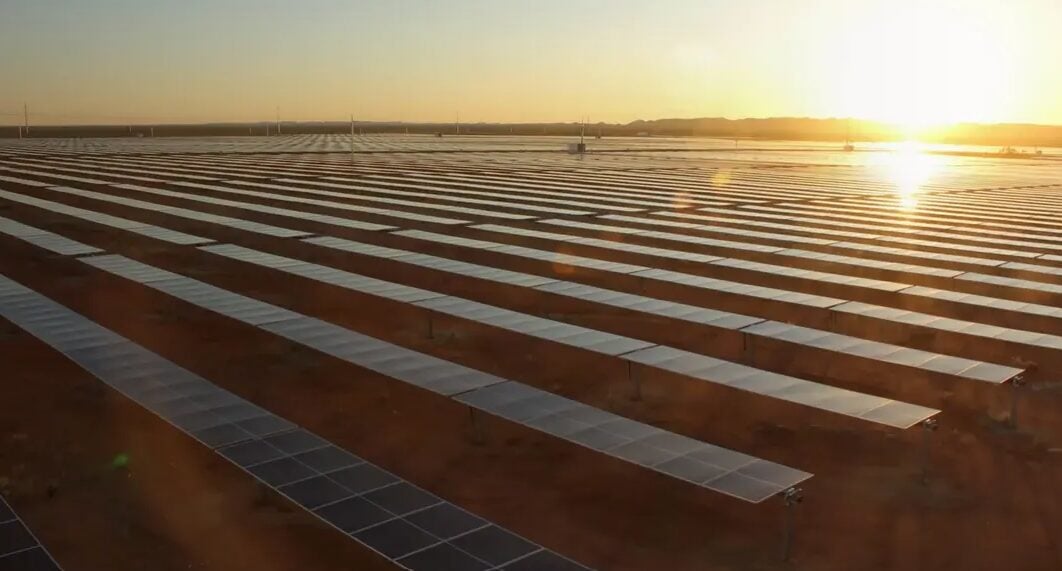
Mining giant Fortescue has commenced the construction of a 690 MW solar farm and a 74 MW / 650 MWh battery energy storage system. This construction is taking place in Western Australia’s Pilabara region. Also, the project comes in as Fortescue races towards its “real zero” decarbonisation goal. The project is set to join the boom of solar projects that are recently springing up in Australia.
Fortescue stated that construction has started on the 690 MW Turner River solar farm. The solar farm is located about 120 kilometres south of Port Hedland. Also, it has began installation of a 74 MW / 650 MWh battery energy storage system at its Cloudbreak mine site. The site is where construction of a 190 MW solar farm is nearing completion.
Fortescue to Achieve Zero Decarbonisation with Turner River
Fortescue said Turner River will be the final solar installation required to deliver the company’s real zero decarbonisation plan. This will take its total PV capacity to over 1.4 GW.
“While others are still debating whether decarbonisation is possible, Fortescue is getting on with building what’s needed to do it,” Fortescue Metals and Operations Chief Executive Office Dino Otranto stated.
“The technology is here. The economics are improving every year. And anyone watching global fuel markets can see exactly why electrification and renewable power matter more than ever.”
“Our solar farms, transmission lines, wind generation and batteries are being built right now across the Pilbara. We are moving first because the economics, the technology and the national interest are all pointing in the same direction.”
The Turner River project adds to the Cloudbreak facility, the 440 MW Solomon Airport solar farm that is also under construction, and the 100 MW at North Star Junction solar farm. Fortescue also sources solar power from the 60 MW Chichester Solar Farm. The solar farm was built by Alinta and now owned by APA.
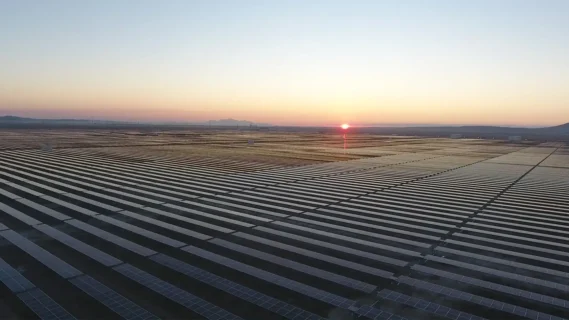
The solar generation portfolio forms the main part of a large-scale off-grid renewable energy network that Fortescue is aiming to complete by as early 2027. This comes in as the company races to eliminate fossil fuels from its iron ore mining and processing operations in Western Australia. Moreover, the Pilbara Green Grid will include over 600 MW of wind generation and up to 5 GWh of battery energy storage.
Other Fortescue Projects in Pilbara
Additionally, Fortescue stated that it has already built over 480 kilometres of high-voltage transmission infrastructure across the Pilbara. Once complete, the network is expected to extend beyond 620 km, physically connecting Fortescue’s renewable energy assets to its mines, rail and port operations.
The miner is aiming to reach “real zero” at its Pilbara mines by 2030, which means burning no gas or diesel for its electricity supply, or for the land transport and drilling and hauling operations at the facilities.
Completion Date
Construction of Turner River is expected to be completed in 2028. Lik while construction of the Cloudbreak battery is expected to be completed in FY27.
While the build out of its renewable energy generation and storage portfolio continues, Fortescue is also electrifying its mobile mining fleet. Additionally, the miner said it already has 16 electric excavators and an electric drill already operating across its iron ore operations. It expects about half of the company’s excavator fleet will be electric by the end of 2026.
It also expects its first battery electric haul truck will be operational before the end of the year. Moreover, it has commenced commissioning of its first in-house developed 6 MW fast charger. The charger is capable of fully charging a haul truck in approximately 30 minutes.
Lastly, it also said facility testing of XCMG’s prototype battery electric wheel loader, dozer, grader and water cart is now in the final stages. These equipment are preparing to make the journey from China to the Pilbara for site testing.
Turner River Solar Farm Construction Project Factsheet
Developer: Fortescue Ltd (Pilbara Energy Generation Pty Ltd)
Location: Pilbara region, Western Australia
Generation Capacity: 690 MW (originally proposed at 573–644 MW, scaled up for construction)
Project Footprint: 1,416.6-hectare
Solar Infrastructure: Over 1,000,000 tracking solar PV panels mounted on ground-embedded tracking piers
Project Status: Construction Commenced (Breaking ground announced May 2026)
Target Completion: 2028
Operational Lifespan: 25–30 years (with indefinite extension potential via asset repowering)

Leave a Reply