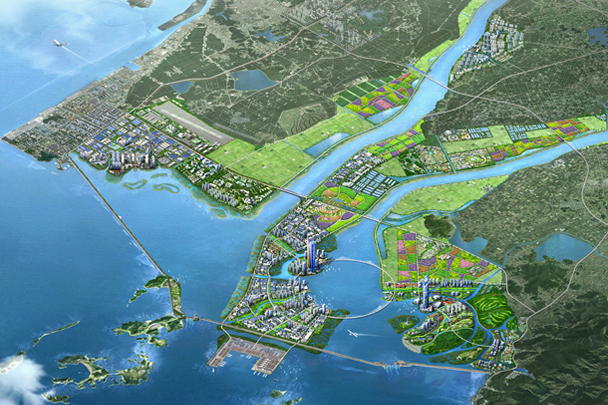
South Korea’s Ministry of Oceans and Fisheries has officially commenced construction on a breakwater extension at the Saemangeum Port New Harbor, marking a critical milestone in the country’s long-running effort to transform one of the world’s largest land reclamation sites into a functional industrial and logistics hub. The project, valued at 101.2 billion won (approximately USD 69 million), involves extending the existing 3.1-kilometre breakwater by an additional 250 metres and is targeted for completion by March 2029.
Decades in the Making: The Saemangeum Story
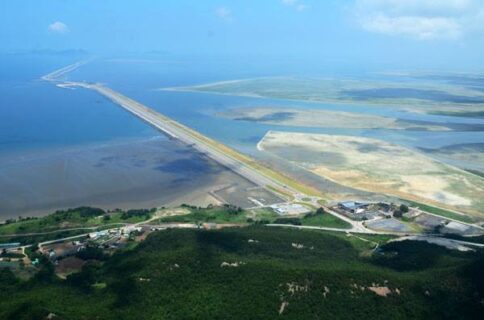
The Saemangeum New Harbor is no ordinary port. Located on an artificial island constructed in the offshore area in front of the Saemangeum seawall — itself one of the longest seawalls on the planet at 33 kilometres — the port has been in development since 2009. The wider Saemangeum project began in the early 1990s as an ambitious land reclamation initiative on South Korea’s western coast, eventually yielding over 400 square kilometres of reclaimed land intended for industrial, agricultural, and residential development.
Project Fact Sheet
Project Name: Saemangeum Port New Harbor Breakwater Extension
Location: Saemangeum, North Jeolla Province (Jeollabuk-do), South Korea
Total Project Cost: 101.2 billion Korean Won (~USD 69 million)
Scope: Extension of the existing 3.1km breakwater by an additional 250 metres
Primary Objective: Secure port tranquility to enable safe vessel docking and cargo operations
Construction Start: March 2026
Target Completion: March 2029
First Berth Opening: Scheduled second half of 2026 (two general cargo berths)
Port Type: Artificial island-type port serving the Saemangeum Industrial Complex
Project Team
Lead Government Authority: Ministry of Oceans and Fisheries, Republic of Korea
Senior Official: Gong Du-pyo, Director General, Port Bureau
Project Developer: Government of South Korea (publicly funded infrastructure)
Main Contractor: To be confirmed
Engineering & Design Consultants: To be confirmed
Regulatory Oversight: Korea Maritime & Ocean University and Korea Institute of Ocean Science & Technology (advisory and compliance roles)
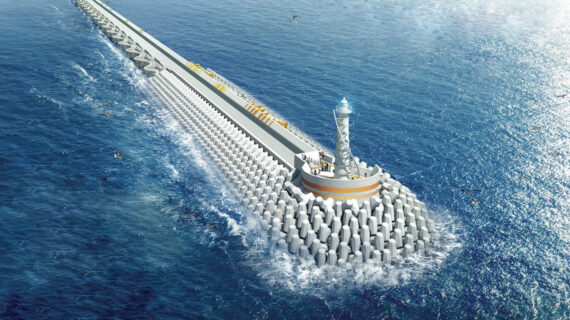
The new harbor is designed primarily to serve cargo traffic generated by the Saemangeum Industrial Complex and surrounding commercial areas. In the second half of 2026, two general cargo berths — configured for handling miscellaneous cargo — are scheduled to open for the first time, signalling the formal entry of Saemangeum into South Korea’s active port network. The breakwater extension now underway is a foundational prerequisite: without adequate tranquility within the port basin, vessels cannot safely dock, load, or unload cargo.
Engineering Calm: Why the Breakwater Extension Matters
In port engineering, tranquility refers to the degree to which wave heights within a harbour basin are attenuated to safe operational levels. The Yellow Sea, off which Saemangeum sits, is known for significant tidal ranges and periodic swells — conditions that can make cargo handling hazardous if not adequately mitigated. By extending the existing breakwater by 250 metres, the project aims to create a wider protective arc that reduces wave penetration into the berth areas, enabling vessels to operate safely regardless of prevailing sea states.
The Ministry emphasises that achieving adequate port tranquility is not merely an operational convenience but an essential condition for long-term development of additional berths. As the Saemangeum Industrial Complex grows and cargo volumes increase, the port will need to expand its berth capacity significantly. The breakwater forms the structural backbone upon which future phases of port development will depend — without it, the commercial viability of the entire harbor complex would remain constrained.
Regional Context: Asia’s Infrastructure Push Picks Up Steam
The Saemangeum breakwater project is part of a broader regional trend of governments in East and Southeast Asia investing heavily in port and coastal infrastructure to support industrial growth and supply chain resilience. South Korea itself has been expanding its port network at Busan — currently ranked among the top ten busiest container ports globally — while simultaneously developing secondary nodes like Saemangeum to decentralise logistics capacity and serve inland industrial zones.
Comparable large-scale reclamation-to-port transitions in the region include Singapore’s Tuas Mega Port, currently under phased construction and designed to eventually handle 65 million TEUs annually, and China’s Caofeidian Industrial Zone port complex in Hebei Province, which similarly arose from reclaimed coastal land to serve heavy industry. These precedents underscore both the potential and the patience required: transforming reclaimed land into world-class port infrastructure is a generational undertaking. South Korea’s continued investment at Saemangeum signals its commitment to seeing that transformation through, positioning the zone as a future gateway for advanced manufacturing exports — including battery components, electric vehicle parts, and green hydrogen — all sectors prioritised under South Korea’s national industrial policy.
Ripple Effects: Economic and Industrial Gains on the Horizon
The Ministry of Oceans and Fisheries has underscored that the breakwater extension is not became a civil engineering exercise but a catalyst for broader economic revitalisation of the Saemangeum region. A fully operational and tranquil port will strengthen logistics linkages between the industrial complex and export markets, making the zone more attractive to both domestic manufacturers and foreign investors. Construction activities will also directly generate employment in civil and marine engineering disciplines, with operational-phase jobs following once the berths open. This focus on maritime infrastructure and regional economic stimulation is also being realized in Western Australia, where the Spoilbank Marina project is clearing the way for the completion of a transformative waterfront precinct in Port Hedland.
Gong Du-pyo, Director General of the Port Bureau, stated that the extension would further strengthen the foundation for additional harbor development and that the government would ensure the first opening of the new harbor — scheduled for the second half of 2026 — proceeds smoothly and contributes to the revitalisation of the Saemangeum region. With construction now underway, the clock is ticking toward what could be a defining chapter in South Korea’s coastal development story.
Leave a Reply