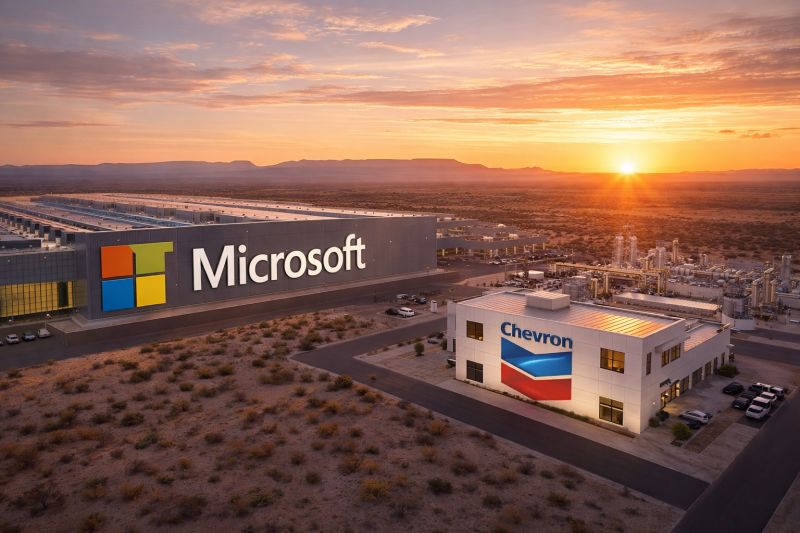
Project Kilby is a landmark 2.67-gigawatt, gas-fired power generation project in West Texas developed by Chevron’s subsidiary, Energy Forge One, to directly supply a massive, hyperscale Microsoft artificial intelligence (AI) data center. Anchored by a 20-year power purchase agreement, this multi-billion-dollar energy infrastructure deal operates entirely “behind the meter,” drawing natural gas straight from the Permian Basin to generate dedicated off-grid electricity. By bypassing ERCOT grid interconnection delays and utilizing GE Vernova gas turbines, Project Kilby establishes a revolutionary structural model where major energy producers monetize local fossil fuel assets directly into long-term tech sector contracts. This flagship project represents a major shift toward co-located, off-grid natural gas infrastructure designed to solve the critical energy constraints bottlenecking next-generation cloud computing and enterprise AI growth.
Project Kilby and another similar development, Project Jupiter reflect a major structural shift in Permian Basin natural gas infrastructure, where massive, behind-the-meter artificial intelligence (AI) data centers drive localized demand for natural gas power generation rather than traditional commodity exports. Chevron’s Project Kilby is a 2.67-gigawatt, gas-fired, off-grid power plant in West Texas built through its subsidiary Energy Forge One to supply electricity directly to a Microsoft data center campus under a 20-year power purchase agreement. Conversely, Project Jupiter is a proposed multi-gigawatt AI data center campus in southern New Mexico, developed by technology partners like Oracle, OpenAI, and BorderPlex, that requires hundreds of millions of cubic feet per day of firm natural gas supply to run its dedicated microgrids.
The critical relationship between Chevron’s Project Kilby strategy and Project Jupiter lies in how these massive projects interact with regional pipeline capacity and Permian gas supply. Historically, midstream pipelines focused strictly on transporting Permian associated gas out of West Texas toward gulf coast LNG export terminals or West Coast utilities. However, the rise of behind-the-meter power deals like Chevron’s Project Kilby creates intense localized competition for pipeline capacity within the region. As Project Kilby absorbs large volumes of Permian gas directly at the wellhead for dedicated power, other major regional builds, such as Project Jupiter, equire major pipeline expansions and new midstream projects (such as Kinder Morgan’s El Paso Natural Gas system or Energy Transfer’s Desert Southwest expansion) to deliver gas to neighboring microgrids. Consequently, Chevron’s Kilby model proves that data center developers can monetize cheap Permian gas locally into stable power contracts, setting off a broader race that directly drives new pipeline developments and capacity allocations needed to support mega-projects like Jupiter.
June 22, 2026
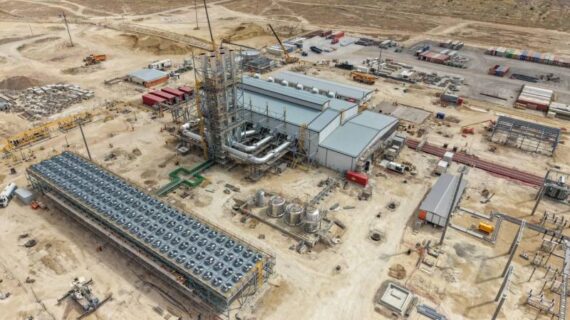
Chevron Corporation today made an announcement that Energy Forge One LLC, a wholly owned subsidiary, has inked an agreement with Microsoft Corporation to develop a co-located power facility in West Texas. This power facility will provide dedicated electricity to a Microsoft-operated data center under a 20-year power purchase agreement. Chevron and Engine No. 1 have been collaborating on the development, known as Project Kilby (“Kilby”). Also, this project will add on to the list of rapidly developing power plants in the United States such as the one in Freestone County. These facilities are expected to meet the power demands of data centers and even industrial facilities.
Capacity
Kilby is expected to deliver approximately 2.67 gigawatts of capacity. The project will be built through a phased, modular approach that enables incremental expansion over time. Additionally, a majority of the generation will come from large GE Vernova turbines and associated electrical infrastructure. Also, additional capacity will be provided by Solar Turbines, a wholly owned subsidiary of Caterpillar Inc.
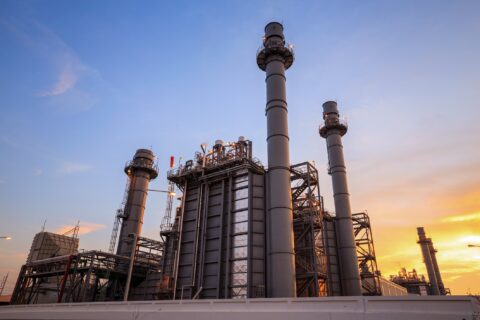
Moreover, this partnership positions Kilby among the largest co-located natural gas power and data center developments in the U.S., supporting the next phase of American AI growth by leveraging America’s natural gas advantage.
“AI is reshaping the global economy, and abundant, affordable, reliable energy is essential to fueling that transformation,” said Jeff Gustavson, Chevron president of New Energies. “Chevron is uniquely positioned to deliver power to customers with certainty, speed and at a competitive cost, leveraging Permian natural gas and our proven execution capabilities. Also, this project links Chevron’s traditional strengths to emerging demand, creating differentiated value for our shareholders and the communities where we operate.”
“The rapid growth we’re experiencing in AI and cloud, driven by customer demand, requires energy infrastructure that can scale quickly and reliably,” said Noelle Walsh, Microsoft president of Cloud Operations + Innovation. “Also, our agreement with Chevron helps ensure we’ll have dedicated, large-scale power to support the evolution and reliability of advanced compute. Furthermore, through this partnership, we’re delighted to grow with and become a deeper part of the West Texas community.
By co-locating new, large-scale power generation with the data center, Kilby is designed to deliver reliable and dispatchable electricity directly to Microsoft. Moreover, the project aims to mitigate impacts on the regional grid that consumers rely on.
Significance of the Agreement
Furthermore, this agreement represents an important milestone toward Chevron’s Final Investment Decision (FID). The FID is expected by the end of 2026, subject to the completion of other necessary conditions. Moreover, the project is targeting mid-teen returns. Kilby is expected to generate diversified cash flow that is independent of oil and gas price cycles, further supporting resilient shareholder returns. First power delivery is anticipated in 2028.
Additionally, in support of digital infrastructure, Kilby is expected to generate significant economic benefits for the region, including more than $10 billion in state and local tax revenue, support almost 2,000 jobs, and drive broader economic growth.
Also, in lieu of freshwater, Kilby plans to use non-potable, brackish groundwater sources for power plant operations. Furthermore, Chevron is working to advance solutions for reuse of produced water from oil and gas operations.
Design
Lastly, the plant design will incorporate advanced air emissions control technologies, including Selective Catalytic Reduction systems designed to reduce NOx emissions, as well as measures to minimize noise and light impacts on surrounding communities.
Project Factsheet
Project Name: Project Kilby (“Kilby)
Primary Developer: Chevron Corporation (via Energy Forge One LLC)
Offtaker: Microsoft Corporation
Agreement Type: 20-Year Power Purchase Agreement (PPA)
Estimated Investment: Up to $7 Billion
Target Power Capacity: 2.67 Gigawatts
Location: near Pecos, Reeves County, West Texas
Key Stakeholders and Partnerships
- Chevron New Energies: Leading execution to bridge traditional hydrocarbon advantages with high-tech energy demand.
- Engine No. 1: Collaborating development partner through its energy company, Joulent. It holds an option for a 50% equity stake and proportional capital expenditures.
Project Timeline
- Agreement Signed: June 2026
- Final Investment Decision (FID): Expected Late 2026 (Pending final regulatory and environmental permitting)
- Initial Power Delivery: Targeted for Late 2028
- Full Build-Out Completion: Phased rollouts continuing into the 2030s

Leave a Reply