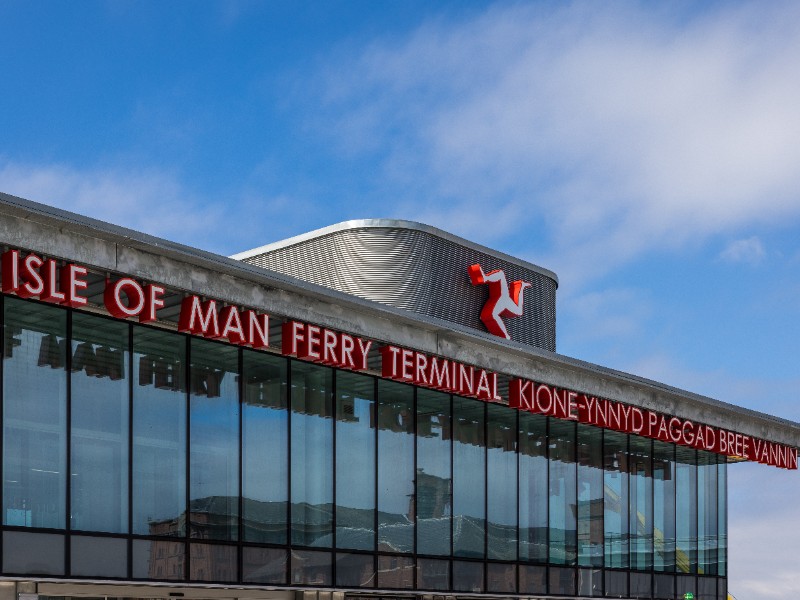
Liverpool Ferry Terminal is a marine transport facility project that was developed in Prince Half-Tide Dock, Liverpool, United Kingdom. The facility was made to reinforce the maritime interconnection between the Isle of Man and the mainland UK. It was also to offer a long term base of operations to the Isle of Man Steam Packet Company.
The Isle of Man Government has indicated that the £72.676 million approved capital budget on the project is completely drawn. These were broken down into £70.676 million in core capital funding and £2.12 million in inflation reserves. According to the officials, the project has already passed through the final commercial reconciliation phase where a final contractual agreement would be made to decide on the final outturn cost. There have been early signs that the total number can be being higher than the approved budget.
Reported in June 2024, the Liverpool Ferry Terminal was inaugurated and is now used as a passenger and freight-only terminal. The project overturned the ageing docking facilities and made modernized docking facilities, such as better embarkation systems, freighting handover and integrated docking functions. The construction was provided in the active marine environment, which involved organizing with the existing port traffic and strict tidal schemes.
Budget Escalation and Project Close-Out
The project initially had a pre-estimate of £38 million. Further design enhancements, marine engineering needs and dock integration necessities resulted in the scope creep. It was found that structural reinforcement works, compliance adjustments and specialist marine construction methods raised capital requirements during the project life cycle. The procurement costs also suffered due to inflationary pressures of 2020-2023 especially those related to steel, marine systems and imported parts.
The marine infrastructure development projects are generally more susceptible to geotechnical uncertainty, tidal and operational integration risk. The Prince Half-Tide Dock construction was to be done in stages to ensure that the work did not interfere with the current port activities. These aspects prolonged programme life cycles and brought in cost fluctuation. According to industry analysts, long-term infrastructure projects especially the public projects are very sensitive in terms of inflation volatility and contractual variations.
Budgets reconciliation is continuing. Project accounts are also under scrutiny to ascertain work done, calculate approved variations and incur other outstanding payments or recoveries of the contractor. The last audited figure will be verified in the end once commercial negotiations are over.
In the face of cost increase, the authorities argue that the terminal is a long term strategic maritime investment. The facility enhances freight resilience, increases passenger processing capacity as well as promotes economical links between the Isle of Man and the northwest of England. Moreover, regional port investment has expanded with developments such as Alexandra Dock Multi-User Warehouse Project at Port of Liverpool. The port enhances freight logistics capacity across the Merseyside maritime corridor.
The infrastructure lifespan is estimated to be between 30-50 years, making the terminal a long term investment in the stability of transport in the region.
Project Factsheet: Liverpool Ferry Terminal
- Name of the project: Liverpool Ferry Terminal.
- Location: Half-Tide Prince Dock, Liverpool, United Kingdom.
- Industry: Maritime Transport System.
- Address: Government of Isle of Man, Department of Infrastructure.
- Vessel: Isle of Man Steam Packet Company.
- Original Estimate at the initial stage: £38 million.
- Authorized Capital Budget £70.676 million.
- Inflation Reserve: £2.12 million.
- Cumulative Authorized Financials: £72.676 million.
- Budget Status: Fully drawn
- Final Outturn Cost: Under commercial reconciliation.
- Status of Opening: June 2024.
- Main Risk Factors: Construction complexity in the marine industry, inflation risk, contractual fluctuations.
- Strategic Objective: Long-term sea links and modernised ferries.
Project Client & Stakeholders
- Isle of Man Government – Commissioning client owning the ferry terminal project.
- Liverpool City Council – Partner supporting planning, access roads and local infrastructure.
- Liverpool Waters / Peel L&P – Developer of the wider regeneration area around the terminal site.
Design & Project Management
- Lead Architect: The Manser Practice – Responsible for architectural design, interior layout, marine and landscape coordination.
- Project Managers & Cost Consultants: Turner & Townsend – Oversaw delivery planning, cost management and coordination across the project.
- Engineering & Technical Consultants: AECOM – Provided civil and structural engineering expertise.
Main Construction & Contractors
- Principal Contractor: John Sisk & Son Ltd – Delivered the main construction works for the new ferry terminal.
- Steelwork Supplier/Installer: Billington Structures Ltd – Supplied and installed key structural steel elements.
- Specialist Subcontractors:
• SPI Piling Ltd – Carried out sheet piling and foundation works for quay and terminal structures.
• Passivent & Kingfisher Louvres – Supplied ventilation and external louvre systems as part of building environmental systems.
• John Sutch Cranes Ltd – Supported crane operations and installation during commissioning phases.
Leave a Reply