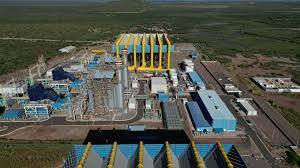
The 766MW Topolobampo III power plant project in Mexico has transitioned from commissioning into stable commercial operation, marking a key milestone in the country’s energy infrastructure development. Initially launched as a major combined-cycle construction project, the facility now plays a central role in supporting electricity demand while enhancing grid flexibility.
Moreover, the project reflects Mexico’s broader push to strengthen power generation capacity using efficient gas-based technologies. As a result, it continues to contribute to energy reliability while complementing the country’s growing renewable energy mix.
Additionally, this development aligns with wider infrastructure momentum, including investment pipelines such as Mexico’s MIP infrastructure program, which is scaling energy and transport construction nationwide.
Operational performance and role in Mexico’s energy mix
Since entering commercial operation in early 2024, the Topolobampo III plant has maintained full operational status through 2026. The facility generates approximately 766MW of electricity, supplying power to over 1.6 million homes while supporting grid stability.
Furthermore, the plant uses advanced combined-cycle gas turbine technology, which improves efficiency and reduces emissions compared to conventional thermal plants. This capability allows the facility to respond quickly to fluctuations in renewable energy supply.
Consequently, the project plays a balancing role within Mexico’s evolving energy system. It supports intermittent solar and wind generation by providing reliable backup capacity.
In addition, the plant remains strategically located in Sinaloa, near existing gas infrastructure, ensuring consistent fuel supply and operational efficiency.
Continued relevance within Mexico’s infrastructure expansion
Meanwhile, the Topolobampo III project continues to demonstrate the country’s ability to deliver complex power infrastructure. Its successful execution has reinforced investor confidence in large-scale energy construction.
Notably, the project also connects with broader infrastructure initiatives such as the Mexico’s MIP infrastructure investment project, which is mobilizing $12 billion across energy and transport sectors. This linkage highlights how operational assets support ongoing project pipelines and future developments.
Therefore, Topolobampo III serves as both a completed construction benchmark and a foundation for future investment strategies. It illustrates how modern gas-fired plants can coexist with renewable expansion in Mexico’s energy transition.
Outlook and integration into future energy planning
Looking ahead, the plant is expected to remain a critical component of Mexico’s power generation fleet. With energy demand projected to grow significantly, efficient combined-cycle facilities will continue to play a supporting role.
At the same time, policy adjustments in 2025 and 2026 aim to encourage private participation in energy infrastructure. These reforms could further enhance the operational environment for assets like Topolobampo III.
Ultimately, the project stands as a completed yet strategically active infrastructure asset. It continues to deliver value while anchoring Mexico’s broader construction and energy investment landscape.
Also read: Two solar power plants inaugurated in Bobo-Dioulasso and Pâ, Burkina Faso
The Topolobampo III power plant establishment aligns with Mexico’s goal of doubling on renewable energy capacity by 2030, while addressing the Latin American nation’s electricity demand. This boosts both wind and solar capacity from 15-40GW.
The technology employed in the Topolobampo III power plant
The plant uses a D650 steam turbine from GE Vernova and two 7HA.01 gas turbines. It also uses three H53 generators as well as advanced plant control systems. The control systems feature integrated Mark VI DCS (Distributed Control System) from GE Vernova.
The set up facilitates the use of real time data for better outcomes. It also guarantees stability and efficiency during operations.
GE Vernova’s HRSG technology local licensee, CERREY, supplied the two Heat Recovery Steam Generators (HRSGs).
About Iberdrola Mexico
According to the CEO of Iberdrola Mexico, the entity is a leader in renewable energy. Iberdrola focuses on funding a portfolio of renewable energy, and it is fostered by efficient gas power. It is said that it has been working on further sustainable energy generation initiatives.
He added that one of the most important attributes is flexibility since it enables them to incorporate renewable energy sources into the grid. He claimed that GE Vernova’s H-Class equipment is essential to support the expansion of Mexico’s renewable power production.
Iberdrola Mexico and GE Vernova’s relationship
The project strengthens Iberdrola Mexico’s relationship with GE Vernova. The company has always supported Iberdrola with reliable technology as well as top tier services in the last 23 years ago.
Dave Ross, Americas President and CEO for GE Vernova’s Gas Power business, said that the company offers support to Mexico’s energy targets. It works with their long-term client Iberdrola.
Dave added that they are proud to participate in the project, marking their first order of their 7HA.01 technology in the country.
Project Fact Sheet
Project Name: Topolobampo III Combined Cycle Power Plant
Location: Ahome, Sinaloa, Mexico
Capacity: 766MW
Technology: Combined-cycle gas turbine (CCGT)
Fuel Type: Natural gas
Project Cost: Approximately $375 million
Construction Scope: Design, construction, installation, operation and maintenance
Commercial Operation Date: January 2024
Current Status (2026): Fully operational
Power Supply Capacity: 1.6 million homes
Key Equipment: 2 gas turbines, 1 steam turbine, heat recovery systems
Project Type: Public-private partnership
Contract Duration: 25 years
Grid Role: Baseload and flexible support for renewable integration
Project Team
Project Developer: Iberdrola Mexico
Technology Supplier: GE Vernova (Gas Power division)
Turbine Technology: GE 7HA.01 gas turbines
Engineering Support: GEIQ (GE Vernova Engineering Center, Mexico)
HRSG Supplier: CERREY (GE Vernova licensee)
Offtaker: Comisión Federal de Electricidad (CFE)
Project Owner Structure: Private investment with government-linked framework
Construction Contractors: Multiple EPC and specialized contractors (not fully disclosed)
Operations & Maintenance: Iberdrola with GE Vernova support
Regulatory Authority: Mexican energy regulators and federal government