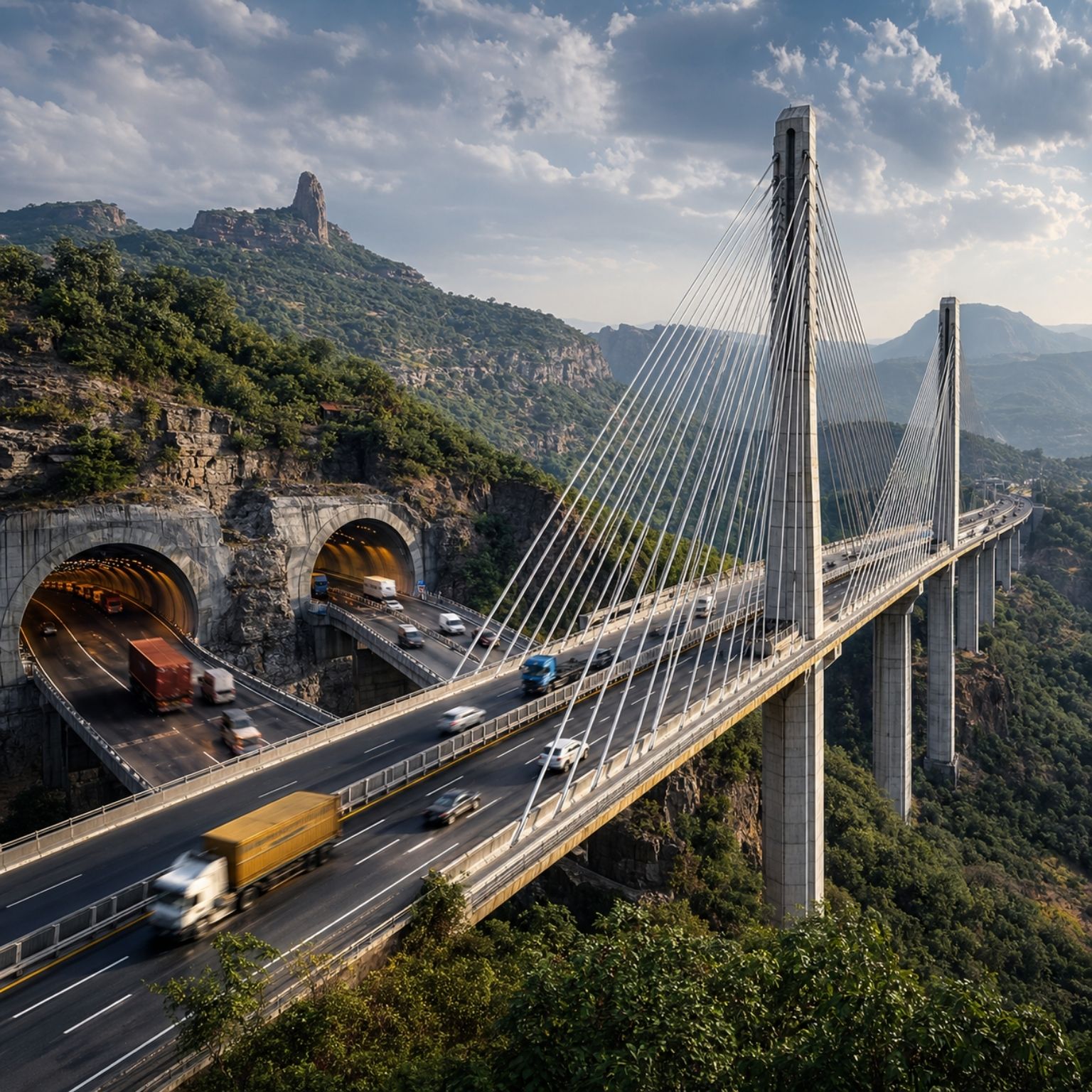
Mumbai–Pune Expressway tunnel opens May 1 with a 13.3 km high-speed route linking Mumbai and Pune, delivering faster travel, reduced congestion, and major engineering upgrades across a critical transport corridor. The Mumbai–Pune Expressway Missing Link connects Khopoli to Kusgaon near Lonavala, bypassing the old Khandala Ghat stretch.
Consequently, the new alignment avoids steep gradients, sharp curves, and accident-prone sections that slowed traffic for years. Moreover, officials confirm the route cuts travel time by at least 30 minutes between the two cities. Additionally, the project shortens the journey distance by about 6 km, improving corridor efficiency for daily users.
As a result, authorities expect up to 70% of vehicles to divert from the existing ghat section. Therefore, congestion will ease significantly while safety conditions improve across both routes. Furthermore, users will access the new section without additional toll charges during the initial phase.
Mumbai–Pune Expressway tunnel showcases engineering scale
The Mumbai–Pune Expressway tunnel features a 650 m cable-stayed bridge over Tiger Valley rising more than 180 m. Notably, the structure ranks among the tallest road bridges in India’s mountainous terrain. Meanwhile, engineers designed the bridge using advanced techniques, including jump formwork suited to steep conditions.
In addition, the project includes a primary tunnel stretching 8.9 km beneath the Western Ghats. Another tunnel extends about 1.9 km, forming part of a wider underground system. Both tunnels measure approximately 23.5 m in width, placing them among the widest globally. Therefore, the design supports high-capacity traffic movement with improved safety and ventilation systems. Moreover, the alignment integrates tunnels, viaducts, and deep cuttings to maintain consistent travel speeds.
Moreover, the project reflects India’s broader push toward complex transport infrastructure, aligning with other major developments such as the construction of the world’s highest tunnel , highlighting a growing focus on engineering in extreme environments
Mumbai–Pune Expressway tunnel Construction delivery timeline and phased opening strategy
Construction of the project began in 2019 but faced delays due to the COVID-19 pandemic. Additionally, heavy rainfall, strong winds, and complex terrain conditions slowed execution across the mountainous region. However, contractors accelerated work in later phases to meet the planned inauguration timeline.
Authorities will initially allow only cars and buses to use the new link for six months. Meanwhile, heavy vehicles and hazardous cargo will continue using the older ghat section. Consequently, officials will monitor safety performance and traffic patterns before expanding access. The project cost stands at approximately Rs 6,695 crore, equivalent to about $800 million. Finally, the inauguration will take place on Maharashtra Day under Chief Minister Devendra Fadnavis.
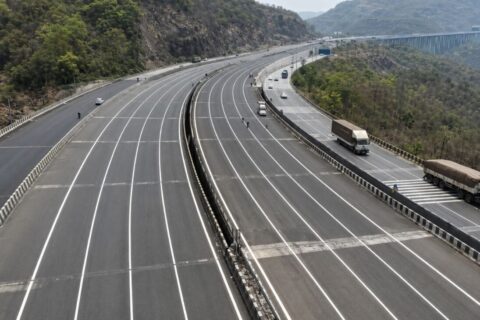
Project Fact Sheet: Mumbai–Pune Expressway tunnel
Project name: Mumbai–Pune Expressway tunnel
Type: Highway construction and realignment project
Location: Between Mumbai and Pune, Maharashtra, India
Length: 13.3 km
Cost: Rs 6,695 crore (approx. $800 million)
- Key structures:
- 650 m cable-stayed bridge over Tiger Valley
- 9 km main tunnel
- 9 km secondary tunnel
Tunnel width: Approximately 23.5 m
Travel time reduction: At least 30 minutes
Distance reduction: Around 6 km
Traffic diversion: Up to 70% from Khandala ghat section
Opening date: May 1, 2026
Initial access: Cars and buses only for six months
Toll policy: No additional toll charges
Purpose: Reduce congestion, improve safety, and enhance corridor efficiency
Project Team
Project owner: Maharashtra State Road Development Corporation (MSRDC)
Implementing agency: MSRDC infrastructure division
Government oversight: Government of Maharashtra led by Devendra Fadnavis
Engineering consultants: National and international highway and structural design firms
Construction contractors: Joint ventures of major Indian infrastructure companies
Tunnel specialists: Contractors experienced in long and wide road tunnels
Bridge engineers: Specialists in cable-stayed bridge design and high-altitude construction
Project management consultants: Independent firms overseeing quality, safety, and delivery timelines
Safety and compliance: National highway authorities and third-party auditors
Technology providers: Intelligent transport systems, monitoring, and tunnel ventilation solutions



Leave a Reply