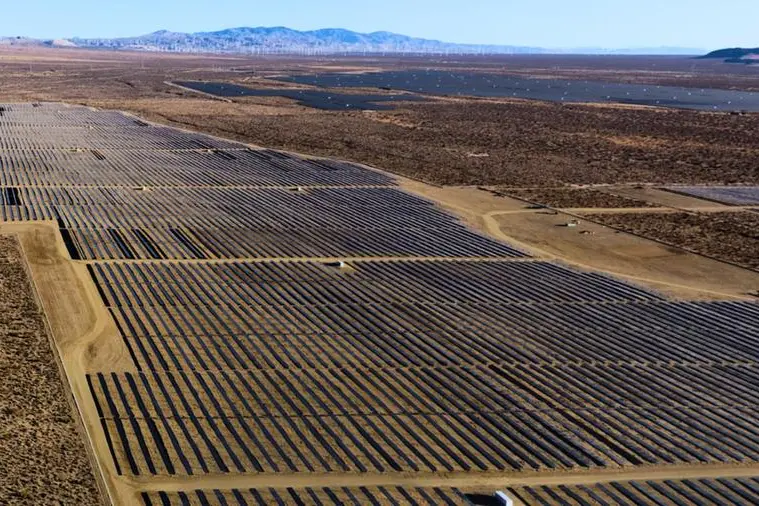
Major civil works have officially commenced on the 1.5 gigawatt (GW) Khazna Solar PV Project in Abu Dhabi, marking the next critical phase in the Emirates’ aggressive decarbonization strategy. Following the formal groundbreaking ceremony this week, heavy machinery has mobilized to the Al Khazna site, located approximately 80 kilometers east of the capital. This project represents the fourth utility-scale solar facility in Abu Dhabi, joining the ranks of Noor Abu Dhabi and the recently commissioned Al Dhafra Solar PV project. Once fully operational, the facility will significantly alter the region’s energy mix, generating enough clean electricity to power approximately 160,000 households across the UAE.
The project is being developed by a consortium led by EDF Renouvelables and Jinko Power, alongside local partners Masdar and TAQA (Abu Dhabi National Energy Company). The execution timeline is ambitious, with the Engineering, Procurement, and Construction (EPC) teams targeting a commercial operation date in 2027. The site mobilization involves grading thousands of hectares of desert terrain to accommodate the installation of millions of bifacial photovoltaic modules. These advanced panels are designed to capture reflected light from the desert sand, boosting generation efficiency by up to 20% compared to traditional monofacial arrays—a technical specification essential for maximizing yield in the high-albedo desert environment.
Khazna Solar PV Project: Factsheet
Project Name: Khazna Solar Photovoltaic (PV) Project
Location: Al Khazna, Abu Dhabi, UAE (~80km from Abu Dhabi city)
Capacity: 1,500 MW (1.5 GW) AC
Status: Under Construction (Commenced Jan 2026)
Target Completion: 2027
Consortium Partners:
Masdar (Abu Dhabi Future Energy Company)
TAQA (Abu Dhabi National Energy Company)
EDF Renouvelables (France)
Jinko Power (China)
Key Technical Specs:
Modules: Bifacial PV technology (captures reflected ground light).
Grid Connection: High-voltage integration by Transco.
Maintenance: Automated robotic dry-cleaning systems.
Operational Impact:
Power Supply: ~160,000 UAE homes.
Carbon Offset: >2.4 million metric tons of CO2/year.
Equivalent Impact: Removing ~470,000 cars from roads.
Strategic Context:
Abu Dhabi’s 4th utility-scale solar project (after Noor Abu Dhabi, Al Dhafra, and Solar Park).
Supports UAE Net Zero 2050 & Energy Strategy 2050.
Strategic Grid Integration and Carbon Reduction
The Khazna project is not merely an addition of capacity but a strategic reconfiguration of Abu Dhabi’s grid topology. By locating this 1.5 GW node in Al Khazna, grid operators can balance loads more effectively between Abu Dhabi and Al Ain, reducing transmission losses and improving system stability during peak summer demand. The facility will be integrated into the grid via high-voltage transmission lines managed by Transco, ensuring that the gigawatts generated are efficiently dispatched to load centers. This localized generation is critical for reducing reliance on gas-fired peaker plants, directly displacing fossil fuel consumption.

From an environmental perspective, the “jobsite impact” translates to a massive reduction in the emirate’s carbon footprint. Upon completion, Khazna Solar is projected to offset more than 2.4 million metric tons of CO2 emissions annually. This is equivalent to removing approximately 470,000 gasoline-powered cars from the UAE’s roads every year. The project aligns directly with the UAE’s Net Zero by 2050 strategic initiative, serving as a tangible infrastructure pillar that moves the nation closer to its goal of producing 50% of its energy from renewable sources by 2030.
Economic Ripple Effects and Future Outlook
The construction phase is expected to generate a significant economic ripple effect, creating thousands of jobs ranging from civil engineering and electrical installation to logistics and site management. The procurement strategy emphasizes local content, ensuring that a portion of the capital expenditure circulates within the UAE economy through local subcontractors and material suppliers. Furthermore, the project serves as a proving ground for automated installation techniques, with robotic cleaning systems planned for the operational phase to mitigate soiling losses from dust and sand—a perennial challenge in the region.
As Abu Dhabi continues to tender these gigawatt-scale projects, the cost of solar energy continues to plummet, reinforcing the economic viability of renewables over conventional hydrocarbons. Khazna is expected to produce electricity at one of the most competitive tariffs in the world, following the trend set by its predecessors. With construction now active, the project stands as a testament to the speed at which the UAE is transitioning its infrastructure, turning vast stretches of empty desert into powerhouse assets for a post-oil future—a transformation further accelerated as EDF and KOWEPO ink a deal for the 1.5 GW Al Zarraf Solar PV project in Abu Dhabi. This consortium, selected by the Emirates Water and Electricity Company (EWEC), will develop the massive facility in the Al Dhafra region, aiming to power approximately 160,000 homes and offset 2.4 million metric tons of carbon emissions annually under a long-term power purchase agreement.
Leave a Reply