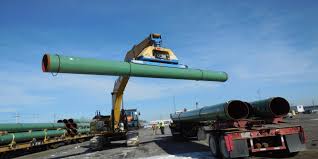
Efforts to clarify the current status of the long-delayed Constitution Pipeline have revealed that while older regulatory proceedings have been formally closed, the project itself remains under active consideration.
In response to an inquiry by Construction Review seeking an update on the project, the pipeline’s PR representatives confirmed that the Federal Energy Regulatory Commission (FERC) recently issued an administrative order documenting the dismissal of earlier Constitution Pipeline proceedings. According to the response, this action follows a 2021 federal appeals court decision and is largely procedural in nature.
“Recently, the Federal Energy Regulatory Commission issued an administrative order formally documenting the dismissal of the prior Constitution Pipeline proceedings, pursuant to the 2021 federal appeals court decision,” the spokesperson said. “This step does not approve or deny any new pipeline proposal.”
Permit applications resubmitted
Crucially, the company emphasized that the Constitution Pipeline’s December 2025 petition seeking renewed authorization remains pending before FERC, and that the Commission has explicitly stated it is not prejudging the request. The administrative move, the spokesperson explained, “simply closes out older case files and clarifies procedural matters related to docket practices.”
Williams Companies, the project developer, reiterated its intention to continue advancing the pipeline within the existing regulatory framework. “Williams continues to move the Constitution Pipeline forward within the established federal regulatory framework,” the response stated, adding that the company remains “fully committed to compliance with all federal and state requirements” and is maintaining close coordination with FERC, other regulatory agencies, and regional stakeholders.
Strategic infrastructure project for the US Northeast
The Constitution Pipeline has long been positioned as a strategic infrastructure project for the US Northeast, aimed at improving energy reliability, lowering consumer energy costs, and reducing reliance on imported energy. Detailed project records remain accessible through FERC dockets CP13-499-006 and CP18-5-004, which outline the project’s regulatory history, proposed benefits, and anticipated development timeline.
While regulatory hurdles persist, the latest clarification confirms that the project is not closed, and that its future now hinges on the outcome of the pending petition before federal regulators.
The Constitution Pipeline continues to navigate regulatory hurdles as developers seek renewed federal approval, while other U.S. energy projects are moving forward. The Port Arthur LNG project in Jefferson County, Texas, is advancing with its Phase 2 expansion, which adds two new liquefaction trains (Trains 3 & 4) to roughly double the facility’s capacity from 13 million tonnes per annum (Mtpa) to around 26 Mtpa. This expansion would enable exports of up to 13.5 Mtpa to non-free-trade-agreement countries. The project has also secured key approvals from the Federal Energy Regulatory Commission (FERC) and the U.S. Department of Energy (DOE), along with a Final Investment Decision (FID) and commercial agreements ahead of full execution.
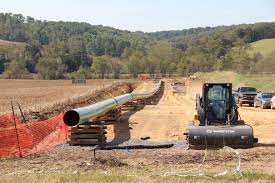
Constitution Pipeline — Project Factsheet
Overview
The Constitution Pipeline is a proposed 124-mile natural gas pipeline from northeastern Pennsylvania to New York, designed to improve energy reliability, lower consumer costs, and reduce reliance on imported energy. While older regulatory proceedings have formally closed, the project remains under active consideration with a December 2025 petition for renewed authorization pending before FERC.
Developers
Williams Partners
Cabot Oil & Gas (now Coterra Energy)
Piedmont Natural Gas
WGL Holdings
Pipeline Specifications
Length: ~124 miles
Diameter: 30 inches
Capacity: Up to 650 million cubic feet per day (MMcf/d)
Route: Susquehanna County, Pennsylvania → Schoharie County, New York
Regulatory History
2014: Filed with the Federal Energy Regulatory Commission (FERC)
2016: Received FERC approval
2016–2017: New York State denied the required Clean Water Act Section 401 water quality certification
2017–2018: Federal courts upheld New York’s authority to deny the permit
2025: Permit applications resubmitted; FERC issued an administrative order formally closing older case files following the 2021 federal appeals court decision. The December 2025 petition for renewed authorization remains pending.
Economic Projections (15-Year Period, released November 4, 2025)
Consumer Savings: $11.6 billion (S&P Global estimate)
Jobs: 2,000 annually (direct, indirect, induced)
Economic Output: $4.4 billion added to regional GSP
Tax Revenue: $432 million (federal + state)
Price Impact: Up to 6% reduction during peak winter demand
Leave a Reply