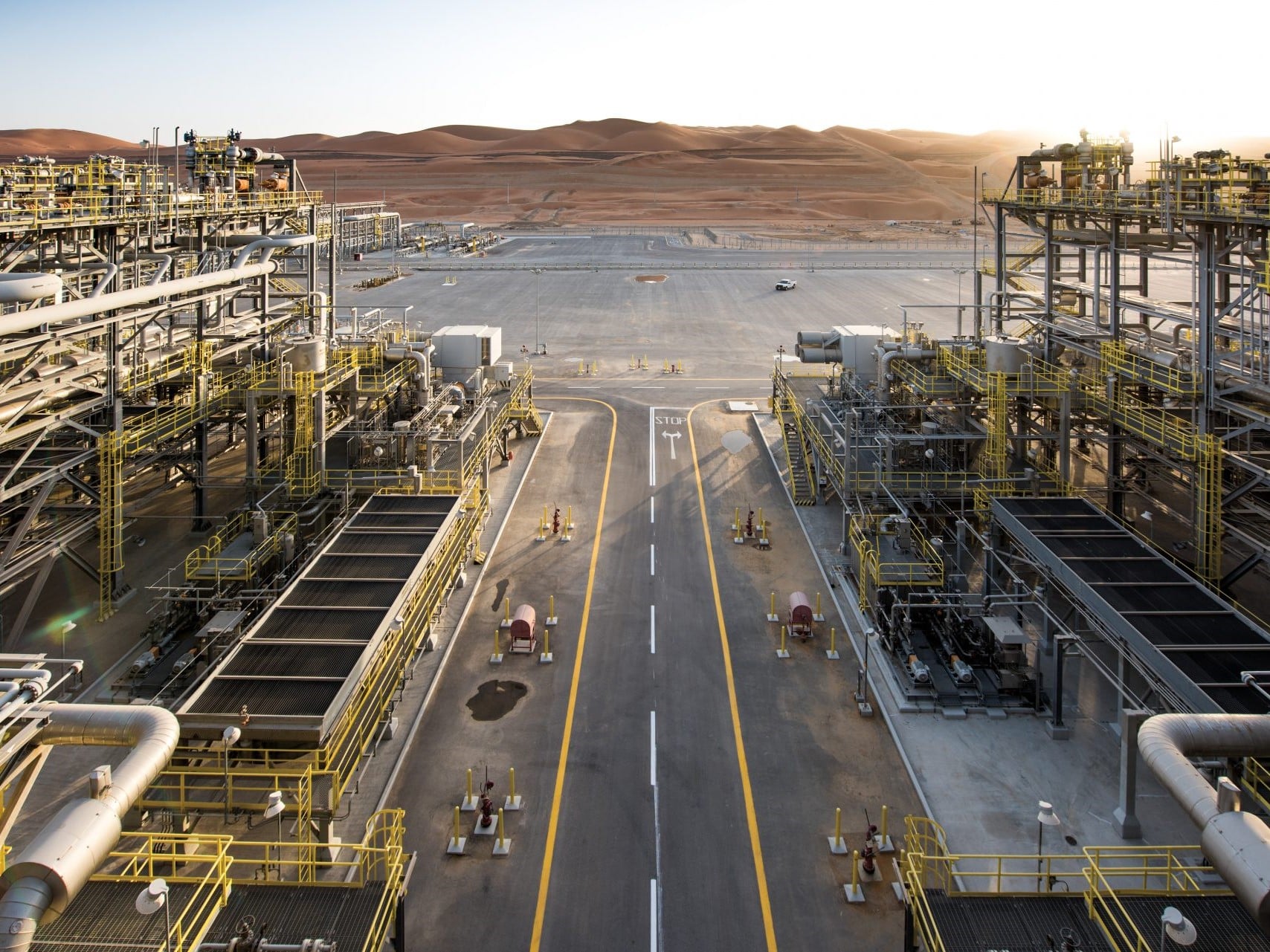
Saudi Aramco has officially opened the valves at the Jafurah unconventional gas field, marking a historic entry into the era of commercial shale production for the Kingdom. While the full ramp-up of the $100 billion development will take years, initial flows of condensate—a high-value, light oil byproduct—are already being sold to the market, generating immediate cash flow from the massive asset. This milestone represents a critical pivot in Saudi energy strategy; rather than relying solely on easy-to-access conventional reservoirs, Aramco is now successfully deploying hydraulic fracturing (“fracking”) techniques on a scale rivaling the US Permian Basin to unlock vast reserves trapped in tight rock formations deep beneath the Eastern Province.
A Massive Engineering Mobilization
The economic logic driving this colossal project is straightforward: Saudi Arabia currently burns nearly half a million barrels of crude oil every day just to generate electricity. By bringing Jafurah’s natural gas online, Aramco intends to displace this liquid fuel in domestic power plants, freeing up the more valuable crude oil for export to global markets. Executing this vision required a massive mobilization of international engineering and construction expertise.
The development is broken into multi-billion dollar EPC (Engineering, Procurement, and Construction) packages that have transformed the barren desert into a complex industrial zone. This focus on maximizing gas utilization extends beyond domestic borders, as Saudi Aramco secures a long-term supply deal from the Commonwealth LNG project in Louisiana. Under this agreement, Aramco will receive 1 million metric tonnes per annum (mtpa) of LNG from the planned Cameron Parish export terminal, with an option to double the volume to 2 mtpa, further diversifying its portfolio into the global gas market.
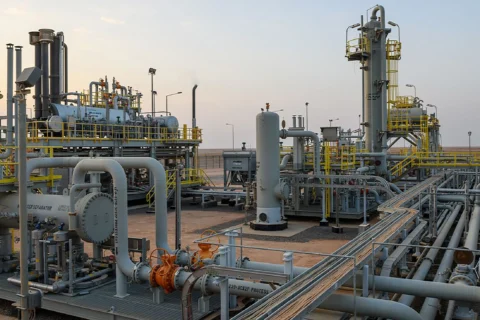
Jafurah Unconventional Gas Field: Factsheet
Project Name: Jafurah Gas Field Development
Location: Eastern Province, Saudi Arabia (Southeast of Ghawar)
Operator: Saudi Aramco
Total Investment: ~$110 Billion (Lifecycle)
Resource Type: Unconventional (Shale) Gas / Condensate-Rich
Key Construction Team (EPC & Services):
Gas Processing Facilities: Samsung Engineering (Package 1)
Utilities & Sulfur Recovery: Hyundai Engineering & Construction (Package 2)
Power & Export Pipelines: Larsen & Toubro (L&T)
Upstream Flowlines: Saipem
NGL Fractionation: JGC Corporation
Drilling & Fracking Services: Halliburton, Baker Hughes, SLB
Production Targets (2030):
Sales Gas: 2.0 Billion scfd
Ethane: 418 Million scfd
Gas Liquids (Condensate/NGL): ~630,000 barrels per day
Strategic Goal: Eliminate crude oil burning for power; create feedstock for Blue Hydrogen and petrochemicals.
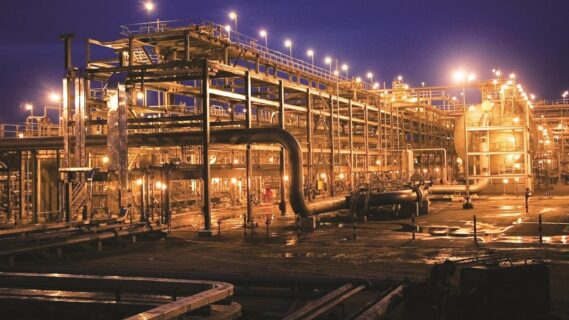
Samsung Engineering and Hyundai Engineering & Construction (Hyundai E&C) led the construction of the central gas processing facilities and sulfur recovery units, erecting massive separation trains capable of handling the high-pressure output. Larsen & Toubro (L&T), through its Energy Hydrocarbon division, executed critical infrastructure including the power supply networks and the export pipelines that act as the project’s arteries. Meanwhile, Saipem was tasked with the intricate upstream flowlines, connecting hundreds of scattered well pads to the central gathering manifolds. The subsurface work is equally intensive, with oilfield service giants like Halliburton, Baker Hughes, and SLB deploying advanced fracturing fleets to stimulate the reservoir.
Fueling a Hydrogen and Petrochemical Future
Saudi Aramco Secures Long Term Supply Deal from Commonwealth LNG Project in Louisiana
Beyond power generation, the field is chemically rich in wet gas components like ethane and NGLs (Natural Gas Liquids), which will serve as the feedstock backbone for the Kingdom’s expanding petrochemical sector and its future Blue Hydrogen ambitions. By 2030, the field is targeted to produce some 2 billion standard cubic feet per day (scfd) of gas, fueling a new industrial corridor in the region.
Leave a Reply