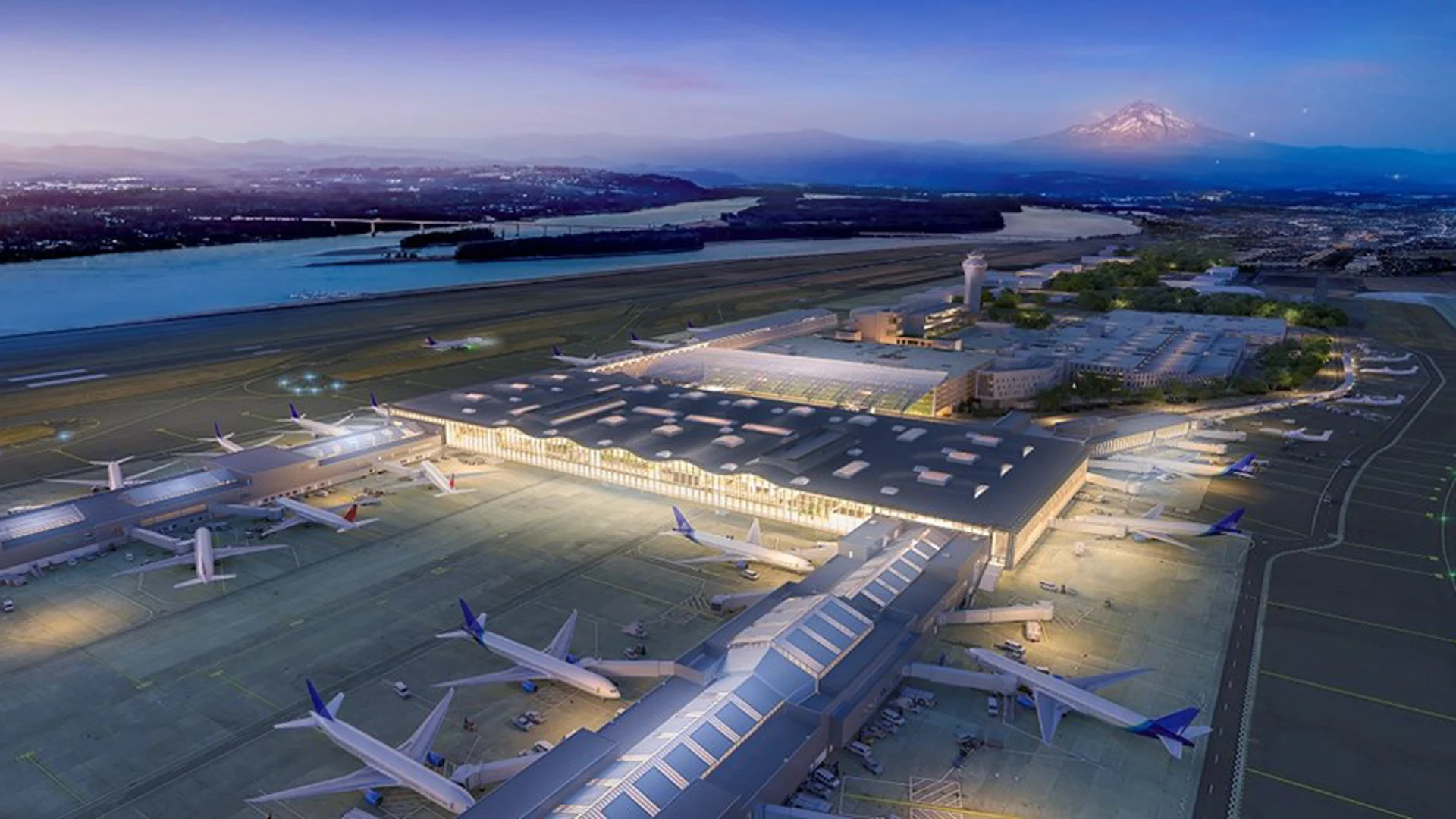
With the heavy lifting of the massive 9-acre timber roof largely complete, the Port of Portland and the Hoffman Skanska Joint Venture have offered a final look inside the concluding phase of the $2.15 billion PDX Main Terminal redevelopment. While the core of the terminal dazzled passengers when it opened in 2024, construction crews have spent the last 18 months executing the complex “Phase 2” demolition and renovation of the north and south nodes. Now, as the temporary bypass walls come down, the full scale of the project is finally visible. This final push connects the ticket counters and security checkpoints into a seamless, seismically isolated single volume, eliminating the logistical bottlenecks that defined the interim construction period.
Jobsite Impact: Seismic Resilience and Live Operations
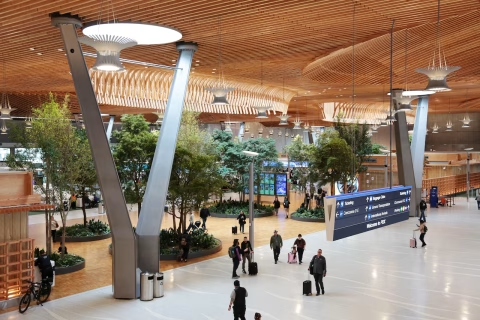
The engineering reality behind the warm Douglas fir aesthetic is a masterclass in seismic resilience. The entire main terminal structure is designed to remain operational after a magnitude 9.0 Cascadia Subduction Zone earthquake. For the construction team, achieving this meant installing high-tech seismic isolation bearings under the columns—effectively floating the new roof and floor plates separate from the ground.
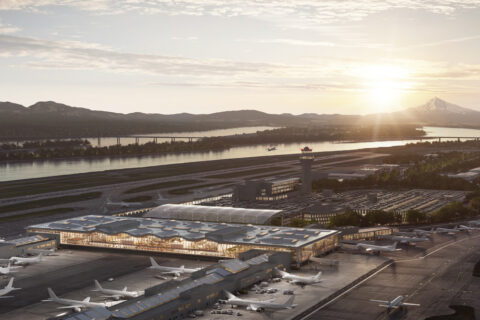
PDX Main Terminal Redevelopment (TCORE): Factsheet
Project Name: PDX Next – Main Terminal Core Redevelopment
Location: Portland International Airport, Oregon
Owner/Developer: Port of Portland
Total Budget: ~$2.15 Billion
Construction Team:
General Contractor: Hoffman Skanska Joint Venture (Hoffman Construction & Skanska USA Building)
Architect: ZGF Architects
Structural Engineer: KPFF Consulting Engineers
MEP Engineer: PAE
Mass Timber Fabrication: Timberlab / Zip-O-Laminators
Steel Fabrication: W&W | AFCO Steel
Key Technical Features:
Roof: 9-acre undulating Mass Timber (Glulam/CLT) diaphragm.
Seismic: Base-isolated structure designed for Mag 9.0 events.
Sourcing: 100% regionally sourced timber (traceable to forest of origin).
HVAC: Ground-source heat pump (geothermal) integration.
Timeline:
Phase 1 Opening: August 2024 (Ticket Hall/Marketplace).
Phase 2 Completion (Current): Spring 2026 (North/South Nodes & Exits).
Navigating this final phase required a logistical ballet. Unlike a greenfield build, Hoffman Skanska had to demolish the old ticket lobbies and baggage claim areas while the airport remained fully operational just feet away. The scope involved intricate steel erection to “stitch” the Phase 1 roof to the new Phase 2 sections, ensuring the lattice of distinct Y-columns flowed uninterrupted from end to end. Currently, the jobsite focus has shifted to the interior fit-out: electricians are finalizing the LED lighting integration within the timber coffers, and finish trades are installing the terrazzo flooring that mimics the dappled light of a forest floor.
Local Materials, Global Scale
The project’s supply chain remains a standout feature in the heavy construction world. The iconic roof is not just architectural; it is a structural diaphragm composed of over 2.5 million board feet of glulam beams and lattice. The sourcing strategy prioritized regional impact, with timber procured from local forests including tribal lands and small family-owned lots within a 300-mile radius. As the final retail nodes are framed out—using lighter gauge steel and architectural woodwork—the terminal is set to house local Portland favorites, moving away from generic airport franchises.
With the major structural work now signed off, the facility is on track for a full commercial opening in Spring 2026, marking the end of a five-year construction marathon. This completion comes as other major aviation hubs advance their own growth plans, such as the HCAA’s approval of the final design for the $1.53 billion Airside D terminal at Tampa International Airport, signaling a continued wave of massive infrastructure investment across the sector.
Leave a Reply