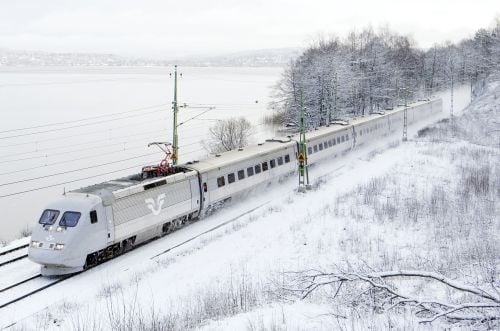
Sweden is taking a massive leap forward in its national rail modernization program following the awarding of the first major construction contracts for the Ostlänken (Eastern Link). This monumental 160-kilometer, double-track high-speed railway will connect Järna (just south of Stockholm) to Linköping, fundamentally altering the transit geography of the region. Overseen by Trafikverket (the Swedish Transport Administration), the project aims to run passenger trains at speeds up to 250 km/h (155 mph), dramatically slashing travel times for commuters. Crucially, by shifting high-speed passenger traffic to this new dedicated corridor, the project will free up vital capacity for heavy freight and regional trains on the severely congested Southern Main Line (Södra stambanan).
Jobsite Impact: Bedrock Tunneling and Massive Viaducts
The sheer scale of the Ostlänken requires a massive mobilization of heavy civil engineering resources, as the newly awarded contracts cover some of the most geographically complex sections of the route. The “Jobsite Impact” will be defined by intensive drill-and-blast tunneling operations cutting through hard Scandinavian granite, alongside the erection of extensive viaduct networks required to span deep valleys, waterways, and existing highway infrastructure.

Ostlänken (Eastern Link) High-Speed Rail: Factsheet
Project Name: Ostlänken (Eastern Link)
Location: Järna to Linköping, Sweden
Client/Developer: Trafikverket (Swedish Transport Administration)
Construction Team:
Client/Owner: Trafikverket
Key Construction Team (Initial Contract Awards):
Vagnhärad Section (SEK 9.5B): Hochtief Infrastructure GmbH
Skavsta Section (SEK 12.0B): Bouygues Travaux Publics
Nyköping Branch (SEK 1.3B): Implenia (Awarded previously for the 8km “Bibana Nyköping” link).
Engineering/Design Partners: SYSTRA, COWI, Ramboll, Atkins.
Route Length: ~160 kilometers (Double-track railway)
Design Speed: Up to 250 km/h (155 mph)
Key Infrastructure Scope: * Construction of approximately 20 kilometers of tunnels.
Erection of over 200 bridges and viaducts.
5 new or extensively rebuilt stations (Vagnhärad, Skavsta, Nyköping, Norrköping, Linköping).
Technical Systems: 15 kV AC electrification; ETCS Level 2 digital signaling.
Strategic Goal: Increase national rail capacity, separate high-speed passenger traffic from freight, and reduce Stockholm-Linköping travel times.
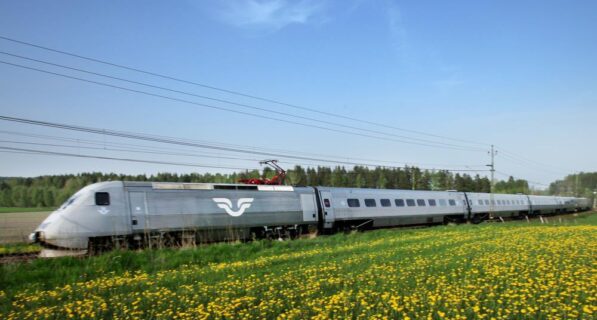
Contractors face immediate technical hurdles regarding geotechnical stability. Teams will need to execute massive earthworks and soil stabilization programs, particularly when navigating the region’s sensitive clay deposits. The structural and rail systems scope is equally demanding. Once the civil alignment is graded, the focus will shift to laying the ballastless track systems designed for high-speed tolerances, erecting hundreds of overhead line equipment (OLE) masts for the 15kV electrification, and installing the European Train Control System (ETCS) Level 2 signaling infrastructure. The flawless integration of these digital communication systems is an absolute necessity to maintain safe train headways at 250 km/h.
Hochtief and Bouygues Secure Multi-Billion Krona Packages
The initial phase of the Ostlänken is being driven by two massive Early Contractor Involvement (ECI) design-and-build contracts covering approximately 60 kilometers of the route. By utilizing an ECI framework, Trafikverket is bringing the heavy civil builders to the table during the final design phase to lock in constructability and manage the immense geotechnical risks before major earthworks begin.
- The Vagnhärad Section: German powerhouse Hochtief Infrastructure GmbH has secured the contract to construct the Vagnhärad section, a package valued at SEK 9.5 billion (approx. $880 million USD). This highly complex stretch includes laying double-track rail through difficult terrain, requiring extensive tunneling and bridge construction to minimize the environmental impact on the Södermanland landscape. The scope also includes the civil works for a new intermodal travel center in Vagnhärad.
- The Skavsta Section: French Tier 1 contractor Bouygues Travaux Publics has been awarded the massive Skavsta package, carrying a normal cost of SEK 12.0 billion (approx. $1.1 billion USD). This section will directly connect the high-speed line to Stockholm Skavsta Airport, a critical logistical node. Bouygues will be responsible for the heavy earthworks, retaining structures, and viaducts required to bring the 250 km/h alignment into the airport precinct and on toward Nyköping.
A Multi-Billion Krona Economic Engine
Beyond the steel and concrete, the commencement of the Ostlänken’s main works represents a multi-billion krona injection into the Swedish construction sector. The mobilization of Tier 1 civil contractors and international joint ventures creates a sustained, multi-year demand for specialized rail labor, including heavy machinery operators, high-voltage electricians, and geotechnical engineers. As these initial work packages break ground, local municipalities along the corridor—including Norrköping, Nyköping, and Skavsta Airport—are actively prepping their own urban infrastructure and station precincts to integrate with this new high-speed transport artery. This Swedish progress stands in contrast to international rail challenges, such as the HS2 high-speed rail project, which faces delays beyond 2033 and cost overruns exceeding £100bn, highlighting the complexities inherent in large-scale transit expansions.
Leave a Reply