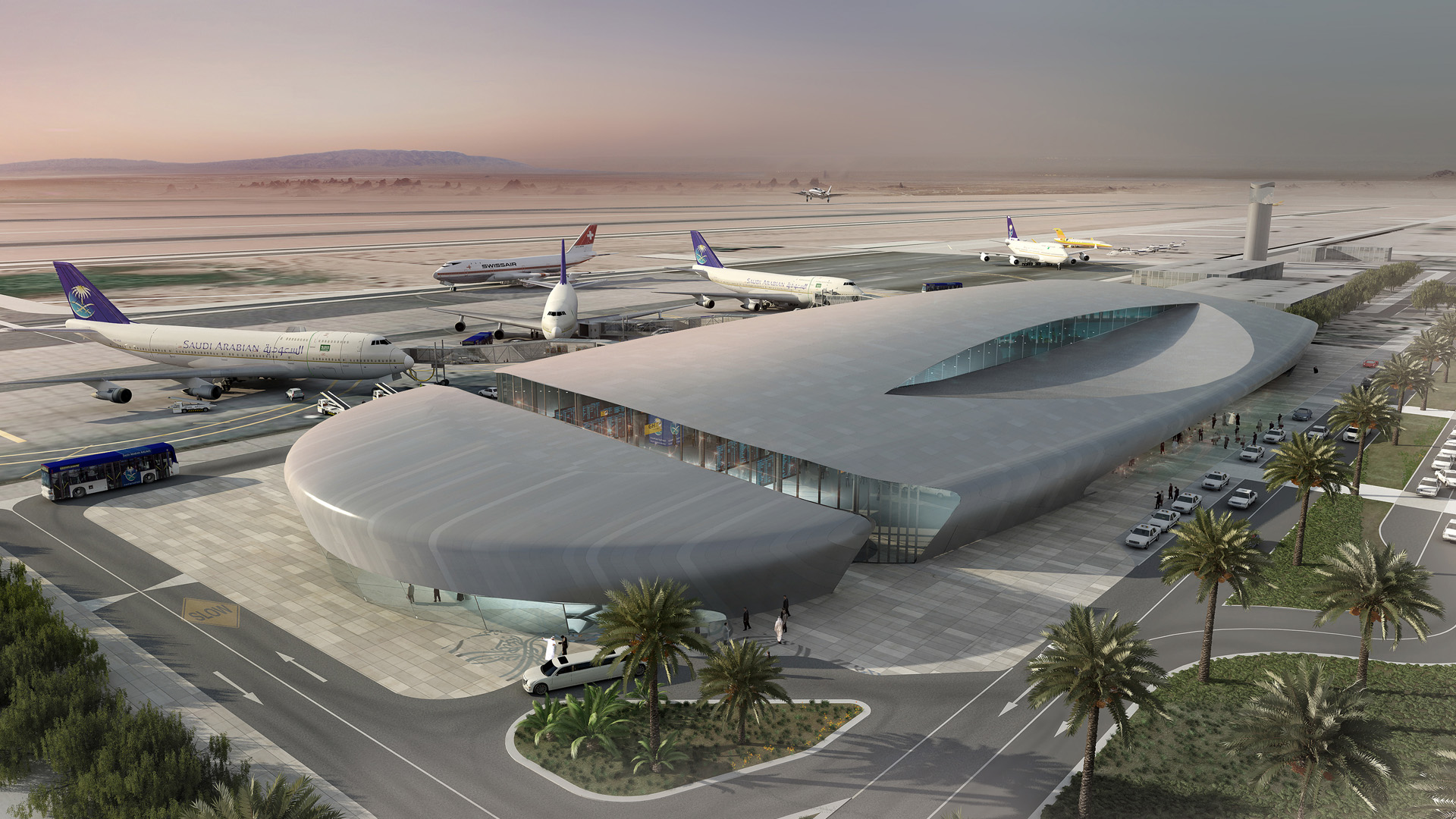
The New Al-Jouf International Airport kicked off operations on Wednesday. This marked the full transfer of flights from the old airport to the new facility, which is operated under the Second Airports Cluster.
The new airport has an annual capacity of 1.6 million passengers, compared to approximately 175,000 passengers at the previous airport. This showcases a growth of more than 800%.
The passenger terminal has been designed according to the latest international standards and spans 24,000 square meters.
Facilities
It includes 16 check-in counters, two of which are self-service. Furthermore, it has 11 departure and arrival gates, five dual passport control platforms. Lastly, it has 648 parking spaces.
Additionally, the airport also features sensory rooms. These rooms are dedicated to serving travelers with autism spectrum disorder in addition to services tailored for people with disabilities and similar cases. Commercial spaces in the airport cover a total area of 1,700 square meters. This reflects efforts to provide an inclusive travel environment.
Terminal Design
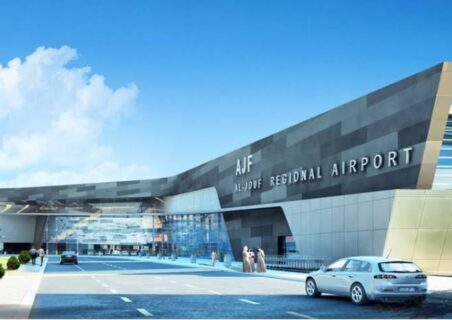
The terminal design incorporates the heritage identity of Al-Jouf Region. Also, it includes approximately 5,000 square meters of green spaces adorned with olive trees, for which the region is known.
Tuesday marked the departure of the final flight from the previous airport, arriving from Riyadh. This signalled the end of its operational phase. Lastly, the transition to the new international airport was carried out in coordination with all relevant authorities under a comprehensive plan. This was done in order to ensure smooth operations.
In summary, the New Al-Jouf International Airport adds to Saudi Arabia’s overall airport infrastructure and boosting Asia’s regions aviation status. The region boasts mega projects such as the Jewar Airport which is the largest airport in Asia.
Project Factsheet
Location: Sakaka, Al-Jouf Province, Saudi Arabia
Project Cost: $117 million
Developer/Operator: General Authority of Civil Aviation (GACA) / Cluster2 (Second Airports Cluster).
Annual Passenger Capacity: 1.6 million passengers
Total Terminal Area: 24,000 m²
Parking Capacity: 648 vehicle spaces
Commercial Space: 1,700 m² for retail, dining, and investment
Project Team
Project Owners & Key Stakeholders
- General Authority of Civil Aviation (GACA): The primary government body responsible for the project’s oversight and funding.
- Matarat Holding: The strategic owner of the airport assets, responsible for the corporatization and long-term development of the Kingdom’s airports.
- Cluster2 (Second Airports Cluster): The company currently responsible for the management and operation of the airport following its completion.
Architects, Consultants & Designers
- Enia Architectes (France): The lead architectural firm for the airport. They designed the terminal building, focusing on a blend of contemporary aesthetics and local cultural heritage (including the integration of the region’s famous olive trees).
- Egis Avia / Egis International (France): Provided the core engineering and technical design for the aviation facilities.
- Sener (Spain): Awarded a significant contract in January 2025 to update the airport’s master plan, focusing on traffic pattern analysis, capacity forecasting, and long-term facility requirements.
- NACO (Netherlands Airport Consultants): Involved in the early technical specifications and master-planning stages of the project.
Main Contractors & Infrastructure Providers
- Local Saudi Contractors: Multiple regional firms were utilized for the civil works, terminal construction, and site preparation, often coordinated through GACA’s procurement systems.
- APSCO (Arabian Petroleum Supply Company): Instrumental in the development and installation of the specialized Jet A1 fuel depot infrastructure and fueling standards.
Saudi Ground Services (SGS): The primary ground handling partner involved in the operational testing and transition phases.
Leave a Reply