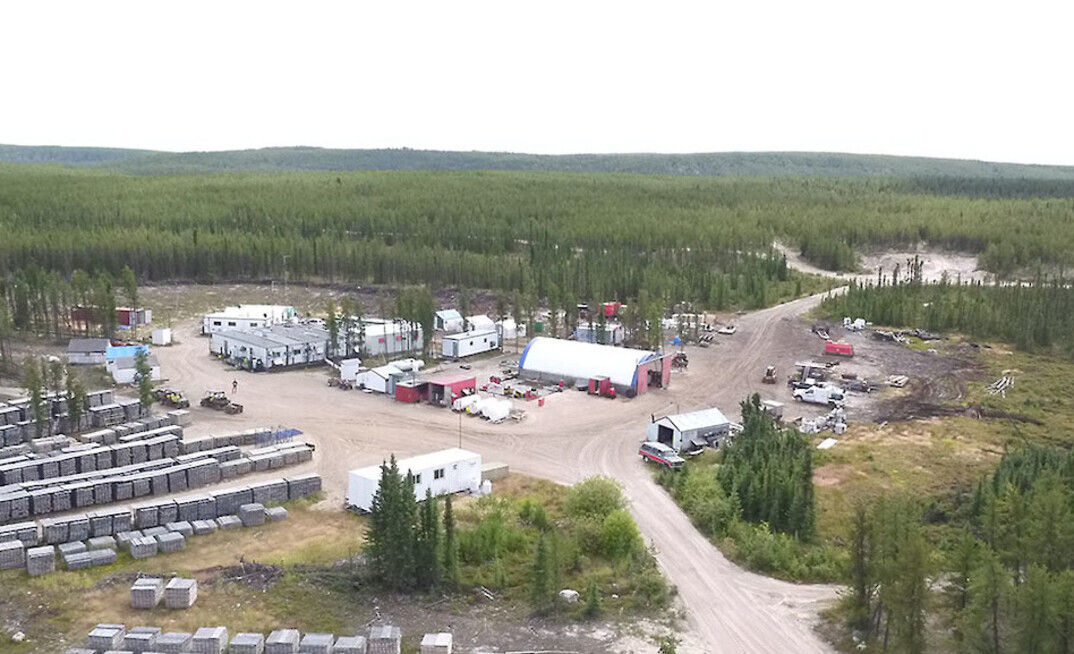
Denison Mines Corp. has received board approval and a federal construction licence to proceed with its Phoenix uranium mine at Wheeler River in northern Saskatchewan, marking the beginning of Canada’s first new uranium mine in roughly two decades. With initial capital costs estimated at USD $600 million and construction mobilising this month, Phoenix is shaping up to be one of the most consequential mining developments in Canadian history.
A Pioneering Dig: Inside the Phoenix Uranium Mine
Phoenix sits within the Athabasca Basin in Treaty 10 territory, a region long recognised as one of the world’s richest uranium jurisdictions. The project holds proven and probable reserves of 56.7 million pounds of uranium, supporting a planned mine life of approximately 10 years.
What distinguishes Phoenix technically is its planned use of in-situ recovery (ISR) — a method in which a mildly acidic solution is injected underground to dissolve uranium ore, then pumped back to surface for processing. If built as designed, Phoenix would be the first uranium mine in Canada to employ this technique commercially, which significantly reduces surface disturbance compared to conventional open-pit or underground mining. Saskatchewan granted environmental approval for the project in August 2025, following a comprehensive review. The Canadian Nuclear Safety Commission subsequently granted a licence to prepare the site and construct the mine and mill, clearing the path for ground-breaking this March.
Construction will proceed in phases, beginning with site clearing, infrastructure installation, and wellfield development. Processing facilities will follow over the subsequent years, with the company targeting uranium production as early as 2028, pending a separate operating licence that Denison intends to apply for as construction nears completion.
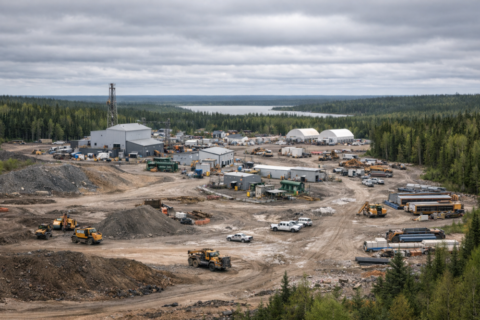
Project Fact Sheet: Phoenix Uranium Mine
Project Name: Phoenix Uranium Mine
Location: Wheeler River, Athabasca Basin, northern Saskatchewan, Canada (Treaty 10 Territory)
Developer: Denison Mines Corp. (TSX: DML / NYSE American: DNN)
Estimated Capital Cost: USD $600 million
Mining Method: In-Situ Recovery (ISR) — first of its kind in Canada
Proven & Probable Reserves: 56.7 million pounds of uranium
Planned Mine Life: Approximately 10 years
Construction Start: March 2026
Target Production Start: 2028 (subject to operating licence)
Regulatory Approval: Canadian Nuclear Safety Commission (construction licence granted)
Provincial Approval: Saskatchewan (environmental approval, August 2025)
Project Team: Phoenix Uranium Mine
Developer & Operator: Denison Mines Corp., Toronto, Ontario
Chief Executive Officer: David Cates
Federal Regulator: Canadian Nuclear Safety Commission (CNSC)
Provincial Regulator: Government of Saskatchewan
Indigenous Agreement Partners: English River First Nation; Métis Nation — Saskatchewan; Ya’thi Néné Lands and Resources (representing Hatchet Lake, Black Lake, and Fond du Lac Denesułiné First Nations and northern municipalities)
Competing Regional Peer: NexGen Energy Ltd. — Rook I Mine (awaiting construction licence)
Construction Contractors: To be confirmed as works ramp up
The Company and Its Collaborators
Denison Mines Corp., listed on the Toronto Stock Exchange (DML) and NYSE American (DNN), is a Toronto-based uranium developer with an extensive portfolio of exploration and development assets in the Athabasca Basin. Chief Executive David Cates has led the company’s push to advance Phoenix through the regulatory process and into construction.
The project has secured impact benefit agreements with three Indigenous groups: English River First Nation, Métis Nation — Saskatchewan, and Ya’thi Néné Lands and Resources, an organisation jointly owned by Hatchet Lake Denesułiné First Nation, Black Lake Denesułiné First Nation, Fond du Lac Denesułiné First Nation, and several northern municipalities. These agreements typically include job commitments, training programs, and local business contracts. Ya’thi Néné executive director Garrett Schmidt confirmed that the organisation endorsed the project after reviewing environmental protections and mitigation plans, while indicating that communities will continue monitoring development activity across the Basin.
Not all communities are aligned. Birch Narrows Dene Nation and Peter Ballantyne Cree Nation did not support the mine during regulatory hearings, and Peter Ballantyne Cree Nation has filed a court challenge against Saskatchewan and Denison over consultation and environmental assessment processes. Denison has stated it will continue engagement with both communities throughout the mine’s operating life.
Energy Security, Employment, and What Phoenix Means for the North
Beyond its immediate construction footprint, Phoenix carries broad economic significance for Saskatchewan and for Canada’s position in global uranium markets. The project will generate substantial employment during both construction and operations, with Denison committed to prioritising local and Indigenous hiring through its benefit agreements. Northern Saskatchewan communities stand to benefit from long-term contracting and training opportunities across a project expected to span more than a decade of active development.
At the national level, Phoenix arrives at a pivotal moment. Global demand for uranium is rising sharply as countries accelerate nuclear power programmes in pursuit of low-carbon energy targets. Canada — historically one of the world’s leading uranium producers — has seen its output constrained by a drought in new approvals, making Phoenix’s construction licence particularly significant. CEO David Cates has argued that with few large uranium mines advancing anywhere in the world, Phoenix may represent the only meaningful new primary supply to reach the market before the 2030s.
The Basin Is Back: Saskatchewan Uranium’s Moment in the Global Spotlight
Here is the paragraph with the link integrated naturally:The last uranium mine approved in Saskatchewan was Cameco Corp.’s Cigar Lake operation, where construction began in 2005. Phoenix therefore represents not merely a single project but a signal that the Athabasca Basin is re-entering an era of active development. The Basin is widely regarded as containing some of the highest-grade uranium deposits on earth, and Phoenix’s advancement is expected to renew investor and government interest in the broader region — particularly as downstream demand intensifies, with players like Centrus Energy pursuing a multi-billion dollar expansion of their Ohio enrichment facility to meet growing appetite for both LEU and next-generation HALEU fuel.
Denison is not alone in this resurgence. NexGen Energy Ltd. (TSX: NXE) is awaiting a construction licence decision for its proposed Rook I underground mine, also in the Athabasca Basin. Should both projects advance, Saskatchewan could see two major new uranium mines in production by the early 2030s — a generational shift for the province and for Canada’s role in global nuclear fuel supply chains. With AI data centres, electrification programmes, and nuclear energy commitments from governments in the United States, Europe, and Asia collectively driving uranium demand to multi-decade highs, the timing of Phoenix’s groundbreaking could hardly be more strategic.
Leave a Reply