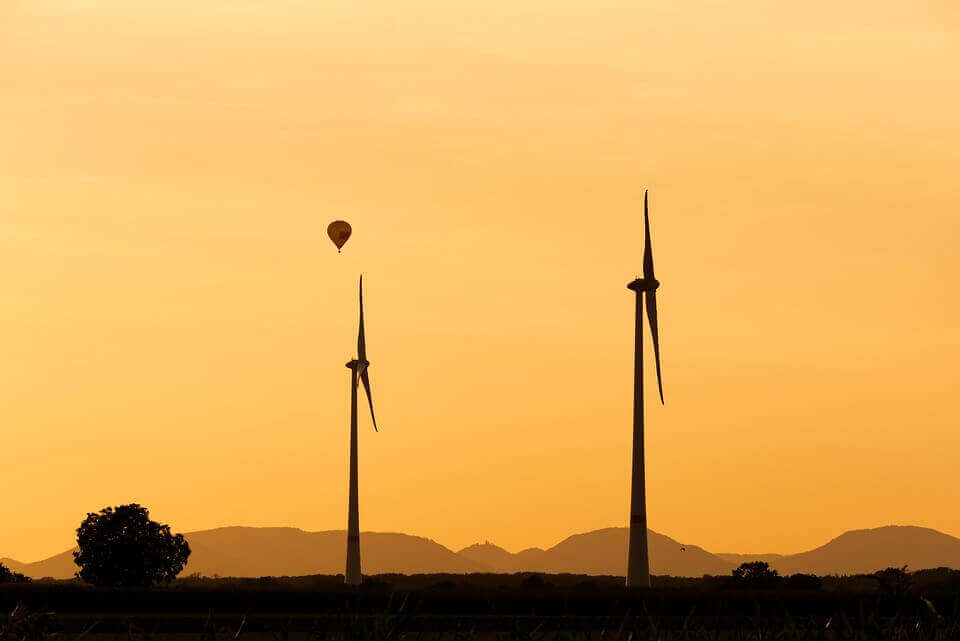
Energiequelle GmbH has commenced construction of the Lüben Wind Farm in the Gifhorn district of Lower Saxony, Germany, marking the company’s second wind energy project in the municipality of Wittingen within a single year. Comprising five state-of-the-art Enercon turbines, the facility will generate enough renewable electricity to power approximately 22,000 local households and deliver a sustained stream of financial benefits directly to the community it serves.
Five Turbines, 160 Metres High: What the Lüben Wind Farm Will Deliver
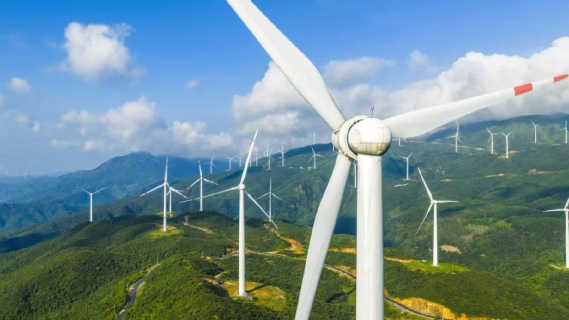
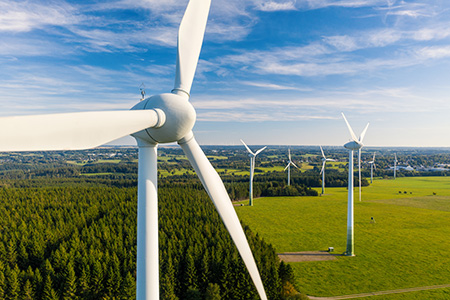
The Lüben Wind Farm will consist of five Enercon E-138 EP3 E3 turbines, each rising to a hub height of 160 metres and rated at an individual capacity of 4.26 megawatts. Together, the five units will produce a combined installed capacity of 21.3 MW and are expected to generate approximately 77 million kilowatt-hours of electricity annually — enough to meet the energy needs of around 22,000 households in the Wittingen area with carbon-free power.
Project Fact Sheet: Lüben Wind Farm
Project Name: Lüben Wind Farm
Location: Lüben, Gifhorn District, Lower Saxony, Germany (Municipality of Wittingen)
Developer: Energiequelle GmbH
Turbine Model: Enercon E-138 EP3 E3
Number of Turbines: 5
Hub Height: 160 metres
Individual Turbine Capacity: 4.26 MW
Total Installed Capacity: 21.3 MW
Annual Energy Output: ~77 million kWh
Households Supplied: ~22,000 (Wittingen area)
Project Approval: December 2024
Federal Network Agency Award: February 2026 onshore wind tender
Construction Start: March 2026 (access roads)
Target Commissioning: Q2–Q3 2027
Community Benefit (EEG §6): €0.002/kWh (~€154,000/year to Wittingen)
Community Benefit (Lower Saxony Participation Act): €0.001/kWh (~€77,000/year)
Resident Benefit: €200 annual electricity bonus per household in Lüben
Project Team: Lüben Wind Farm
Developer & Constructor: Energiequelle GmbH, Zossen OT Kallinchen, Brandenburg, Germany
Project Leader: Tina Hermerding, Energiequelle GmbH
Media/PR Contact: Susanne Tauke, Marketing & PR, Energiequelle GmbH
Turbine Manufacturer/Supplier: Enercon (E-138 EP3 E3)
Approving Authority: Regional planning authority, Lower Saxony (December 2024)
Federal Tender Authority: Federal Network Agency (Bundesnetzagentur)
Municipal Partner: Town of Wittingen
Community Fund: Newly established landowner-supported local investment association
Construction has commenced with initial work on the site’s access roads, the first physical step in a build sequence that will continue through to commissioning, which Energiequelle has scheduled for the second and third quarters of 2027. Approval for the project was granted in December 2024, followed by a successful award from Germany’s Federal Network Agency in the February 2026 onshore wind energy tender. The Enercon E-138 EP3 E3 is a well-established turbine platform in the German market, offering high energy yields in moderate to strong wind conditions — characteristics well-suited to the Lower Saxony landscape, which is one of Germany’s most productive regions for onshore wind generation.
The Developer Behind Lüben — and Its Decade-Long Road to Ground-Breaking
Energiequelle GmbH is an owner-managed renewable energy company headquartered in Zossen, Brandenburg, with over 450 employees at approximately 20 locations across Europe and South Africa. Founded in 1997, the company plans, constructs, and operates wind and solar installations, substations, and energy storage systems, and has successfully completed more than 800 installations to date. The turbines for the Lüben project are supplied by Enercon, one of Germany’s leading wind turbine manufacturers and a long-standing technology partner for Energiequelle on domestic projects.
Tina Hermerding, Energiequelle’s project leader for Lüben, has acknowledged that the path to this construction start was anything but swift. The regional planning process spanned more than ten years, demanding sustained patience and coordination from all parties involved. Her thanks, expressed publicly at the project’s launch, extended to every stakeholder who remained engaged throughout that prolonged development period. The media and public relations contact for the project is Susanne Tauke of Energiequelle’s Marketing and PR team. With construction now formally underway, Hermerding has indicated that the Lüben project validates the patience and cooperative spirit that navigated it through one of Germany’s more demanding planning environments for wind energy.
Sharing the Wind: Community Participation at the Heart of Lüben
One of the most distinguishing features of the Lüben Wind Farm is the depth and structure of its community participation framework — a model that Energiequelle previously introduced at the adjacent Teschendorf Wind Farm, commissioned in autumn 2025, and is now replicating at Lüben. Residents of Lüben will receive an annual electricity bonus of €200 per household, enabling them to benefit directly and tangibly from the energy generated on their doorstep.
Beyond individual residents, the municipality of Wittingen will receive €0.002 for every kilowatt-hour generated under Section 6 of Germany’s Renewable Energy Sources Act (EEG), translating to approximately €154,000 per year. The Lower Saxony Participation Act supplements this with an additional €0.001 per kilowatt-hour, adding a further €77,000 annually to municipal coffers — bringing the total annual public benefit payment to around €231,000. Additionally, local landowners involved in the project have agreed to contribute a portion of their lease income to a newly established community association, creating a fund for investments that benefit the broader Wittingen area. The combination of direct household bonuses, statutory municipal payments, and voluntary landowner contributions makes Lüben one of the more comprehensively participatory wind energy projects currently under construction in Germany.
Lower Saxony, Lüben, and the Bigger Picture of Germany’s Wind Expansion
Lüben arrives at a pivotal moment for Germany’s Energiewende — the country’s long-running energy transition — which has accelerated sharply since the Russian invasion of Ukraine triggered a fundamental rethinking of European energy security. Germany has significantly raised its onshore wind expansion targets in recent years, with the federal government aiming to increase installed wind capacity to over 115 GW by 2030, up from around 60 GW in 2023. Lower Saxony has historically been one of the federal states most central to that ambition: it hosts more installed wind capacity than any other German state and continues to attract new development thanks to favourable wind resources, relatively flat terrain, and supportive state-level policy. That onshore momentum runs in parallel with equally ambitious offshore expansion, exemplified by projects like the 257 MW Arcadis Ost 1 wind farm in the Baltic Sea — the first commercial deployment of Vestas’ 9.5 MW V174 turbines, and a marker of how rapidly Germany is pushing the boundaries of offshore wind technology alongside its onshore buildout.
The Teschendorf-Lüben pairing in Wittingen is an example of a model increasingly common in Germany’s wind sector: a developer establishing a footprint in a productive municipality, completing one project, and using the goodwill and community trust built through that first development to unlock a second. This sequential approach reduces planning friction, shortens development timelines on subsequent projects, and creates a compounding community benefit rather than a one-off transaction. As Germany continues to scale its onshore wind programme — and as municipalities grow more sophisticated in negotiating participation terms — the Lüben model of structured financial sharing and community investment funds is likely to become a template for future projects across Lower Saxony and beyond.
Leave a Reply