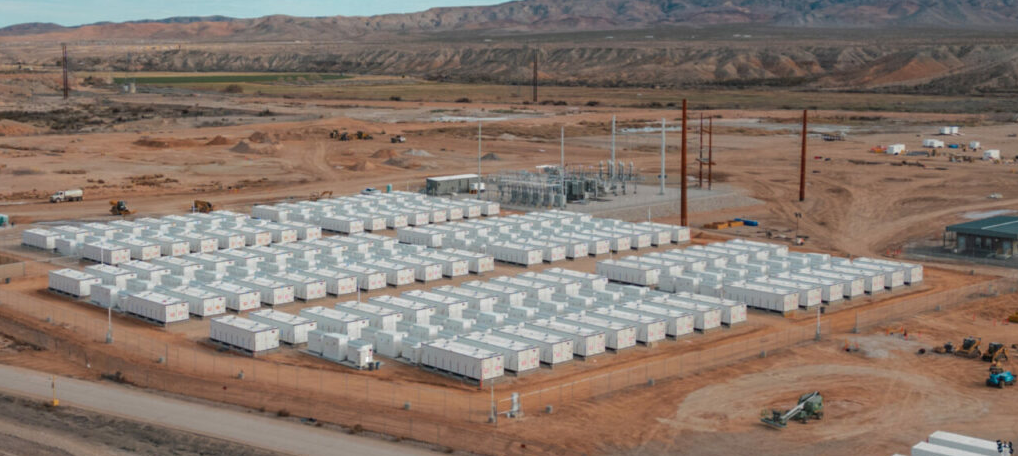
ACEN San Marcelino Solar Park battery storage marks a major renewable energy investment in the Philippines. The company plans a $268 million battery energy storage system at the San Marcelino Solar Park in Zambales. Consequently, the project will strengthen grid reliability and enhance solar power integration nationwide. Moreover, the battery installation will store surplus electricity generated during peak sunlight periods. The stored energy will later supply power when solar production declines or demand rises. Therefore, the initiative supports the country’s transition toward stable and flexible renewable energy systems.
Furthermore, the new system will deliver 2 gigawatt-hours (GWh) of energy storage capacity. This large storage facility will support one of the Philippines’ biggest solar projects. In addition, it will improve the overall operational performance of the solar park. As renewable penetration increases, storage infrastructure becomes essential for grid stability. Consequently, ACEN continues expanding its hybrid solar-plus-storage portfolio across Southeast Asia.
San Marcelino Solar Park Battery Storage Investment
ACEN plans to invest PHP 15.8 billion, equivalent to about $268 million, in the battery project. The storage facility will be integrated into the San Marcelino Solar Power Project, operated by ACEN’s subsidiary SanMar Solar Inc. As a result, the hybrid facility will combine solar generation with utility-scale energy storage.
Meanwhile, the San Marcelino solar park is being developed in multiple phases. The first two phases already operate with a combined capacity of 384 MW. These phases currently supply clean electricity to the national grid. Additionally, a third phase with about 200 MW capacity remains under construction. The company expects this phase to reach commercial operation by the third quarter of 2027.
Once all phases are completed, the solar park will reach around 585 MW total capacity. Consequently, it will rank among the largest solar power developments in the Philippines. The project will also help meet growing electricity demand while reducing carbon emissions.
Construction Timeline for ACEN San Marcelino Solar Park Battery Storage
Construction of the battery energy storage system will begin in the third quarter of 2026. Developers expect to complete installation by the end of 2027. Following testing and integration, full commissioning should occur in early 2028.
During operation, the battery system will store electricity produced during high-generation periods. Later, it will discharge energy during peak demand or low solar production. Therefore, the storage facility will smooth output fluctuations from solar power generation.
Moreover, large-scale storage improves grid flexibility and energy security. As renewable energy capacity grows, grid operators must manage intermittent power sources. Battery systems address this challenge by balancing supply and demand in real time. Consequently, ACEN’s investment strengthens the resilience of the Philippine power system.
Renewable Expansion in the Philippines
The San Marcelino solar complex sits in Zambales province in Central Luzon. The area offers strong solar resources and suitable land for utility-scale renewable energy projects. Therefore, ACEN selected the location to anchor its large solar development pipeline.
Additionally, the company continues expanding its renewable energy portfolio across the Philippines. ACEN operates multiple solar and wind farms nationwide with over 2.4 GW of renewable capacity. As a result, the firm remains one of the country’s leading clean energy developers.
The San Marcelino project also contributes to ACEN’s long-term decarbonization strategy. The company aims to accelerate renewable deployment while supporting national climate goals. Consequently, hybrid projects combining solar generation and storage will play a key role in future developments.
Furthermore, the integration of storage will increase energy reliability for communities and industries. Stable renewable electricity supports economic growth while reducing dependence on fossil fuels. Therefore, the project strengthens the Philippines’ energy transition roadmap.
The Philippines continues to expand its renewable energy capacity through large-scale solar projects across several provinces. A notable example is the Solar Power Plants in Philippines; Prime Infra’s Subsidiary Solar Tanauan Advances in Batangas and Cavite, where new solar installations are expected to supply electricity to about 84,000 households while reducing coal consumption significantly
Overview of the Project
Project Name: San Marcelino Solar Park Battery Energy Storage System (BESS)
Location: San Marcelino, Zambales Province, Central Luzon, Philippines
Project Type: Utility-scale Battery Energy Storage integrated with Solar PV
Developer / Owner: ACEN Corporation through SanMar Solar Inc.
Investment Value: $268 million (approx. PHP 15.8 billion)
Battery Storage Capacity: 2 GWh (2,000 MWh)
Associated Solar Capacity: Approximately 585 MW total solar capacity upon completion
Operational Solar Phases:
- Phase 1: Operating
- Phase 2: Operating
- Phase 3: Under construction (200 MW)
Construction Start (BESS): Q3 2026
Completion Target: End of 2027
Commissioning: Early 2028
Key Functions of the BESS:
- Store excess solar electricity
- Supply power during peak demand
- Stabilize grid frequency and voltage
- Improve renewable energy reliability
Estimated Homes Powered: Over 180,000 households from the solar project
Strategic Role: Supports Philippine renewable integration and energy security
Project Team
Project Owner / Developer: ACEN Corporation
Project Operating Entity: SanMar Solar Inc.
Engineering and Construction Partners
- POWERCHINA Huadong Engineering Corporation (solar project EPC and development partner)
- Technology Suppliers (Solar Components)
- Arctech Solar (solar mounting structures supplier)
Regulatory and Government Authorities
- Department of Energy (Philippines)
- Department of Environment and Natural Resources
- Local Stakeholders
- Zambales Provincial Government
- Municipality of San Marcelino
Leave a Reply