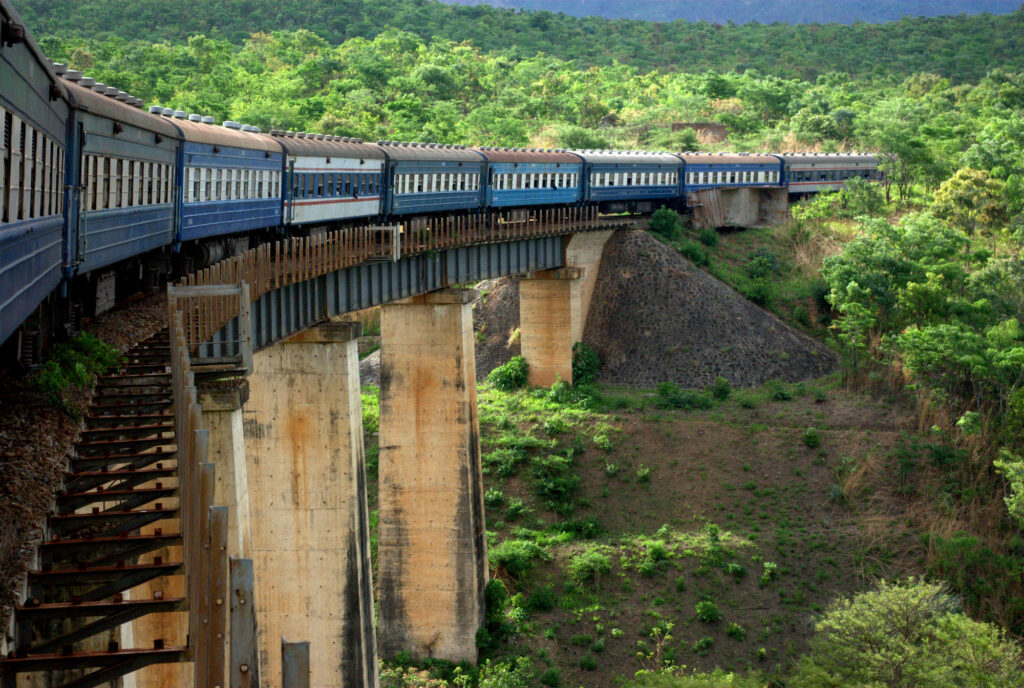
Chinese mining, shipping, and logistics companies are mulling over investing $1.4 billion Tazara railway project. The railway links Zambia copper region to a port on the Indian Ocean as various companies aim to upgrade the 1,860-kilometer rail line. Copper producers CMOC Group Ltd. and Zijin Mining Group Co. are teaming with state-owned China Civil Engineering Construction Corp (CCECC). CCECC signed a deal with Zambia and Tanzania last year in September to rehabilitate the Tazara railway project.
On the other hand, it will retain an 80% interest in the joint venture undertaking the project. These insights were revealed in a statement from Jiayou International Logistics Co. earlier this week. It is one of the four firms taking 5% stakes. Conversely, the other three are units of Zinjin, CMOC, and also COSCO Shipping Holdings Co.
The backing for the Chinese project comes as Washington tries to loosen Beijing’s grip on supply chains for critical minerals in Africa. The US concluded a bilateral minerals partnership with the Democratic Republic of Congo in December. The partnership grants American companies preferential access to some of the country’s abundant reserves of metals.
Outlook on the Tazara Railway Project
Once rehabilitated, the Tazara railway project will compete with the Lobito Corridor railway which is backed by the U.S. and European Union. Similarly, that railway connects the same copper-rich region of central Africa to an Angolan port on the west coast of the continent. CMOC and Zijin are among the Chinese miners that dominate metal exports from Congo.
The nation is the world’s second-largest producer of copper. Moreover, it is the biggest source of battery material cobalt. By contrast, Western firms – particularly Canada-headquartered First Quantum Minerals Ltd. and Barrick Mining Corp. – account for most output in neighboring Zambia. Tanzania and Zambia granted CCECC a 30-year concession to operate the line.
Once completed, the rehabilitated infrastructure will ease congestion on roads in Zambia and Congo. Currently, roads are the medium used to transport most mineral cargoes to African ports. The Chinese companies will invest in the Tazara project according to the size of their interests in the Dubai-registered joint venture entity, according to Jiayou. The investments reflect a shift in China’s Belt and Road Initiative to increasingly partner with private companies to operate projects on commercial terms.
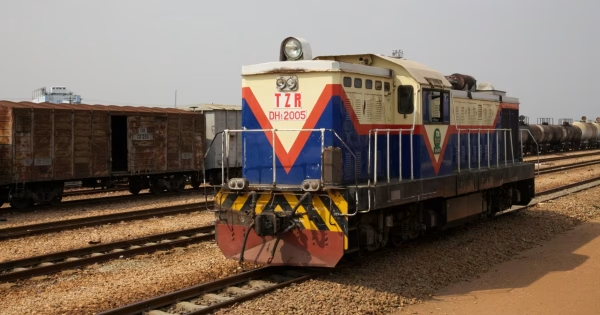
Project Overview
- Project Name: TAZARA Railway Rehabilitation
- Project Type: Rail infrastructure upgrade
- Estimated Cost: $1.4bn
- Length: ~1,860 km
- Purpose: Transport copper to port
Key Stakeholders
- Lead Contractor / Operator: China Civil Engineering Construction Corporation
- Investors:
- CMOC Group
- Zijin Mining Group
- COSCO Shipping Holdings
- Jiayou International Logistics
Location
- Route: Zambia to Tanzania
- Connection: Copperbelt to Indian Ocean port
- Countries: Zambia, Tanzania
Scope
- Full railway rehabilitation
- Freight capacity upgrades
- Logistics and operations overhaul
- Long-term concession (30 years)
Funding / Delivery Model
- Joint venture structure
- CCECC holds ~80% stake
- Minority stakes by partner firms
- Commercial investment model
Status
- Stage: Investment planning
- Update: Chinese firms considering funding
- Next: Final investment decisions
Key Risks & Challenges
- Financing alignment
- Cross-border coordination
- Competition from Lobito Corridor
- Geopolitical pressure (U.S.–China)
Strategic Significance
- Secures copper export routes
- Strengthens China’s Africa presence
- Competes with Western-backed corridors
- Reduces road transport reliance

Leave a Reply