
Afri Fund Capital has revealed plans to raise 6 billion US dollars in cross‑listed debt to finance the completion of the Lamu Port–South Sudan–Ethiopia Transport (LAPSSET) Corridor. The LAPSSET Corridor is a regional infrastructure initiative. It is designed to connect Ethiopia to Kenya’s Indian Ocean gateway at Lamu.
The debt instruments will be listed on the Nairobi Securities Exchange and the London Stock Exchange. It will also be listed on a third major exchange in the Middle East or Asia. Therefore, this will mark one of the largest private‑sector‑led infrastructure financing efforts in East Africa’s recent history.
Funding Utilization
Also, the financing will target key corridor components which is inclusive of the construction of high‑capacity road networks, the standard gauge railway (SGR) extension from Lamu through Isiolo to Moyale and onward into Ethiopia and South Sudan. Furthermore, it will target specialised processing and logistics zones at Lamu Port.
The initiative is structured as a blended finance model. It seeks to attract global institutional capital while offering domestic investors. This includes pension funds and retail participants, a high‑yield, liquid asset class. Additionally, this approach aims to shift some infrastructure funding burden from sovereign balance sheets to private sector‑led special purpose vehicles.
Significance of the LAPSSET Corridor
Furthermore, once completed, the corridor will diversify export routes for Ethiopia, which now depends heavily on Djibouti. Already, Ethiopian and Kenyan transport authorities participate in a joint technical committee meeting in Addis Ababa to address operational challenges and enhance utilisation of the Port of Lamu and the corridor network. The committee is focusing on logistical harmonisation, customs protocols, freight tracking systems and strengthening key border posts like Moyale One Stop Border Post.
Also, economists and industry stakeholders say the deal could accelerate Ethiopia’s regional trade ambitions and ease transport costs for exporters. Additionally, road and rail links are expected to open markets in East African and international destinations, while specialised zones at Lamu are foreseen to attract manufacturing and logistics firms seeking access to global supply chains. Analysts also point to opportunities in infrastructure engineering, trade finance, logistics services and financial advisory work as sectors likely to benefit from accelerated corridor development.
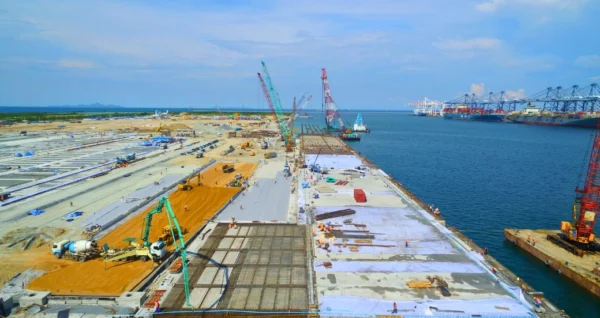
Also, recent port infrastructure upgrades at Lamu, including the procurement of modern ship‑to‑shore cranes, have boosted cargo handling capacity, reflecting rising interest from Ethiopia and South Sudan to use the facility once inland links are completed.
Project Factsheet
Current status of key infrastructure:
Lamu Port: Fully Operational First 3 berths 2,900 km total network. Kenya’s Lamu-Isiolo segment is in the detailed design/financing stage.
Highway Network: Partially Complete Isiolo-Moyale (505 km) is finished. Lamu-Garissa-Isiolo road is advancing to enable inland cargo.
Crude Oil Pipeline: Feasibility/Pre-FID
International Airports: Functional/Upgrading
The LAPSSET Railway (SGR):
- Total Length: 2,900 km across three countries.
- Cost Estimate: Approximately $16 billion for the Kenyan segments.
- Capacity: Designed for 25 million tons of freight per year with speeds up to 120 km/h for passengers.
The Port of Lamu (Manda Bay):
- Depth: 17.5 meters (deepest in East Africa), allowing for massive transshipment volumes.
- Performance: Cargo volumes jumped from 74,000 tonnes in 2024 to nearly 800,000 tonnes in 2025, driven by regional trade shifts and the 2026 Strait of Hormuz crisis.



Leave a Reply