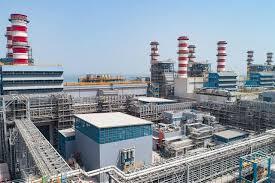
Algeria retenders Djelfa power plant contract to revive a critical stalled energy initiative. Sonelgaz actively launches this international tender for the 1.2 GW combined-cycle gas-fired facility in Djelfa province. Consequently, authorities aim to overcome years of setbacks swiftly.
Moreover, the move opens opportunities for qualified global contractors. Therefore, the project can finally progress toward completion. Additionally, rising electricity demand across Algeria drives this urgent action.
Thus, the retender strengthens the national grid reliably. Furthermore, officials demonstrate strong commitment to reliable power supply. In addition, the initiative supports broader economic growth. Overall, this step marks a turning point for energy infrastructure.
Djelfa Power Plant Contract Encounters Prolonged Delays
Initially, Duro Felguera won the original contract in 2013-2014. Subsequently, the Spanish firm agreed to construct the plant for approximately €544 million, roughly $600 million today. However, serious challenges emerged early. For instance, payment disputes and contractual disagreements slowed advancement considerably.
As a result, Duro Felguera suspended operations in 2024. Meanwhile, Sonelgaz executed performance bonds valued at €54.8 million. Moreover, arbitration largely favored the Algerian side. Consequently, Sonelgaz pursued compensation claims up to €413 million. Meanwhile, efforts to transfer the project to a Chinese consortium collapsed entirely. Therefore, the site remained unfinished for an extended period. Thus, progress halted despite earlier high expectations.
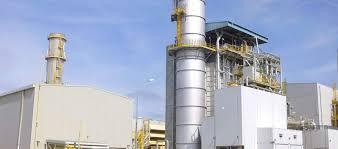
Algeria Retenders Djelfa Power Plant Contract with Renewed Momentum
Currently, Sonelgaz pushes the retender forward in 2026. Specifically, the utility invites worldwide bids to finalize the 1.2 GW Djelfa power plant. In addition, this open process replaces previous unsuccessful arrangements. Furthermore, bidders must prove robust technical skills and solid finances. Meanwhile, the facility relies on efficient combined-cycle technology. For example, it integrates gas turbines, steam turbines, and heat recovery systems.
Consequently, completion will significantly boost national capacity. Moreover, Sonelgaz applies stricter evaluation criteria now. As a result, experienced international companies show strong interest. Therefore, past lessons improve project management effectively. Thus, Algeria anticipates faster execution under fresh oversight.
Reviving the Djelfa Power Plant Delivers Substantial Benefits
First, this project enhances energy security considerably. Additionally, Algeria depends heavily on natural gas for electricity generation. Therefore, the extra 1.2 GW addresses surging household and industrial requirements. Moreover, it reduces blackout risks in major urban centers. Furthermore, construction generates numerous local jobs. In addition, ongoing operations sustain employment long-term.
Consequently, communities near Djelfa experience economic uplift. Meanwhile, investors respond positively to renewed progress. Thus, the retender reinforces confidence in infrastructure reliability. Overall, Algeria pursues a balanced mix of thermal and renewable sources. Therefore, stable energy supply becomes more achievable.
Key Challenges Persist for Djelfa Power Plant Contract
Nevertheless, selected contractors face tight deadlines ahead. For instance, they must thoroughly evaluate site conditions. Additionally, supply chain management demands careful planning. However, Sonelgaz incorporates valuable insights from earlier disputes. Moreover, rigorous supervision guides every stage.
Consequently, global expertise enters through competitive proposals. Furthermore, transparent communication proves essential for success. Therefore, Algeria expects smoother advancement this time. Thus, the retender positions the project for timely delivery.
Wider Effects on Algeria’s Energy Future
Meanwhile, the Djelfa revival fits seamlessly into national priorities. Specifically, Sonelgaz advances gas-fired plants alongside solar developments. For example, recent solar tenders expand capacity in parallel. Consequently, this diversified strategy ensures greater resilience. Moreover, the retender clears away lingering uncertainties decisively. Therefore, Algeria moves confidently toward energy independence. Additionally, stakeholders follow updates with keen attention. Thus, full commissioning will transform nationwide power availability positively.
Algeria retenders Djelfa power plant contract to capture emerging possibilities. In summary, the $600 million project offers transformative advantages. Ultimately, renewed determination accelerates meaningful progress.
Algeria’s power sector depends heavily on reliable gas supply from expanded pipelines, which often face development timelines and local execution. For instance, the GR-7 Gas Pipeline completed by Sonatrach in 2020 and transports gas from southwest fields to Hassi R’Mel, increasing capacity to support nationwide energy needs.
Consequently, such foundational infrastructure enables gas-fired plants like Djelfa to operate efficiently, underscoring why retenders become crucial to overcome stalls and deliver on Algeria’s energy ambitions.
Project Fact Sheet
Project Name: Djelfa Combined-Cycle Power Plant /Ain Oussera Power Plant
Location: Aïn Oussara, Djelfa Province, Algeria
Capacity: 1,200 MW (1.2 GW), with references to 1,260 MW or 1,262 MW in planning documents
Technology: Combined-cycle gas-fired (4 gas turbines, 2 steam turbines, 4 heat recovery steam generators)
Original Contract Award: 2013-2014 to Duro Felguera (Spain) for engineering, procurement, and construction
Original Contract Value: Approximately €544 million ($600 million USD at adjusted exchange rates)
Status: Construction partially advanced but stalled since 2024; disputes triggered bond calls and failed handover; retendered in 2026 by Sonelgaz/SPE to complete remaining works
Owner/Developer: Sonelgaz through Société Algérienne de Production de l’Electricité (SPE)
Purpose: Increase electricity generation capacity, meet growing demand, and reinforce grid stability in a gas-reliant system
Key Milestones: Original target completion 2017-2019; major suspension in 2024; 2025 MoU for Chinese involvement did not proceed; retender launched to restart and finalize
Project Team
Owner/Procuring Entity: Sonelgaz (state-owned electricity and gas utility) – Directs overall strategy, international tendering, and implementation under senior executives focused on production expansion.
Power Generation Subsidiary: Société Algérienne de Production de l’Electricité (SPE) – Manages tender processes, technical supervision, daily coordination, and operational planning.
Original Contractor: Duro Felguera S.A. (Spain) – Secured EPC contract in 2014; completed partial works before 2024 suspension due to disputes.
Regulatory/Supervisory Bodies: Algerian Ministry of Energy and Mines – Establishes national energy policy, grants approvals, and tracks progress toward energy transition targets.
Potential/Failed Successor: China Power Engineering & Consulting Group (CPECC/Power China) – Participated in 2025 memorandum of understanding for project transfer, which ultimately failed.
Legal/Arbitration Support: International arbitration panels (resolved several claims in Sonelgaz’s favor); dedicated local and international legal teams handle disputes and compensation recovery.
Technical/Equipment Partners (Historical): GE (provided turbines for similar Algerian power initiatives); potential for equivalent suppliers or partners in the current revival phase.
Leave a Reply