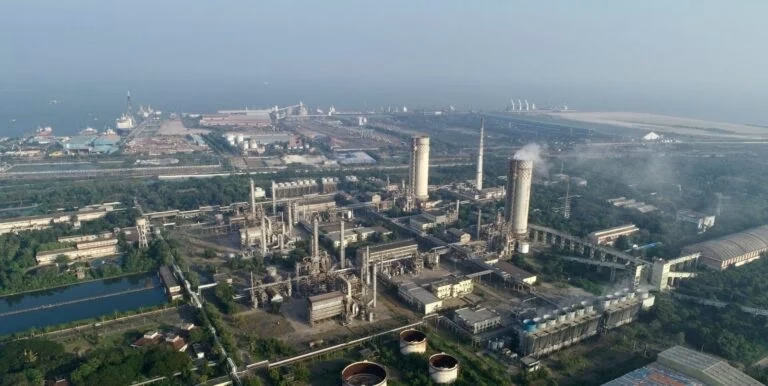
AM Green is approaching a critical phase in the development of its massive $10 billion green hydrogen and green ammonia complex in Kakinada, Andhra Pradesh. State government officials have confirmed that the project, one of India’s largest clean energy investments to date, is set to mark its first major equipment erection on January 17, 2026. The ceremony will be attended by Andhra Pradesh Chief Minister N Chandrababu Naidu and Deputy Chief Minister Konidala Pawan Kalyan, underscoring the strategic importance of this facility to the state’s industrial growth and India’s broader green energy ambitions.
Converting Legacy Infrastructure into a Green Hub
The Kakinada project is unique in its approach, as AM Green is converting an existing ammonia-urea facility into a world-class green energy hub. This “brownfield” strategy allows for faster deployment compared to greenfield projects. Once completed, the complex is projected to be the world’s largest green ammonia facility, with a total production capacity of 1.5 million tonnes per year. The site will serve as a pivotal export terminal, supplying clean energy to key global markets including Germany, Japan, and Singapore, where demand for low-carbon fuels for shipping and power generation is rapidly escalating.
AM Green Kakinada Project: Factsheet
Developer: AM Green
Location: Kakinada, Andhra Pradesh, India
Total Investment: $10 Billion
Project Type: Brownfield conversion (Ammonia-Urea to Green Ammonia)
Total Planned Capacity: 1.5 Million Tonnes Per Year (MTPA)
Key Milestone: First major equipment erection (Jan 17, 2026)
Timeline:
2027: 0.5 MTPA operational.
2028: 1.0 MTPA operational.
2030: Full 1.5 MTPA capacity.
Export Markets: Germany, Japan, Singapore.
Job Creation: ~8,000 jobs during construction.
Phased Rollout and Economic Impact
The project is designed to come online in stages to manage the scale of production and logistics.
- Phase 1 (2027): Initial capacity of 0.5 million tonnes per year.
- Phase 2 (2028): Expansion to 1 million tonnes per year.
- Full Capacity (2030): Reaching the final target of 1.5 million tonnes per year.
Beyond its environmental credentials, the project is a major economic driver for the region. It is expected to generate approximately 8,000 jobs during the peak construction phase, while fostering a skilled workforce in related sectors such as renewable energy logistics, storage, and port services. The facility will enable India’s first commercial exports of green ammonia, positioning the country as a leader in the global hydrogen value chain—a sector rapidly expanding as the world’s largest integrated green hydrogen-ammonia-methanol project officially begins operations in China’s Songyuan Hydrogen Energy Industrial Park Phase I.
Leave a Reply