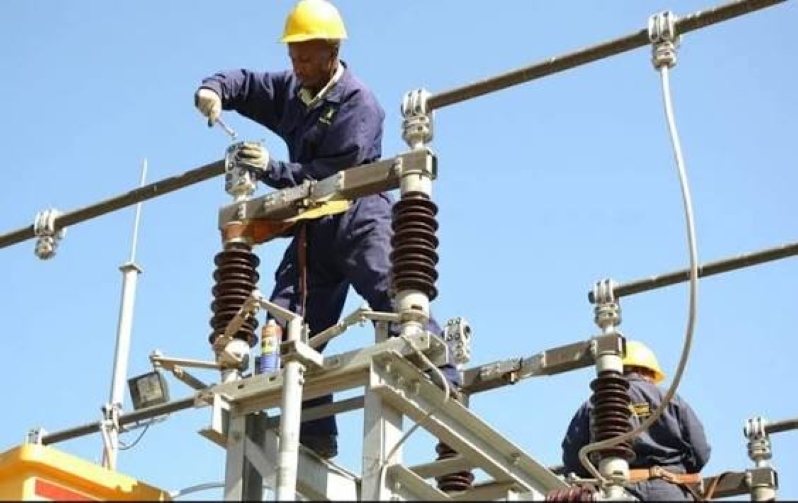
Global commodities trader Trafigura has withdrawn from a proposed 2,000 MW cross-border electricity transmission line project that was intended to transport surplus hydropower from Angola to energy-hungry mining operations in the Democratic Republic of Congo (DRC) and Zambia, creating uncertainty over one of Southern Africa’s most ambitious privately backed power infrastructure initiatives.
July 2024 MoU
The development comes nearly two years after Trafigura, engineering firm ProMarks and the Angolan government signed a memorandum of understanding in July 2024 to jointly study the feasibility of developing a high-voltage direct current (HVDC) transmission interconnector.
The project was designed to utilize Angola’s significant surplus hydropower resources. It would supply reliable, low-carbon electricity to copper and cobalt mines in the DRC Copperbelt and Zambia. This is in bid to strengthen regional power integration through the Southern African Power Pool (SAPP).
How has Trafigura’s exit affected the Angola transmission line project?
According to sources familiar with the matter, Trafigura has now abandoned the project. One Angolan government source confirms that negotiations continue but with changes to the consortium of companies expected to implement the scheme.
The Angolan Ministry of Energy and Water has not publicly commented on the future of the project. Trafigura has also not made any comments on the exit. Engineering partner ProMarks also did not make any comments on the latest Angola transmission line project development.
Central and Southern Africa mining operations
The proposed Angola transmission line interconnector project is expected to play a strategic role in addressing electricity shortages affecting mining operations across Central and Southern Africa.
Angola has substantial untapped hydropower generation capacity from projects including the Lauca and Capanda dams. Much of power from the dams remains underutilized due to limited domestic demand and inadequate export infrastructure.
Meanwhile, copper and cobalt producers in the DRC and Zambia continue to face constrained power supplies despite rapidly growing global demand for battery metals used in electric vehicles (EVs) and energy storage technologies.
Outlook on the Angola-DRC-Zambia transmission line project
Although Trafigura has stepped away from the Angola transmission line project, Angola’s broader ambition to become a regional electricity exporter remains intact.
Two major transmission projects promoted by Meridia Energy – a joint venture between Dubai-based Averi Finance and Morocco’s Somagec – are continuing to advance. These include the US$450 million Soyo-Inga-Cabinda transmission line, designed to provide up to 800 MW of capacity, and the US$1.25 billion Lauca-Kolwezi interconnector, capable of transmitting up to 1,400 MW from Angola into the DRC’s mining belt. Developers are also targeting commercial operation of both projects by 2030.
Other mega-transmission projects in Angola
Separately, U.S.-based HYDRO-LINK is pursuing another regional transmission project valued at US$1.5 billion. The project will build 1,200 km of transmission infrastructure and five substations linking Angola with mining provinces in the DRC. HYDRO-LINK’s project will primarily serve Lualaba and Katanga. Construction is expected to take around two and a half years once development and financing milestones are achieved.
Trafigura’s portion of the Lobito Corridor development
Trafigura’s withdrawal from the transmission project does not alter its broader presence in the Lobito Corridor. It remains a member of the Lobito Atlantic Railway consortium operating the railway linking the DRC’s mineral-rich Copperbelt to Angola’s Atlantic coast.
The corridor has become a flagship infrastructure project supported by Western governments and international financial institutions seeking to improve and benefit from critical minerals supply chains in Southern Africa.
Earlier this month, the Lobito Atlantic Railway reached financial close on a US$753 million financing package. The financing will support rehabilitation and long-term operation of the railway concession.
What next for the Angola-DRC-Zambia electricity transmission line project?
While Trafigura’s exit is a major setback for the Angola-DRC-Zambia electricity transmission line project, multiple competing transmission developments suggest that Angola’s long-term strategy of monetizing its surplus renewable hydropower through cross-border electricity exports remains on course. This is driven by growing global industrial demand from the rapidly expanding critical minerals sector in the DRC and Zambia.
Angola-DRC-Zambia 2,000 MW HVDC Power Transmission Interconnector – Project Fact Sheet
Project status
- Development stage: Feasibility phase
- Current status: Trafigura has withdrawn from the consortium. The Government of Angola is reportedly seeking alternative consortium members while negotiations continue.
Project type
- Cross-border electricity transmission
- High-Voltage Direct Current (HVDC) transmission line
- Public-Private Partnership (PPP)
Planned capacity
- 2,000 MW
Purpose
- Export Angola’s surplus renewable hydropower.
- Supply reliable electricity to copper and cobalt mining operations in the Democratic Republic of Congo and Zambia.
- Integrate Angola with the Southern African Power Pool (SAPP).
- Support industrial development along the Lobito Corridor.
Countries involved
- Angola
- Democratic Republic of Congo
- Zambia
Route
Expected to connect:
- Northern Angola hydropower plants
- DRC Copperbelt (Kolwezi region)
- Zambia’s Copperbelt
Electricity source
Surplus hydropower generated by Angola’s northern hydroelectric dams.
Target customers
- Copper mining companies
- Cobalt mining companies
- Industrial consumers
- Southern African Power Pool participants
Construction period
- Approximately 4 years after Final Investment Decision (FID).
Commissioning date
- Originally targeted around 2029-2030. This timeline is now uncertain following Trafigura’s withdrawal.
Key stakeholders
Government
- Government of Angola
- Ministry of Energy and Water
- Rede Nacional de Transporte de Electricidade (RNT)
Original private developers
- Trafigura
- ProMarks
Potential replacement/competing developers
- Meridia Energy
- Averi Finance
- Somagec
- HYDRO-LINK
Regional organizations
- Southern African Power Pool (SAPP)
End users
- Mining companies operating in Kolwezi, Lualaba Province, Katanga Province and Zambia Copperbel
Connected infrastructure
- Lobito Corridor
- Lobito Atlantic Railway
Related transmission projects
Lauca-Kolwezi Interconnector
- Capacity: 1,400 MW
- Cost: US$1.25 billion
Soyo-Inga-Cabinda Line
- Capacity: 800 MW
- Cost: US$450 million
HYDRO-LINK Angola-DRC Interconnector
- Cost: US$1.5 billion
- Length: 1,200 km
- Five substation
- Construction period: 2.5 year


Leave a Reply