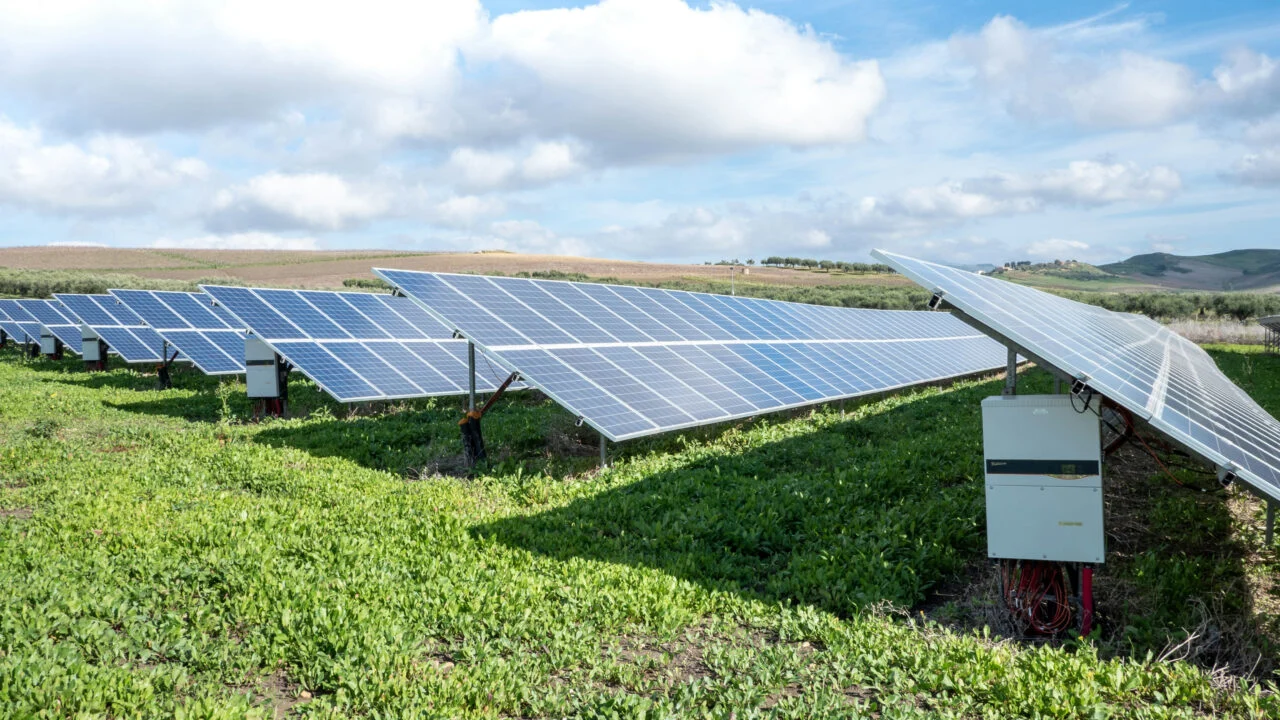
South African independent power producer Anthem has commenced construction on the Notsi Solar PV Project, a 475 MWac (620 MWdc) utility-scale photovoltaic facility in the Free State province — the largest single-phase solar development to reach financial close and begin construction in South Africa’s history. The R9 billion (approximately US$490 million) project reached financial close on 5 March 2026, with financing arranged by a consortium led by Standard Bank as co-mandated lead arranger, co-ordinating lead arranger, facility agent, and hedging bank, alongside Nedbank, ABSA, and Vantage GreenX Note. The China Energy Engineering Corporation (CEEC), in partnership with the Northwest Electric Power Design Institute, will serve as the engineering, procurement, and construction contractor, with construction expected to complete within 26 months, targeting early summer 2028. The Notsi project’s entire output is contracted under long-term 20-plus-year power purchase agreements with two of South Africa’s leading energy trading platforms, Discovery Green and NOA Group, under a wheeling model that routes power over Eskom’s national transmission grid directly to commercial and industrial customers.
A Thousand Hectares in the Free State: The Scale of What Notsi Represents
The Notsi Solar Project spans more than 1,000 hectares of land in the Free State province — South Africa’s interior grain-farming heartland, which combines the flat, sun-drenched topography, land availability, and proximity to high-voltage grid infrastructure that characterise the country’s most productive solar development zones. In physical terms, the project’s footprint is equivalent to more than 1,000 rugby fields or roughly 40 runways at Cape Town or OR Tambo International Airport. The 860,000-plus solar panels that will be installed across that footprint will generate approximately 1.5 million MWh of clean electricity annually — enough to supply the average consumption of around 140,000 South African households every year.
Project Fact Sheet: Notsi Solar PV Project
Project Name: Notsi Solar PV Project
Location: Free State Province, South Africa (central interior)
Developer / Owner / Operator: Anthem (lead investor, developer, majority equity, long-term operator)
Equity Partner: Reatile Group
Total Project Value: R9 billion (~US$490 million)
Generation Capacity: 475 MWac / 620 MWdc
Site Area: >1,000 hectares
Solar Panels: ~860,000+
Annual Energy Output: ~1,500,000 MWh (~1.5 TWh)
Households Equivalent: ~140,000 per year
Financial Close: 5 March 2026
Construction Start: March 2026 (week of 17 March 2026)
Construction Duration: ~26 months
Target Completion: Early summer 2028
Offtake Model: Multi-offtaker wheeling via Eskom national grid
Offtake Agreements: 20-year-plus PPAs with Discovery Green and NOA Group
Significance: Largest single-phase solar PV project in South Africa by capacity
Additional Infrastructure: Transmission substation (to be transferred to Eskom/NTCSA)
Future Option: Environmental permission secured for battery energy storage system (BESS) addition
Project Team: Notsi Solar PV Project
Lead Developer / IPP: Anthem (formed 2025; integration of African Clean Energy Developments, EIMS Africa, Mahlako Energy Fund, Norfund; managed by African Infrastructure Investment Managers under IDEAS Fund)
Anthem CEO: James Cumming
Anthem CCO: Mike Wickins
Equity Partner: Reatile Group (Founder & Executive Chairman: Simphiwe Mehlomakulu)
EPC Contractor: China Energy Engineering Corporation (CEEC) + Northwest Electric Power Design Institute
Lead Debt Arranger / Facility Agent: Standard Bank (co-mandated lead arranger, co-ordinating lead arranger, facility agent, hedging bank)
Co-Lenders: Nedbank; ABSA; Vantage GreenX Note
Offtaker 1: Discovery Green (division of Discovery Limited Group; CEO: Andre Nepgen)
Offtaker 2: NOA Group (CEO: Karel Cornelissen)
Grid Operator: Eskom / National Transmission Company South Africa (NTCSA)
Regulator: NERSA (National Energy Regulator of South Africa)
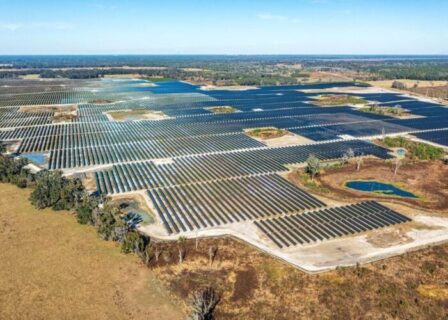
At 475 MWac / 620 MWdc, Notsi surpasses the previous largest single-phase solar project in South Africa both in nameplate capacity and in aggregate scale, establishing a new benchmark for what the country’s private renewable energy market can originate, finance, and build in a single transaction. Beyond generation, the project is constructing its own transmission substation — a purpose-built grid connection infrastructure investment that Anthem is funding as part of the project cost and will subsequently transfer to Eskom and the National Transmission Company South Africa (NTCSA) at a later date. The substation investment both resolves the grid access challenge that has historically constrained private renewable energy development in the Free State and directly addresses one of the structural weaknesses of South Africa’s electricity infrastructure: the chronic underinvestment in transmission and distribution networks that limits the ability of new generation to reach load centres even when the generation itself is available.
Anthem, Reatile, and the Project’s Leadership Team
Anthem is South Africa’s lead investor, developer, majority equity participant, and long-term operator of the Notsi project. Formed in 2025 through the integration of African Clean Energy Developments and EIMS Africa — two established renewable energy platforms operating under the African Infrastructure Investment Managers-managed IDEAS Fund — with the Mahlako Energy Fund and Norfund, Anthem entered the market as one of South Africa’s largest renewable energy investment holding companies from its first day of operations. The newly launched business already carries a portfolio exceeding 2 GW of wind, solar, and hydro projects either operational or under construction, with Notsi representing the single largest asset within that portfolio. James Cumming, Anthem’s CEO, has articulated Notsi’s strategic logic clearly: the project was developed at an “immense size” specifically to provide low-cost wholesale power to the private market while simultaneously generating the scale needed to amortise the significant grid upgrade investments that the project is building on behalf of Eskom and NTCSA — a model that aligns the developer’s commercial interests with the country’s infrastructure development needs.
Reatile Group, a diversified South African infrastructure and energy investment company with deep roots in the country’s broad-based black economic empowerment (B-BBEE) economy, is Anthem’s equity partner in the Notsi project. Simphiwe Mehlomakulu, Reatile’s founder and executive chairman, has emphasised the project’s alignment with South Africa’s dual imperatives of energy security and transformation. On the construction side, the China Energy Engineering Corporation (CEEC) — one of China’s largest state-owned energy infrastructure developers, with an extensive portfolio of large-scale photovoltaic plant completions across Africa and Asia — is the principal EPC contractor, partnering with the Northwest Electric Power Design Institute for engineering and design. Anthem’s operations and maintenance team will take over full operational responsibility from the EPC contractor from the third year of the project’s operational life, providing long-term domestic management continuity for the facility.
The Wheeling Model and the Energy Traders Behind Notsi’s Offtake
The Notsi project’s commercial structure is a sophisticated multi-offtaker wheeling model — a mechanism that has emerged as the defining architecture of South Africa’s private renewable energy market following the electricity sector reforms of the early 2020s that liberalised wheeling and enabled large-scale private generation outside the Eskom franchise system. Under this model, electricity generated at the Notsi plant in the Free State is transmitted over Eskom’s national grid — using wheeling agreements with Eskom for grid access — and delivered to commercial and industrial customers across the country who have signed long-term offtake agreements with Notsi’s two energy traders, Discovery Green and NOA Group.
Discovery Green, a division of the Discovery Limited Group and one of South Africa’s leading trader-led renewable energy platforms, has signed a 20-year-plus offtake agreement as one of Notsi’s two anchor offtakers. Its CEO, Andre Nepgen, has described the project as enabling Discovery Green to offer large and small businesses access to globally competitive energy prices without requiring customers to invest themselves in generation assets or take construction and operational risk. NOA Group, a South African IPP, aggregator, and energy trader backed by experienced infrastructure investors, brings Notsi’s total contracted portfolio to approximately 1.5 GW of generation capacity across owned assets and strategic offtake partnerships. CNBC Africa has reported that Notsi’s output will support sustainability commitments from major industrial companies including Sasol, Glencore, and Impala Platinum — names that illustrate the depth of corporate decarbonisation demand that Anthem developed the project to serve. Under the wheeling structure as governed by NERSA, commercial and industrial customers typically achieve electricity cost savings of 20 to 30 per cent compared to Eskom wholesale tariffs, providing a compelling commercial case alongside the carbon reduction benefits.
South Africa’s Solar Buildout and Notsi’s Place in a National Transformation
The Notsi Solar Project’s construction start arrives within a framework of accelerating policy ambition and private investment activity that is fundamentally reshaping South Africa’s electricity generation landscape. In November 2025, Minister of Electricity and Energy Kgosientsho Ramokgopa unveiled South Africa’s latest Integrated Resource Plan (IRP), committing to the addition of over 28 GW of new solar PV capacity to the national grid by 2039 — a target that places utility-scale solar at the centre of the country’s long-term energy security strategy. The IRP’s publication followed years of electricity shortages and load shedding that reached a peak of more than 200 days of rolling power cuts in 2023, and which drove an unprecedented wave of private investment in off-grid and wheeled renewable generation across the C&I sector. One of the most ambitious responses to that demand signal is SolarAfrica’s 1 GW SunCentral solar project in the Northern Cape, which reached financial close on its first 144MW component backed by $98 million from Investec and RMB, and which pioneers a one-to-many wheeling model that will supply renewable energy to a wide pool of commercial and industrial offtakers simultaneously — a structural innovation that could serve as a blueprint for similar projects across the continent.
Notsi’s scale, wheeling structure, and multi-offtaker model epitomise the direction in which South Africa’s electricity market is evolving. The project bypasses the historical bottleneck of the Renewable Energy Independent Power Producer Procurement Programme (REIPPPP), which procures generation for Eskom through competitive tender rounds, and instead develops entirely within the private wheeling market — financing construction through bank debt and equity rather than government-backed offtake guarantees. As Anthem CEO James Cumming has argued, the multi-offtaker wholesale model represents the future of energy security in South Africa: a model in which independent generators, commercial offtakers, and grid operators collaborate within a regulatory framework to deliver competitive clean power to the private sector, reducing the country’s dependence on a single utility and accelerating the transition to lower-carbon energy consumption.
Leave a Reply