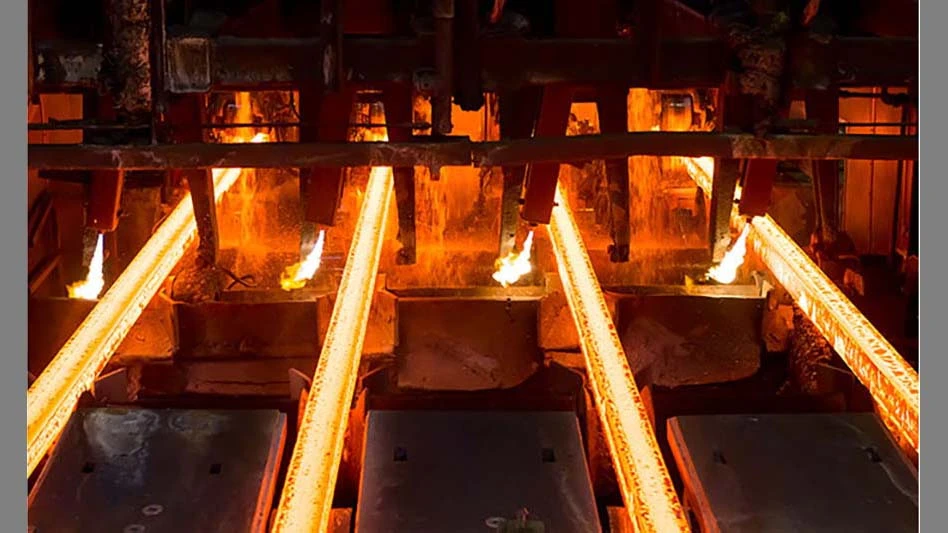
ArcelorMittal has officially confirmed the construction of a massive €1.3 billion (USD 1.4 billion) Electric Arc Furnace (EAF) unit at its flagship site in Dunkirk (Dunkerque), France. This final investment decision marks a historic pivot for the plant, which has traditionally relied on coal-fired blast furnaces to produce primary steel. By replacing one of the site’s existing blast furnaces with this state-of-the-art EAF, ArcelorMittal is effectively decoupling its production from fossil fuels, leveraging France’s low-carbon nuclear electricity grid to melt recycled scrap and direct reduced iron (DRI).
Constructionreview reached out to ArcelorMittal and were informed by Isabelle Chopin, Head of Communications for France that company is not targeting a -35% CO2 reduction by 2030 because market and regulatory conditions haven’t evolved favorably enough over recent years to allow ArcelorMittal to keep this initial target. She also clarified that the EAF will have a 2 Mt capacity, not 2.5 and that this €1.3bn investment replaces the 1.7bn plan the company had initially announced.
Technical Scope: A 2.0 Million Tonne Giant
The project involves the engineering and installation of a 2.0 million tonne per year EAF, making it one of the largest single industrial decarbonization projects in Europe. Unlike a blast furnace which chemically reduces iron ore using coke at high temperatures, the EAF operates like a colossal toaster, using high-power graphite electrodes to generate an electric arc that melts scrap steel. The “Jobsite Impact” is profound; the construction phase will require heavy civil engineering to reinforce foundations for the furnace transformer and the massive ladle turrets. Furthermore, the site must be integrated with a new high-voltage substation enabling it to hanlde the immense electrical load—comparable to the consumption of a medium-sized city. This necessitates significant grid infrastructure upgrades by the transmission system operator, RTE.

ArcelorMittal Dunkirk EAF: Factsheet
Project Name: Dunkirk Decarbonization Project (EAF)
Location: Grande-Synthe, Dunkirk, France
Owner/Developer: ArcelorMittal France
Total Investment: €1.3 Billion (~$1.4 Billion USD)
Construction Team:
Client: ArcelorMittal
Grid Connection: RTE (Réseau de Transport d’Électricitè)
Technical Specifications:
Technology: Electric Arc Furnace (EAF)
Capacity: 2.5 Million Tonnes Per Annum (MTPA)
Feedstock: Recycled Steel Scrap and Direct Reduced Iron (DRI)
Operational Timeline:
Decision: Confirmed Feb 2026
Commissioning: 2027
Environmental Impact:
Reduction of ~4.4 million tonnes of CO2/year.
Replaces one coal-based Blast Furnace.

Economic and Environmental Impact
Mobilization for the project is expected to begin shortly, creating a surge in demand for specialized industrial construction labor. This includes refractory masons, heavy rigging crews, and high-voltage electricians. The project is supported by the French government’s “France 2030” investment plan. The government recognizes the facility’s role in sovereignty and green manufacturing. Once operational in 2027, the EAF will slash the site’s direct CO2 emissions by approximately 4.4 million tonnes per year. This transition not only secures the future of the Dunkirk plant in a carbon-taxed economy but also provides European automakers and construction firms with the “XCarb” low-carbon steel required to meet their own Scope 3 emission targets.
This drive to reinvent traditional carbon-intensive industries through advanced processing technology is echoed in the United States, where Frontieras North America plans to build an $850 million advanced coal facility in Mason County, West Virginia. Utilizing its patented FASForm technology, this plant will process Appalachian coal into liquid fuels, hydrogen, and fertilizers rather than burning it for power, generating over 2,000 construction jobs and positioning the region as a hub for value-added coal manufacturing.
Leave a Reply