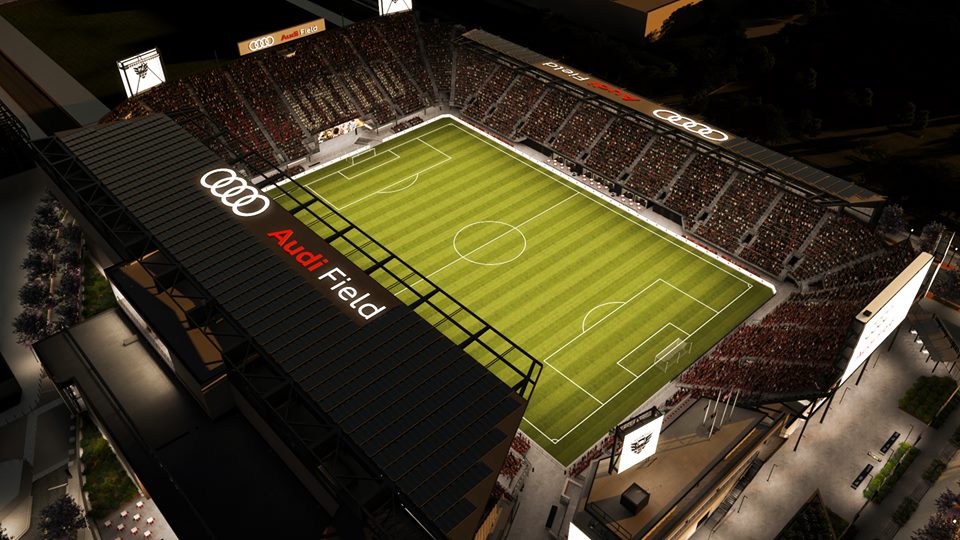
The Audi Field expansion in Washington DC, would add a climate controlled roof and roughly 8,000 seats to the home of D.C. United under a $620 million proposal introduced by D.C. Council Chairman Phil Mendelson. The legislation, unveiled this week, would take the Buzzard Point stadium from its current 20,000 seats toward about 28,000 and cover the venue so it can operate year round. Under the funding structure, the District would contribute about $300 million, with the balance covered through other sources. Supporters argue the enclosed, climate controlled design would let Audi Field host roughly 100 extra events a year, from concerts to conferences, during the cold months when the stadium now sits largely idle. The bill projects that the added activity would generate enough economic output and tax revenue to more than triple the city’s roughly $300 million stake over time. In a notable condition, the proposal requires D.C. United to build 467 new housing units nearby, including 148 affordable homes and 122 reserved for seniors. The measure is at an early stage and must clear the D.C. Council before any construction can begin. It would build on a wave of stadium and arena spending across the District, from the Capital One Arena package to talks over the RFK Stadium site.
Buzzard Point and a National Wave of Soccer Venue Investment
The proposal reflects how quickly Major League Soccer venues are evolving, and how central stadiums have become to neighborhood economics in Washington. Audi Field opened in 2018 for about $300 million and anchored the transformation of Buzzard Point, a once industrial peninsula that has since drawn projects like the 1,100 unit first phase of The Stacks. A roof matters more now because MLS is shifting to a July through May calendar in 2027, pushing more of the season into winter and raising the value of a covered, all weather venue. D.C. United averaged 18,137 fans last season, about 91 percent of capacity, and chief executive Jason Levien has said newer league stadiums are trending larger and that the club needs to catch up. The club is not alone in reinvesting in soccer real estate. In the Seattle area, the Sounders built the Sounders FC Center at Longacres in Renton on the former Boeing headquarters site, a training and headquarters complex with four full size pitches. Where Seattle focused on a performance and operations campus, the Audi Field plan pushes the opposite way, extracting more revenue days out of an existing match venue by enclosing it and expanding its seating bowl.
Audi Field Expansion Timeline and What Comes Next
The Audi Field expansion is still a legislative proposal rather than a funded project, so the near term milestones are political rather than physical. The bill must move through committee review, public hearings and a full D.C. Council vote before any design or construction contract can be let, and the roughly $300 million District contribution will draw scrutiny at a moment when the Commanders, Nationals and other franchises are all seeking public support. Open questions include how the remaining costs beyond the city’s share would be financed, when construction might start, and how the required 467 unit housing component would be delivered alongside the stadium work. If the District approves the package, the reward the legislation points to is a year round events venue capable of adding about 100 dates annually and deepening the redevelopment already under way around Buzzard Point. For now, the timeline hinges on whether the Council backs the plan and on terms still to be negotiated with D.C. United.
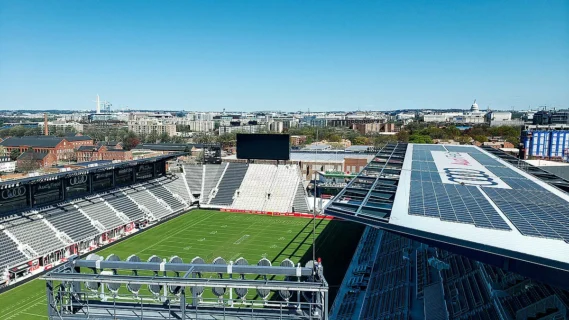
Project Fact Sheet
- Project Name: Audi Field expansion, Washington, D.C.
- Location: Buzzard Point, Southwest Washington, D.C., near Nationals Park
- Project Value: About $620 million, per the proposed legislation
- Client and Owner: District of Columbia, in partnership with D.C. United, which operates the stadium
- Proposed By: D.C. Council Chairman Phil Mendelson
- Public Contribution: About $300 million from the District, with the balance from other sources
- Key Components: A climate controlled roof, roughly 8,000 additional seats taking capacity toward about 28,000, and a required 467 unit housing development including 148 affordable and 122 senior homes
- Procurement Model: Public private partnership requiring D.C. Council approval
- Current Status: Early stage legislation pending before the D.C. Council
- Strategic Impact: Positions Audi Field as a year round venue able to host about 100 extra events annually
Project Team
- Client and Owner: Government of the District of Columbia
- Stadium Operator and Partner: D.C. United
- Legislation Sponsor: D.C. Council Chairman Phil Mendelson
- Main Contractor: Not yet awarded
- Architect and Designer: Not yet awarded
Frequently Asked Questions
How much would the Audi Field expansion cost? The Audi Field expansion is estimated at about $620 million, with the District contributing roughly $300 million and the remainder covered through other funding sources.
What would the Audi Field expansion add? The Audi Field expansion would add a climate controlled roof and about 8,000 seats, taking the stadium from 20,000 toward roughly 28,000 and enabling year round events.
Where is Audi Field located? Audi Field sits in the Buzzard Point neighborhood of Southwest Washington, D.C., a short distance from Nationals Park, and is home to D.C. United.
Who proposed the Audi Field expansion? D.C. Council Chairman Phil Mendelson introduced the legislation, which must be approved by the full D.C. Council before construction can proceed.
When will the Audi Field expansion be built? No construction timeline has been set, as the proposal remains early stage legislation that first requires D.C. Council approval.

Leave a Reply