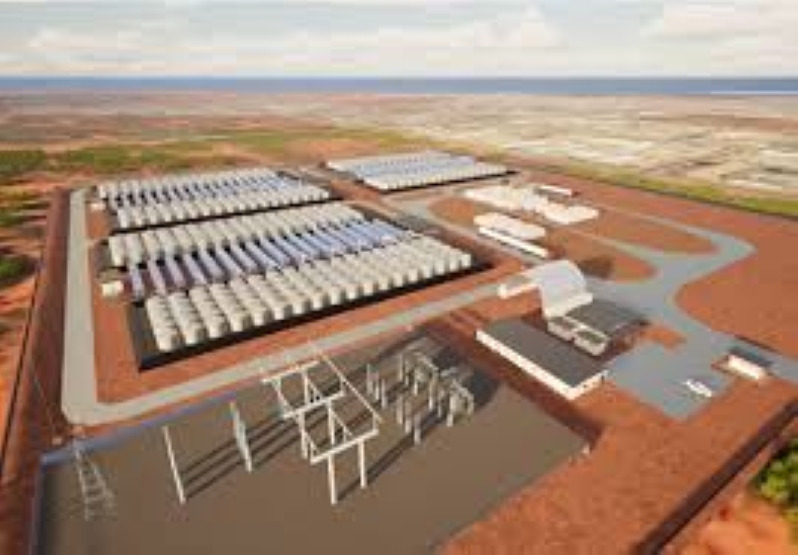
Australian Vanadium Ltd (AVL) has signed a pre-bid agreement with Japan’s Sumitomo Electric Industries for the Western Australian Government’s planned Kalgoorlie Vanadium battery energy storage system (VBESS) project. Kalgoorlie VBESS is a proposed 50 MW/500 MWh, 10-hour-long duration battery storage project aimed at stabilize the Goldfields grid.
The agreement also appoints Sumitomo Electric as the exclusive vanadium flow battery technology provider to AVL subsidiary VSUN Energy during the expression-of-interest and bidding stages of the Kalgoorlie project. When completed, Kalgoorlie would also be the largest vanadium flow battery project in Australia and among the longest-duration grid batteries in the region. This will be alongside others like Supernode battery project in Queensland and Hallett BESS project in south Australia.
Additionally, the project also forms part of a Western Australian state initiative supporting long-duration energy storage and local manufacturing. The initiative is also backed by up to A$150 million in government investment.
Kalgoorlie Vanadium Battery Energy Storage System (VBESS) Project Factsheet
Location: Kalgoorlie-Boulder, Western Australia
Capacity: 50 MW power output
Energy Storage: 500 MWh
Discharge Duration: 10 hours
Technology: Vanadium flow battery
Developer: VSUN Energy
Parent Company: Australian Vanadium Limited
Technology Partner: Sumitomo Electric Industries
Government Support: Up to A$150 million
Expected Commissioning Target: 2029
Grid Role: Long-duration storage and regional grid reliability support
Development Status and Timeline
- Stage-1 EOI submitted by AVL/VSUN Energy as of early 2026.
- Stage-2 bidding expected to commence from March 2026.
- Preferred-proponent negotiations targeted for June 2026.
- Target commissioning year set for 2029.
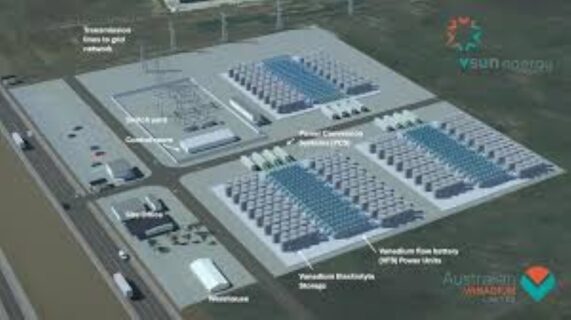
Sumitomo-AVL Technology Partnership
The partnership is also intended to assure the project’s execution as witnessed through the competitive procurement process. This is as:
- Japan’s Sumitomo Electric brings decades of global vanadium flow battery deployment experience while
- Australia’s AVL brings vertically integrated local supply chain spanning mining, electrolyte manufacturing, and project development.
The Kalgoorlie facility will use vanadium flow batteries (VFBs), a long-duration storage technology best known for its:
- High cycle life and deep discharge capability
- Thermal stability and fire resistance
- Scalability and recyclability
Project Financing
Kalgoorlie VBESS is structured as a public-supported infrastructure project rather than a private asset. The Western Australian Government has so far committed funding of up to up to A$150 million. This funding is also part of broader state policy to increase long-duration storage deployment and local battery manufacturing.
Stakeholders & Contractors Involved in Kalgoorlie Vanadium Battery Project
Lead Developer
- VSUN Energy
Parent Company
- Australian Vanadium Limited (AVL) as integrated supply chain provider.
Technology Provider
- Sumitomo Electric Industries as the exclusive vanadium flow battery supplier.
Government Stakeholders
- Western Australian State Government as funding sponsor and procuring authority.
Grid and System Stakeholders
- Western Power as regional network operator involved in reliability measures.
- Australian Energy Market Operator (AEMO) as system reliability oversight in region.
What Kalgoorlie Vanadium Battery Energy Storage System (VBESS) Project Brings to Western Australia
The Kalgoorlie region has been experiencing reliability issues due to transmission faults and limited backup generation. According to the Western Australian Government, this highlights the need for large-scale storage in order to strengthen grid resilience.
The proposed Kalgoorlie vanadium battery project is also designed to supply at about 10 hours of backup electricity. This will come in handy when stabilizing the Eastern Goldfields network located at the edge of Western Australia’s main grid.
Government backing also reflects a policy objective to create a domestic vanadium industry cluster and diversify the regional economy. Additionally, this is while generating about 150 construction jobs and additional downstream opportunities.
Leave a Reply