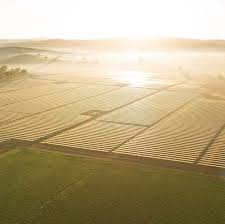
The Goulburn River Solar Farm, a significant 450MW (AC) project developed by Lightsource bp, is currently in its active construction phase in the Upper Hunter region of New South Wales. Following its federal environmental approval under the EPBC Act in October 2024, the project moved into on-site works in December 2024 with DT Infrastructure serving as the primary EPC contractor. As of mid-2026, construction is well underway across the 792-hectare site near Merriwa, aiming for a completion date by December 2026.
Once operational, the $880 million facility will feature approximately one million bifacial panels and a large-scale battery energy storage system (BESS), providing enough clean energy to power roughly 191,000 homes annually while supporting the transition of the Hunter-Central Coast Renewable Energy Zone.
Also such energy projects are key for Australia’s economy as they meet the ever-growing power demands in the country. With the demands coming from people, industries and even data centers.
August 26, 2024
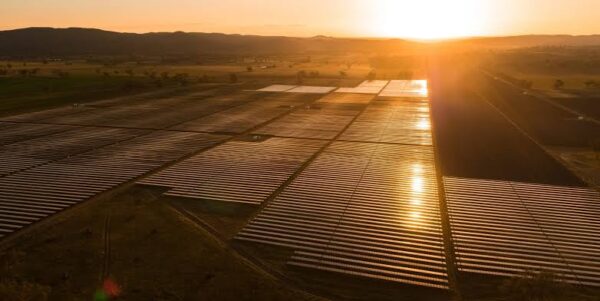
The New South Wales (NSW) government in Australia has approved the Goulburn River Solar Farm, a 450MW renewable energy project set to provide electricity to 191,000 homes annually.
The A$880m ($591m) development, situated near Merriwa in the Upper Hunter region, integrates a battery energy storage system (BESS) to enhance grid stability by storing and dispatching solar energy during peak demand.
The strategic initiative places the solar farm between two key Renewable Energy Zones, offering direct access to the existing electricity transmission network.
The project will reduce greenhouse gas emissions in NSW by 733,000t each year, contributing to the state’s net zero emission goals.
The construction phase is expected to create 350 jobs, with a focus on hiring local workers and engaging regional businesses.
The development will also include additional infrastructure such as road upgrades and worker accommodations in response to community input.
New South Wales minister for the Hunter region Yasmin Catley stated: “The $880m project injects a major capital investment within the Upper Hunter region, bringing a major boost to local jobs.
“Today’s announcement further shores up our region as a renewable energy powerhouse that will power communities for decades to come.”
New South Wales Minister for Planning and Public Spaces Paul Scully sated: “Under our government, we have a planning system that is supporting the renewable energy transition, approving projects that will support our communities, energy security and emissions reductions.
“With 350 jobs generated during construction and operation, this project will benefit the local economy, local communities and provide indirect benefits to local services throughout the life of the project.
“This project is one of many that is part of the state’s growing renewable energy infrastructure that plays a vital role in powering our economy for generations to come.”
In May 2024, the NSW government launched a tender to secure long-duration energy storage projects, targeting 1GW of storage capacity with an eight-hour duration.
Projects Similar to Goulburn River Solar Farm
An ambitious £19billion (30 billion Australian dollars) solar farm project in remote northern Australia, set to beam energy to Singapore via a submarine cable, has edged closer to reality after receiving the green light from the Australian government on Wednesday.
The colossal Australia-Asia PowerLink scheme, spearheaded by Aussie firm Sun Cable, envisions a 12,400-hectare solar farm linked to Darwin with an 800-kilometer overhead transmission line, and then powering up Singapore’s industrial sector through a 4,300-kilometer undersea cable. Backers said it will create thousands of jobs.
Touted to pump out six gigawatts of clean electricity annually, the project received glowing praise from Australian Environment Minister Tanya Plibersek, who declared it would “help turn Australia into a renewable energy superpower” while giving the economy a significant lift.
“This massive project is a generation-defining piece of infrastructure,” proclaimed Plibersek. “It will be the largest solar precinct in the world and heralds Australia as the world leader in green energy.”
The Sun Cable project took a hit when it entered voluntary administration in January 2023 due to a funding row between heavyweights Forrest and Cannon-Brookes. But by May, the tide turned as a Cannon-Brookes-led consortium’s Grok Ventures snapped up the company, sealing the deal by September 2023.
Also read: World’s largest solar power plant commences in Australia
Queen’s Wharf Brisbane: A $3.6 Billion Transformation of Australia



Leave a Reply